Table of Contents
With Israel and the US launching joint strikes aimed at bringing down the Islamist regime that has ruled Iran with an iron fist since 1979, the obvious question is: how does this end?
While some are trying to whip up hysteria about ‘World War III’ and ‘another Forever War’, neither possibility seems remotely likely. While Russia has long been a backer of Iran, the dream of an axis running from the Arctic to the Persian Gulf seems long dead. If nothing else, Russia is too mired in its own war with Ukraine to be diverting vital military resources to Iran.
At the same time, the Trump administration, which includes several veterans of the last failed Forever War in the Middle East, has clearly learned from the mistakes of every administration for the last 34 years. In 1991, George H W Bush went into war in Kuwait with a clear and limited objection: expel Iraqi forces that had invaded the country back to their borders – and no further. By contrast, his son, and successive Democrat administrations, laboured under the delusion that they could ‘bring democracy’, let alone civilisation, to a bunch of tribal savages in the Hindu Kush, something even the British Empire failed to do.
George W Bush’s war with Iraq in 2003 cost intolerable loss of life and untold damage to America’s strategic capabilities and stature.
Democratic presidents’ less ambitious efforts have fared no better. Bill Clinton’s standoff bombing campaign failed to arrest the rise of al-Qa’ida and led more or less directly to the September 11 attacks; Barack Obama “led from behind”, unleashing chaos in Libya, and permitted Syria to cross his chemical weapons red line. Joe Biden’s catastrophic exit from Afghanistan (part of the Greater Middle East for these purposes) was a humiliation.
Does Operation Epic Fury have better prospects? A few days into the conflict, there is no definitive answer, but a cautiously optimistic case can be made that this Middle Eastern entanglement will end better than most of the others.
Two questions must be answered when pondering whether any military action of this sort is to be undertaken: Is it justified? And is it wise?
With regard to the first question, its justification is beyond doubt. The US doesn’t even have to rely on the UN’s own, rubbery, ‘Responsibility to Protect’ doctrine, and point to the Iranian regime’s shocking campaign of mass-murder.
Iran’s government has been responsible for the deaths of more Americans than any other in the past 50 years.
From its outset in 1979, the Islamic Republic has made murdering Americans among its highest priorities. From the more than 200 Marines killed by Hezbollah in the 1983 Beirut bombing and the 600 or so American service members killed by Iran-backed militias in Iraq to the many US citizens terrorised, captured and killed by Hamas and other Iranian-sponsored entities in Gaza and around the world, Tehran has repeatedly bathed in American blood.
And this is the first argument for the wisdom of bringing it down.
Under the principle of self-defence, action taken against a regime that has killed so many of our own citizens is legitimate, not simply for retributive justice, but to prevent further killings.
Arguments that “achieving regime change remotely – through air power alone – is an extraordinarily long probability” can easily be answered by pointing to the example, for better or worse, of Libya. Air strikes, sanctioned and egged on by the sanctimonious UN, so weakened the Gaddafi regime that its own populace were able to rise up and topple it on the ground.
Few regimes have been undermined in the way Tehran’s has in the past two years. It has just witnessed the awesome combination of a US-Israeli intelligence and military capability pulverise its supreme leader of almost four decades and much of his leadership team. It has seen the countries it vowed to destroy rain down fire and destruction on its military facilities for a year, its top military commanders taken out with breathtaking precision, its conventional and nuclear facilities badly damaged, its air defences essentially destroyed. It has watched as its close ally in Syria was overthrown in a civil war, its proxies in Gaza and Lebanon decimated.
Even its friend in the western hemisphere, Nicolas Maduro, now sits in a Brooklyn, New York, jail cell. Its sponsors, Russia and China, seem to regard their relationship with it as a one-way affair: they get Iran’s drones and oil, and Iran gets tough diplomatic language for America and Israel. The Iranian people have risen up against the regime, which has survived only by killing thousands of them.
But, as the cautionary tales of both Libya and Iraq demonstrate, toppling a murderous regime is one thing. What comes next is quite another.
As US Secretary of Pete Hegseth has stated, even if the US puts troops on the ground, ‘Forever Wars’ are off the table.
“No stupid rules of engagement, no nation-building quagmire, no democracy-building exercise,” he said. “No politically correct wars. We fight to win and we don’t waste time or lives. This is not Iraq.”
Regime survival, in its current form, seems the most unlikely outcome. Almost certainly, as soon as the regime announces new heads, combined Israeli and American expertise will ensure they roll. Allowing the regime to survive would be politically disastrous for Trump.
At worst, the regime might survive in an adjusted form, much as the Venezuelan regime was allowed to continue after the removal of Maduro – subject to strict terms and conditions. The leadership of Maduro’s former vice-president Delcy Rodriguez seems likely to be at most a transitional arrangement, to keep the civic machinery running smoothly until regime change happens at the ballot box, which, given the results of the last election that Maduro simply refused to recognise, seems inevitable.
This would avoid the fatal mistake of Iraq, where the entire Ba’athist civic structure was summarily eradicated, leaving a deadly power vacuum.
As for Iranians themselves, regime change is clearly what they want.
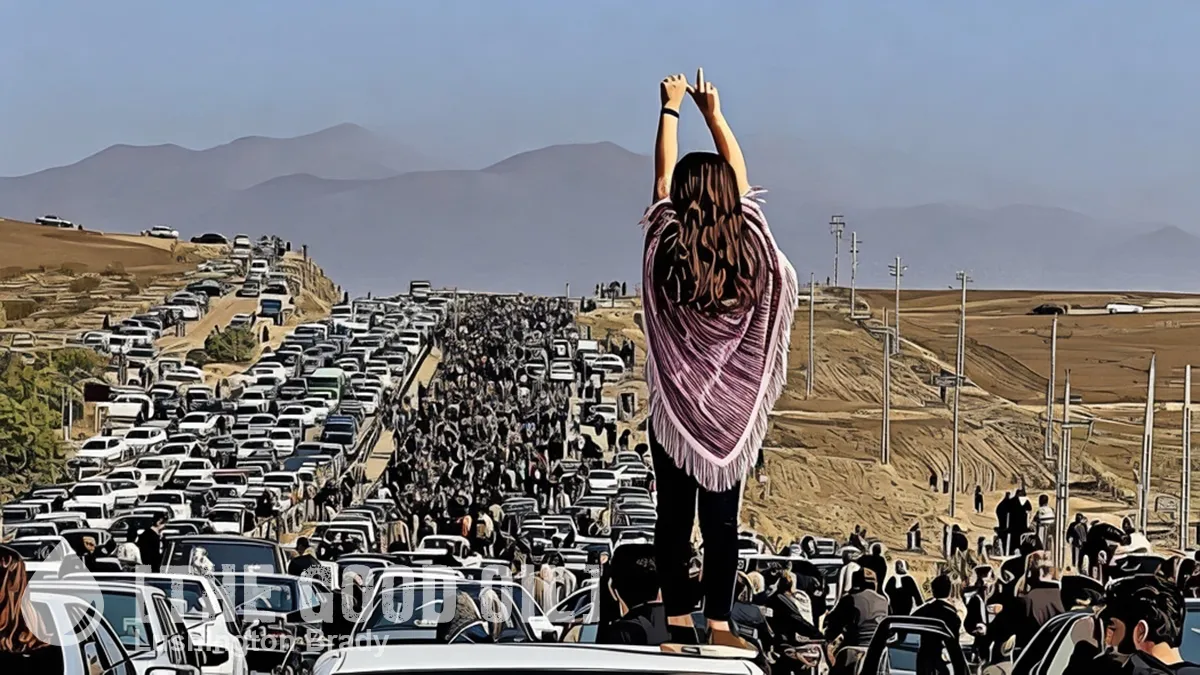
When Iranians rose up in protest across the country in January there was no doubt in the mind of their supporters, including much of the US political establishment, that they were seeking to topple the regime and replace it with a pro-Western democracy.
That, the supporters went on, was an endeavour behind which Mr Trump should throw the weight of American power.
It is still their preferred outcome.
There is, too, the exiled son of the last ruling Shah, Reza Pahlavi. Many Iranians in exile have leant their support to Pahlavi as at least a transitional leader, ultimately shepherding the country to a democratic republic, or staying on as a constitutional monarch. This is Pahlavi’s own stated goal.
But, just as in 1979, it’s a mistake to see only the liberal, Westernised urban women who, in the ’70s, wore miniskirts, parked their cars by the beaches of Lake Chitgar and today flock to pro-Pahlavi rallies in the West. Behind them is a vast hinterland of much more conservative rural women.
The Mojahedin-e-Khalq, also known in English as the People’s Mojahedin Organisation of Iran, is another group that has won widespread support from Western politicians, particularly on the right. Its public face, Maryam Rajavi, with her Islamic headscarf, sometimes appears on the surface more representative of “ordinary Iranians” […]
Whether Ms Rajavi or Mr Pahlavi, or any other figure, could rally Iranians into a unitary, pro-Western democracy remains plausible but open to doubt.
It seems highly unlikely, at least, that Iran will collapse into sectarian anarchy, like its neighbour and ancient enemy, Iraq. Not that there aren’t small but significant minority dissenting groups from the Shia majority. But, if Trump and his administration have learned anything from the last 30 years, it’s that the best course is to decapitate the old regime and then stand back.