Table of Contents
Is the Scientific Revolution over? If it is, it’s been killed from the inside. Far from the edgelord gibbering of porch atheists, it’s not Christianity’s fault: in fact, Christianity not only nurtured the infant scientific revolution, it’s been more of a boost to science for half a millennium than a hindrance.
But it is quasi-religious cultism which is killing science: from climate cultism to an inexplicable infatuation with Islam. And, most especially in Australian and New Zealand, the ludicrous worshipping of ‘indigeneity’, and the oxymoron that is ‘indigenous science’.
Let’s get this straight: ‘Western science’ is a ridiculous phrase that no actual scientist should ever utter. In one sense, all science is ‘Western’, in the sense that true science was discovered in the Christian West and nowhere else. In another, no science is ‘Western’, because genuine science is universal. The idea that there are siloed ‘Māori science’ or ‘Aboriginal science’ is completely antithetical to science.
But these stupidities are having their effects on scientific practice – and not for the better. The obviously false claim, for instance, that Māori discovered Antarctica somehow gets printed in supposedly serious scientific journals.
Then there’s the too-obvious revisionism for the sake of political correctness.
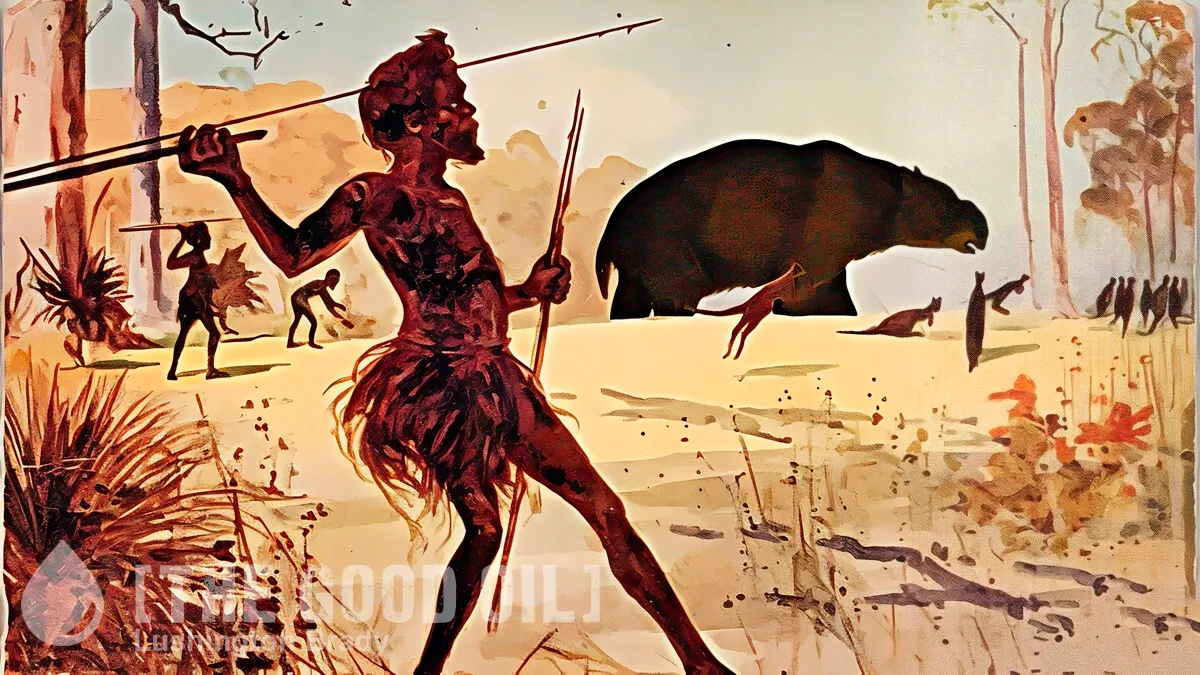
That the arrival of humans in Australia coincided with the extinction of its megafauna is a well-established. Correlation is not causation, of course, but when the correlation is seen repeatedly around the world, from ancient times to modern (the arrival of Māori in New Zealand), makes it pretty hard to deny that humans had a leading role in the extinctions. Especially when, as in Australia and New Zealand, it is well known that the same human arrivals were responsible for vast ecological changes.
In Australia, the arrival of Aborigines led to a period of extensive burning which wiped out much of the dense, wet forests of the eastern seaboard, replacing them with the dry, open forest and grassland preferred by hunter-gatherers. Aboriginal burning continued well into European arrival, showing that, having cleared the forests, Aborigines were determined to keep them clear. In New Zealand, vast swathes of forest on the South Island were similarly cleared by burning.
But we’re supposed to pretend that the same people simply ignored the lumbering tons of fresh meat surrounding them?
This being the ABC, the lies and exaggerations start from the very first paragraphs.
People arrived at Sahul (a past continent made up of Tasmania, mainland Australia and New Guinea) some 65,000 years ago.
There is very little, and heavily disputed at that, evidence to support that claim – and much to rebut it (such as the presence of Neanderthal DNA in the Aboriginal genome). But, such is the anti-truth climate of these times that such a claim is parroted as unchallengeable truth.
It gets worse.
Both before and after this arrival of humans, megafauna was disappearing, with many large species dying out about 40,000 years ago.
The reasons for [megafaunal extinction] are hotly debated by scientists with several factors including climate change and hunting suggested as factors.
Signs of direct interactions, however, between humans and these now extinct species in the fossil record are limited.
‘About 40,000 years ago’ is, in fact, the most likely time of human arrival. But, sure, tell us it’s a coincidence. And of course the fossil evidence is limited: because fossil evidence itself is so limited. Fossilisation is a vanishingly rare occurrence.
[Palaeontologist Mike Archer, a University of New South Wales professor] and the co-authors of the new study now argue there is no hard evidence in Australia that humans wiped megafauna out.
“[The study] is going to ruffle the feathers of those people who are convinced that First Nations people were the primary reason why megafauna species went extinct,” Professor Archer said.
“What we’re saying is the flip side of that argument, is that it’s more probable it was climate change.”
Note the language used: “First Nations people”. This is the latest, politically correct leftist catchphrase imported from the American left. It is absolutely meaningless in the Australian context, where nothing remotely resembling a nation existed until 1 January, 1901. That such PC jargon is infecting scientific discussion shows just how badly academia is tainted by political fashions.
Thankfully, not everyone is surrendering to the winds of politically-correct fashion.
Gifford Miller, a paleoclimatologist at the University of Colorado Boulder who co-authored the egg study, said his research clearly documented human predation of megafauna.
“There are many sites with partially burned eggshells of the megafaunal bird Genyornis that clearly show humans were gathering those eggs, cooking them over a fire, and then eating them, and scattering the eggshell fragments in and around the campfire,” Professor Miller said.
“So human-megafaunal interactions are clearly documented.”
Even Professor PC has to admit that it’s hard to deny.
Professor Archer said while he thought there was no current hard fossil evidence of First Nations people killing megafauna, it was likely that it happened as the giant animals and humans overlapped with each other.
Because, sure, ancient hunter-gatherers would burn tens of thousands of square kilometres of forest to make hunting grounds, but completely ignore the biggest, juiciest hunting on offer.
So, what’s motivating this anti-science nonsense?
Quite simply, it’s the ridiculous conceit that ‘indigenous’ peoples are uniquely wise and sensitive custodians, living in harmony with the natural environment. Which is, frankly, a load of ‘Noble Savage’ bollocks. As Jared Diamond said, ‘tribal peoples often damage their environments and make war’. They’re human, after all, not saints. And the natural environment was their larder – and they exploited it to the hilt.
Pretending otherwise not only infantilises indigenous peoples, but is shockingly corrosive to the institution of science.