Table of Contents
Whatever the merits or otherwise of Anne Rice’s Vampire Chronicles, some of their more interesting moments are when a centuries-old vampire compares the modern world to the Renaissance Venice of his youth: “Dirty… people went about in rags with rotting teeth and stinking breath and laughed at public executions.”
By contrast, when the vampire emerges into the world of the late 20th century, he is astonished.
“The poverty and filth that had been common in the big cities of the earth since time immemorial were almost completely washed away… There weren’t slums where people slept eight and ten to a room. Nobody threw the slops in the gutters... Even the drunkards and lunatics who slept on the park benches and in the bus stations had meat to eat regularly, and even radios to listen to” – Anne Rice, “The Vampire Lestat”
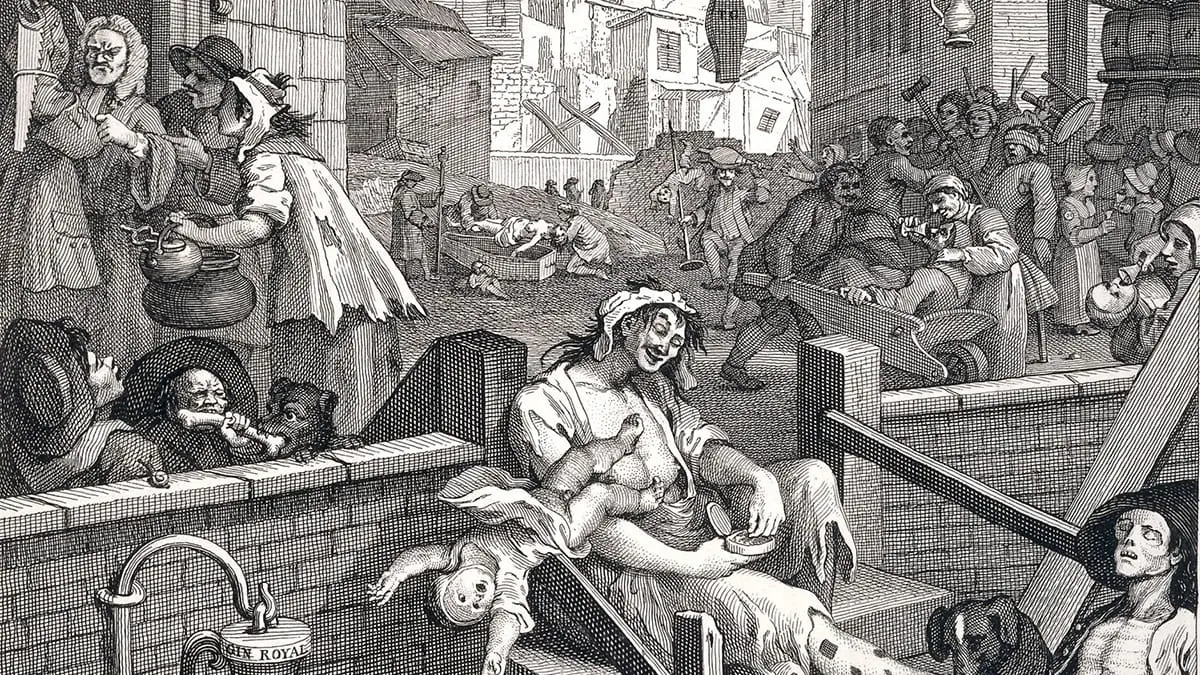
This was the abiding impression of the modern world that leave the visitor from the ‘Good Old Days’ wonder struck: cleanliness. Plenty. Even common people dressing, eating, travelling and looking like aristocrats, with clean skin and white, even teeth.
By contrast, if a modern was transported to the pre-industrial past, the stench alone would almost knock them dead.
French historian Robert Muchembled’s Smells: A Cultural History of Odours in Early Modern Times, as translated by Susan Pickford, describes what the preindustrial past smelled like in frightening detail […]
“The good old days are a myth. The towns and villages of Europe stank horribly in the days of yore.” While certain forms of air pollution are relatively recent, “the foul air of medieval towns” was suffocating.
Animals were being killed nonstop for food, hides, quack medicines, entertainment, and more. Hence “the reek of death constantly hung over towns and cities.” Sometimes the poor air quality even prompted appeals for change. “When the air became too grim to breathe,” outrage occurred. In 1363, several scholars and students at the University of Paris complained to the king about how butchers killed animals in their homes:
“The blood and waste from the animals is thrown day and night into the Rue Sainte-Geneviéve, and on several occasions the waste and blood of the animals was kept in pits and latrines in their houses until it was corrupted and rotten and then thrown into that same street day and night, until the street, Place Maubert and all the surrounding air was corrupted, foul, and reeking.”
Seventeenth-century French historian Henri Sauval described Paris as “black, foul-smelling, its stench unbearable for those from elsewhere; it stings the nostrils from three or four leagues distant”. Contributing to the malodorous mass of air was not just the stinky trades like butchers and tanners, but the mass sewage dumps right in the middle of the city. One, which remained operational until 1781, was a full 10 hectares (24 acres, or 100,000 square metres) of “cesspits full of fermenting sewage and its slaughterhouse piled high with rotting carcasses could almost have been something out of Dante’s Inferno”.
The air was so tainted that it tarnished and bleached Parisians’ silverware, gilding and mirrors. Night-soil men actually died from the smell when they opened latrines.
“The rotting excrement released a dangerous, fetid sewer gas called ‘mofette’ ... or ‘plomb’ (the French term for lead, as the symptoms were thought to be similar to those of lead poisoning) ... Cases of fatal sewer gas poisoning among night-soil men remained a cause for medical research throughout the nineteenth century ... In 1777, the king [of France] appointed a commission of chemists to study the effects of mephitism, a disease which struck fear into the hearts of night soil men.” The sewer gases could kill directly or through incineration when they burst into flames. “The gas sometimes caught fire, as in Lyon in July 1749.”
It was no better outside the city, either. If your idea of rural life before the Industrial Revolution and modern sanitation is one of bucolic cleanliness – all verdant fields and farmers in clean linen smocks – think again.
The countryside our ancestors knew has been described as “a concentration of bad smells: sweaty livestock, poultry droppings, rotting rat carcases, bodies living together in a single room, rubbish hidden in dark corners, and combustible fumes steaming from the dung heap outside the door.” Bizarrely, rural people sometimes took pride in the filth and used “the height of dung heaps as a measure of wealth.”
The people smelled, if anything, worse.
Not only were our ancestors surrounded by horrific smells, but they themselves were often rather stinky. The frequency with which most ordinary people today bathe, wash their hands, and engage in other bodily cleansing would utterly bewilder their preindustrial ancestors, who often feared contact with water as a threat to health. In 16th-century France, “the culture set little store by cleanliness, water being considered dangerous.” Daily bathing would be seen as eccentric and possibly harmful. “The population should be imagined as filthy, crawling with vermin and scabies-ridden.”
At this point, I’m sure you’re making jokes about the stinky, soap-dodging French, but across the Channel in Merrie Olde England the fetor was no less noisome. The air in Elizabethan London was so noxious that by-laws mandated how often houses had to be repainted, as the acrid air stripped old paint away. And the people were just as revolting as any of those garlic-munchers beyond Calais.
If you could visit the past, you would be shocked at the commonness not just of pockmarks but also of oozing open sores. “Venereal disease was the secret epidemic that blighted the entire period,” resulting in such outward signs as “weeping sores on the lips” and “pocky” countenances. Many other diseases also produced wounds that festered and exuded foul discharges on the faces of everyday people. “In this pre-antibiotic era, skin eruptions in the forms of bulging pustules, lesions, acne and gout-induced ulcers could all have become infected, causing chronic wounds.” Such skin problems affected all social classes.
Sure, they had cosmetics, but… believe me, they weren’t much help.
“Caustic and toxic ingredients lurked in many ready-made and home-mixed cosmetics and toiletries. Eliza Smith’s cure for pimples included brimstone (sulphur). Johann Jacob Wecker suggested the use of arsenic and ‘dogs-turd’ as ingredients for ointments to ‘make the nails fall’.
French cosmetics were little better.
In 1522, among the perfume ingredients sold by a French apothecary were litharge (a form of lead), verdigris (which is mildly poisonous), asafoetida (colloquially known as “devil’s dung” for its fecal stench), and sulphur, which is commonly considered to smell like rotting eggs. Eau de millefleurs (“water of a thousand flowers”) was a pretty name given to a concoction derived from the urine or dung of a cow, although by the late 18th century, a less-repulsive version of this creation “made from cow pats, was later made from musk, ambergris and civet.”
Pigeon blood and goat bile were also acceptable perfume ingredients.
And that was just the cosmetics. Medicines might as well have been brewed by the three witches of Macbeth. A highly regarded physician to Louis XIV threw in just about everything but Nose of Turk and Tartar’s lips.
Dog excrement, ground and soaked in vinegar and plantain water, was, in Blégny’s expert opinion, an excellent remedy for diarrhoea when applied as a hot, if rather smelly, poultice. Nosebleeds needed a liquid blend of donkey droppings that were ground and mixed with plantain syrup, certainly intended to attenuate the taste and smell. Fresh pig’s droppings could also be dried on a fire-shovel, ground, heated and inhaled […]
Tobacco, with its strong odor, was also considered a miraculous cure for many ailments.
Indeed, one prescribed cure for drowning victims was literally blowing smoke up their arse.
While your nose was being assaulted, so were your ears. Laws were passed to restrict the hours blacksmiths could bang and clatter away at night. That was far from the only kind of beating outlawed at night: a 1595 London law forbade husbands from beating their wives after nine pm. Not from any concern for the women, but so the neighbours could get a good night’s sleep.
The good old days? Weren’t.