Table of Contents
Tim Donner
Senior political analyst
We have witnessed a number of uprisings in Iran over the years, most notably the so-called Green Revolution of 2009, when untold thousands took to the streets to protest the brutal repression of the revolutionary theocratic government installed by the infamous Ayatollah Khomeini in 1979. But without support from then-President Barack Obama and the West writ large, that rebellion failed; further uprisings in 2019 and 2022 were also thwarted, and the regime managed to maintain its iron grip on power. So why do so many informed observers believe that this time around, the insurrection currently overtaking most of the country is bound to succeed in toppling the regime?
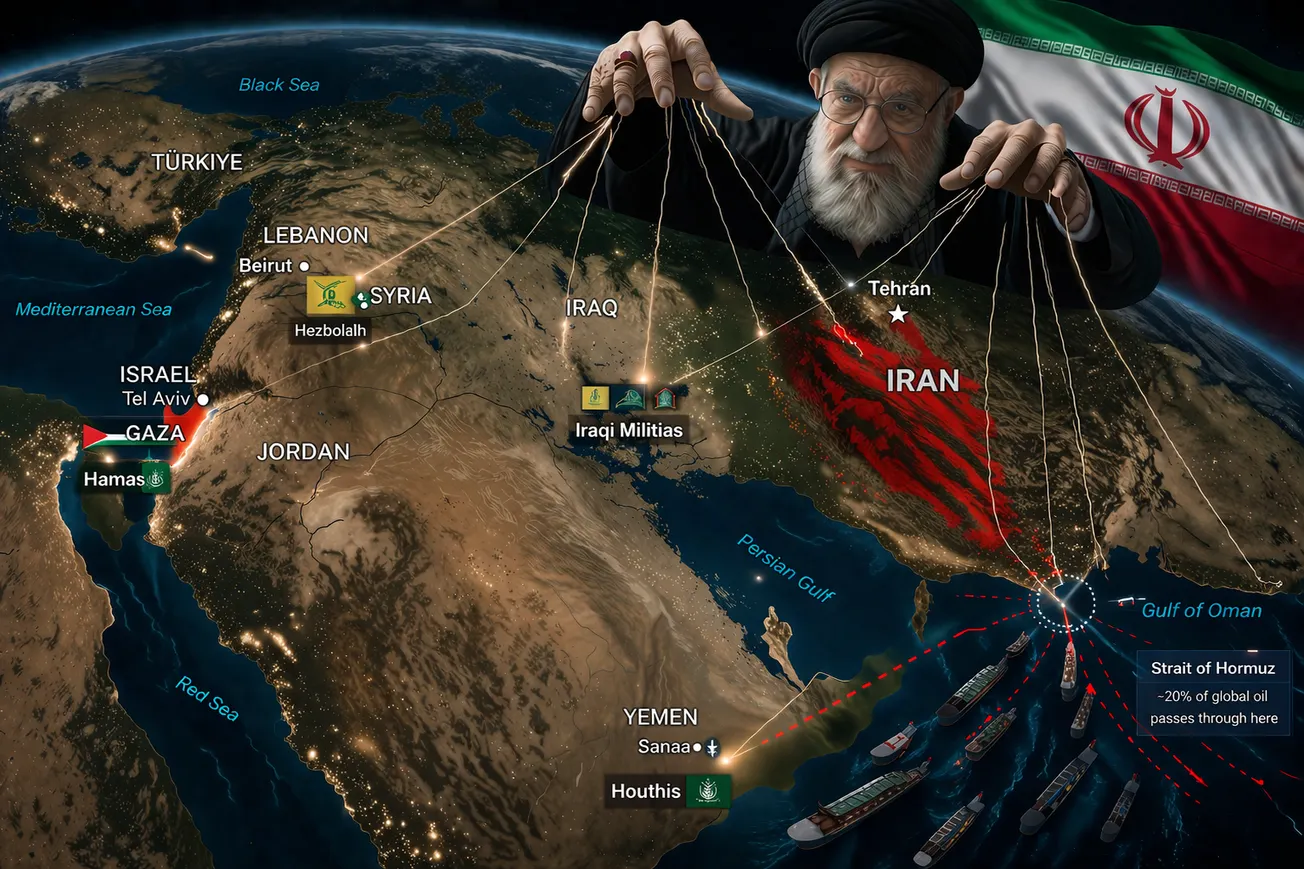
Let us count the ways. From an international perspective, Iran’s murderous proxies, Hezbollah and Hamas, have been decapitated by Israel. The Trump administration employed bunker-busting munitions to obliterate the country’s nuclear ambitions, as well. A subsequent peace deal between Israel and many of Iran’s neighbors has isolated the regime as never before. Finally, rampant inflation, currently pegged at around 40 per cent (compared with less than three per cent in the US), has made the basic necessities of life unaffordable. The regime’s sustained crackdown on dissent has already led to hundreds or thousands of deaths during the current revolt, according to credible reports, and Ayatollah Khamenei, in power since the death of Khomeini in 1989, has been reduced to ordering a nationwide shutdown of the internet.
Finally, the protesters have been emboldened by the presence of a powerful and committed ally in the West who appears fully prepared to offer aid and comfort to those demanding the ouster of the regime. That would be President Donald Trump, who took to Truth Social on Saturday and announced, “Iran is looking at FREEDOM, perhaps like never before. The USA stands ready to help!!!”
The Counter-Revolution Takes Hold
The walls are undoubtedly closing in on the rulers who killed the golden goose that once made Iran strong, stable, and prosperous. But unlike Venezuela, where the totalitarian president and drug lord Nicolás Maduro was captured in another breathtaking military operation by the 47th president, there is no obvious successor in place, such as the democratically elected Maria Corina Machado, to assume the reins of power and stabilize the country.
Or is there? For all its ancient history dating back to the days of the Persian empire, Iran is now a country dominated by the young. The average age in the Islamic Republic is 32, and 70–80 per cent of the population was born following the revolution 47 years ago. This means that the experience and memory of the Shah, who was driven into exile by Khomeini and mobs of his supporters almost five decades ago, is increasingly just a distant memory that no longer animates the long-oppressed Iranian citizenry. Simply put, the overwhelming majority of Iranians who have lived only under the brutal theocracy currently in place appear ready and willing to drive it from power. But will they be able?
Enter Reza Pahlavi, the 65-year-old son of the deposed Shah who resides in the US and has been ramping up his media and online presence, inciting protesters in the streets of Tehran and in every other major city in Iran. He upped the ante on Sunday, announcing on Fox News that “I’m prepared to return to Iran at the first possible opportunity. I’m already planning on that. My job is to lead this transition to make sure that no stone is left unturned, that in full transparency, people have an opportunity to elect their leaders freely and to decide their own future.”
Dreams of a Democratic Iran
It is notable that Pahlavi refers to “this transition” as if it is already in the works. He is either wishing upon a star or, more likely, he understands the seriousness of his country’s uprising and the likelihood it will eventually topple Khamenei and the mullahs. How long can the regime cling to power at the point of a gun? According to the Jerusalem Post, the death toll in Iran over the weekend is estimated to be in the thousands after security forces indiscriminately fired into crowds of demonstrators. The country has become a tinderbox, just a lighted match away from exploding in flames.
Crowds of protesters have also been heard chanting for weeks, “Javid Shah,” meaning “long live the Shah,” “This is the final battle! Pahlavi will return,” and “The Shah will return to the homeland.” It is a truly extraordinary and transformative show of support for the Pahlavi dynasty, driven from power long ago amid widespread unrest over its autocratic rule, political repression, and alliance with Western powers. But Pahlavi is not calling for the restoration of his family dynasty. He has advanced a specific five-point framework for transition to democracy – a call for national unity, civil resistance, international pressure, economic disruption, and preparation for a democratic transition.
It is impossible to overstate the significance of the revolt in Iran. If this counter-revolution succeeds, it will reverse the cataclysmic revolution of 1979 that destabilized the entire region and has threatened world peace ever since. Like the takedown of the drug- and corruption-drenched leader of Venezuela, the toppling of Iran’s murderous and rabidly anti-Western, anti-Israeli regime would lead to dancing in the streets of Tehran and much of the civilized world. And Reza Pahlavi stands to be the catalyst to make Iran great again.
This article was originally published by Liberty Nation News.