Table of Contents
It seems an almost universally predictable pattern: the more top-down micromanagement and the more taxpayer’s money thrown at anything, the worse it gets. Education? Despite steadily pouring more and more money into education, results just keep falling. Despite decades of massive funding of public hospitals, waiting lists are blowing further and further out. Indeed, while we spend more and more billions on public health, outcomes have declined markedly in the last 20 years.
It’s almost as if the system itself is the problem.
Despite decades of ever-spreading therapy culture, and vast public sums spent on ‘mental health initiatives’, things just keep getting worse. Naturally, government and public health bureaucrats will blame anyone but themselves. The latest scapegoat is social media.
That seems attractive enough on the surface: we all know the lure of ‘Facecrack’, and how toxic the online environment can be. But, for all the deluging with ‘cyberbullying’ scare stories, is the supposed link between social media use and mental health as spurious as the repeatedly debunked ‘link’ between movies, video games or heavy metal music and violence and suicide?
That’s the thought that keeps running through Patrick McGorry’s head. What if it’s not Facebook or YouTube or TikTok? What if we’re wrong? […]
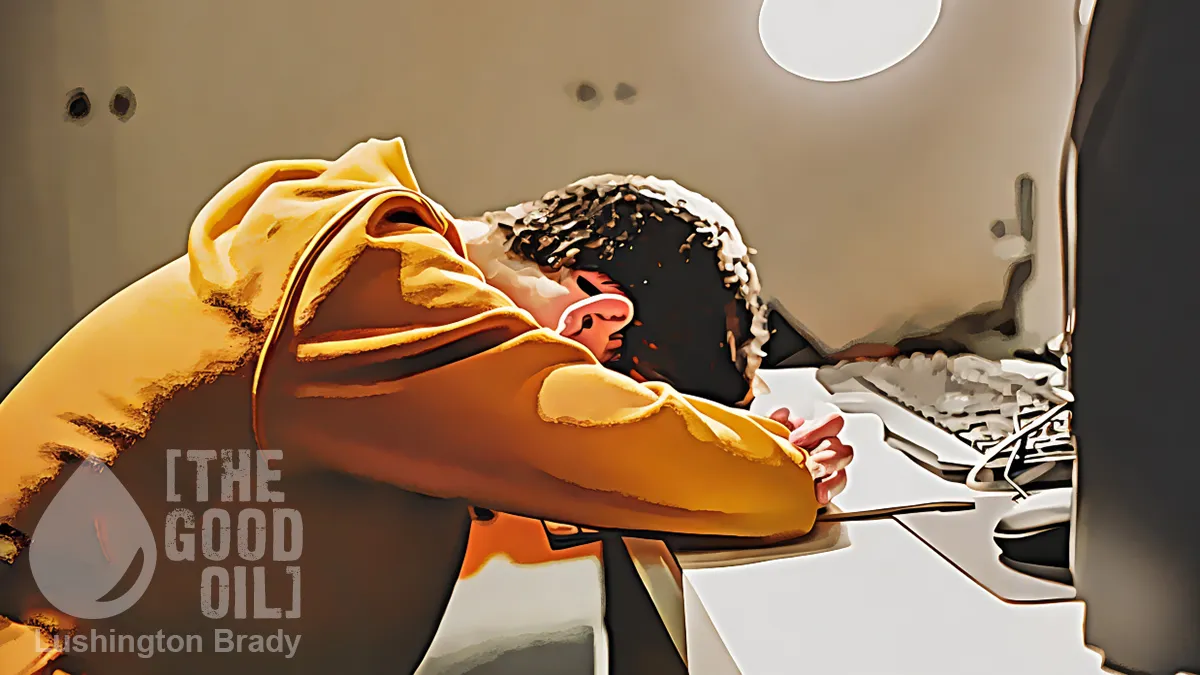
The data suggests there has been a dramatic decline in the mental health of our current generation of young people. “And maybe the one before,” McGorry said. “It’s been happening for 15 to 20 years.”
And that just happens to roughly correlate with the launches of Facebook and Twitter.
Young people are heavy users of social media. They also suffer from mental ill-health. This does not mean the former causes the latter; we lack robust data showing that relationship. Correlation does not mean causation. “It is,” McGorry said, “a gross oversimplification”.
But while everyone should know that correlation is not causation, such correlation is an easy out for the nanny-staters.
The Albanese government will ban children under 16 from using social media from December. Prime Minister Anthony Albanese promoted the ban at the UN on Thursday, where he shared the stage with Bathurst mother Emma Mason, whose 15-year-old daughter, Tilly, took her own life after being relentlessly bullied by classmates on social media.
Except that she had also been relentlessly bullied for over a decade in real life. But never underestimate the willingness of public policy ghouls to pose on the graves of dead children.
It’s a powerful message. It’s also, for McGorry, a deeply troubling one. “It’s an easy target. A simple explanation,” he says.
It is easy for parents to believe social media is the total cause of their kids’ poor mental health. “But no experts in the youth mental health field believe that. And government did not listen to us when this policy was being formulated,” McGorry said.
So, if not social media, then what? Because something is apparently going catastrophically awry.
The prevalence of diagnostic-level mental disorders in Australians aged 16 to 24 jumped 50 per cent between 2007 and 2022; nearly 50 per cent of young women have a diagnostic-level condition.
Thirty-two per cent of this group now qualify as having medically diagnosed anxiety, up from 15 per cent in 2007.
Importantly, this is not self-report data, but from a study using an interviewer with a standardised World Health Organisation questionnaire.
But what if it’s a mirror of the so-called ‘autism epidemic’, which is almost entirely an epidemic of diagnosis, not to mention bandwagon-jumping? (‘Neurodiverse’ is so hot right now.) If you think such a social contagion is unlikely, then you’re not paying attention. From the 18th century ‘Werther’ suicide craze, to more recent phenomena like TikTok thots pretending to have ‘Tourettes’ because they think it’s ‘quirky’ and ‘cute’, people will jump on the unlikeliest bandwagons.
Especially if they’re encouraged from above.
So, what if the spread of an all-consuming therapy culture is a self-fulfilling prophecy?
Some scientists argue efforts to raise awareness of mental health problems actually pushed young people to interpret mild distress as mental illness.
But blaming social media certainly lets politicians, economists, not to mention older generations, off the hook for the world they’ve created. Not to mention ‘crises’ which have been spun out of very thin cloth indeed into a suffocating blanket of doom-saying.
McGorry’s hypothesis is at least three huge structural forces are reshaping the world young people are entering into: a housing crisis, a crisis of job insecurity and a crisis of global heating. “Everything in their life is more fragile,” he said. “Conditions are stacked against them” […]
“We have effectively been institutionally gaslighting a whole generation of children and young people by telling them the problem lies between their ears, rather than in our economic and social policies,” said Community Mental Health Australia chief executive Kerry Hawkins.
But that would mean the Boomer generation sitting at the top of the heap would have to both give up some of their grotesquely outsized, largely unearned, share of the pie and to shut the hell up with their ceaseless yammering about ‘climate change’.
That will happen some time after Satan breaks out the winter woollies.