Table of Contents
The timeline truly is healing, folks: for the first time in 35 years, Billboard’s Top 40 has no rap songs.
Now, I’m not one of those reactionary old farts who angrily yells at the clouds about ‘rap crap’. There is a very limited repertoire of rap and HipHop from over the last few decades that is genuinely good. Even predating pioneers like Afrika Bambaataa, DJ Kool Herc, pioneer of the ‘breakbeat’ technique, and Grandmaster Flash, there were the likes of Gil Scott Heron. In the ensuing decades, there were occasionally genuinely great rap acts, but the ratio of crap to greatness remained one of the lowest of just about any modern music genre.
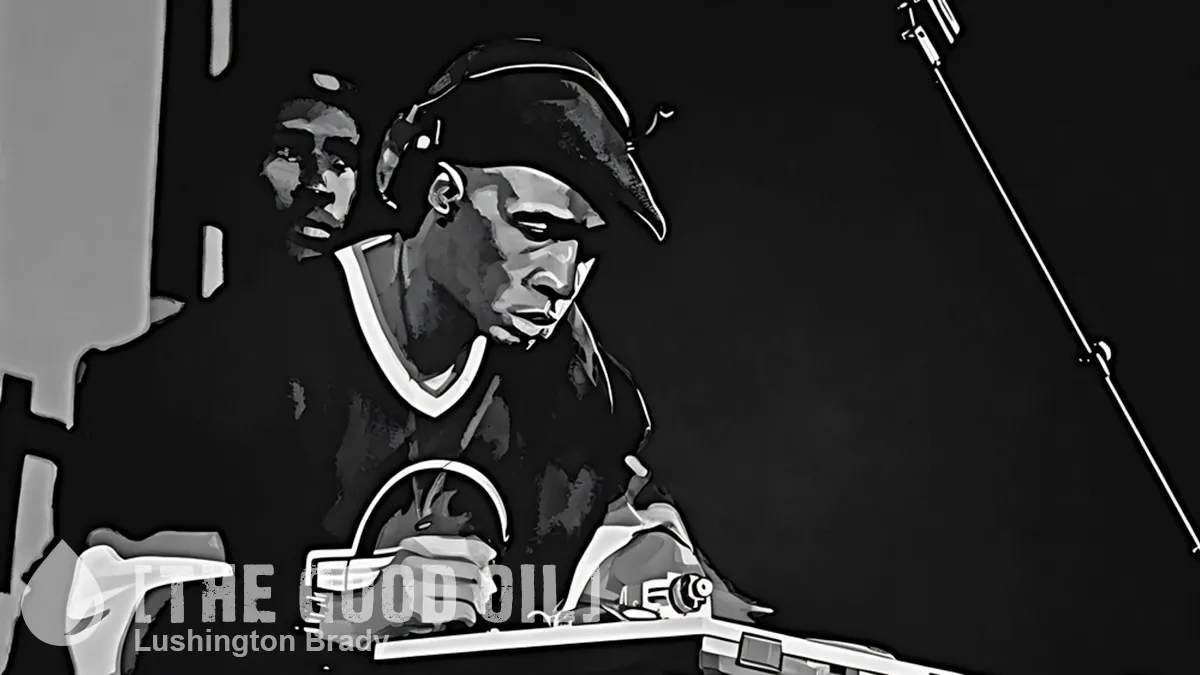
Especially once digital technology made the dizzying old-school techniques of DJs like Terminator X obsolete. Even his annoying bandmate Flavor Flav hid a formidable musical talent behind the grills and stupid clocks. The advent of sampling programs, though, made any fool a ‘HipHop producer’ – and it too often did.
What was even worse, though, was that a genre where the word was literally its defining characteristic should be so devoid of actual words, but rather became an endlessly parroted litany of stock-phrases distinguished only by their paucity of meaning.
I just decided to listen to that song – “Crank That” – for the first time in two decades. I can now conclusively say that I know what it would be like to endure a lobotomy – a mind-deadening collection of hollering non sequiturs.
But to me, that’s how all rap sounds. Contemporary or classic, British or American, a call for the Real Slim Shady to make himself known or a hymn to the virtues of a “Wet-Ass Pussy” – it’s all just as grotesque.
It’s not about being a ‘rock snob’, either. Although, yes, too many of the ‘rap crap’ old men shouting at clouds have barely budged beyond their old Led Zeppelin and Creedence records. Even the Sex Pistols, contrary to Malcolm McLaren’s silly PR, could play (guitarist Steve Jones went on to be a much-in-demand LA session player). I’d challenge Bob Vylan to play anything more challenging than dropping one of a handful of bog-standard samples of someone else playing into FL Studio.
Yes, I am a snob. Even if all I took from music was that hitting the “demo” button on a keyboard does not endear you to your teacher, I still know my Bach from my Beethoven.
I know what requires genius to write, talent to play and a touch of the sublime to enjoy. Rap is not that: desiccated street-poetry devoted to eulogising guns, bitches and bling to the serially brain-dead.
That so many of its stars seem to end up in prison for shooting each other is a testament to its societal value. Rap is short for “repartee”, but the last thing one can accuse the genre of is wit.
So, why was it so popular for so long? Mostly because the only people more full of shit than the mostly middle-class kids pretending to be ‘gangstas’ making it were the middle-class kids thinking they’re ‘gangsta’ for listening to it. At least the rappers were (mostly) black.
For those imitating it on my school stage, it brought a level of inherited cool stemming from America’s black inner cities. Yelping about gang violence in Chicago seems so much more transgressive than admitting you’re an accountant’s son from Rickmansworth.
Besides, like those upper-middle-class Trustafarians of limited musical talent pretending to be communist revolutionaries Rage Against (or, more accurately, For) the Machine, rappers can only make so many megabucks before they have to stop even pretending to be hood rats.
With the so-called “Queen of Rap” Nicki Minaj addressing the United Nations in defence of persecuted Christians, one wonders whether America’s hip-hoppers are realising the soullessness of their profession. Far more satisfaction will come from a silent prayer than wiggling one’s bottom, rolling off profanities, or, shudder, “making it rain” […]
But even in its homeland across the Atlantic, rap might finally be losing its appeal. This month, for the first time since 1990, no hip hop songs appeared in the US Top 40. On the eve of their 250th year, are Americans finally developing a sense of taste?
Would that it were so. Instead, what’s really happened is just another downward turn in the soulless corruption of the mainstream music industry.
But while Minaj’s outspokenness about the killings in Nigeria is creditable, the reasons for hip hop’s exclusion is much more mundane: a new algorithm that excludes songs that have been lagging around the chart’s depths for too long.
The charts – slaves to the algorithms – are now dominated by an ever-smaller number of artists, with Taylor Swift and Sabrina Carpenter’s latest making the running. This is part of a long-term trend of melodic dumbing down, with a study at Queen Mary University of London declaring that songs have been a third less complex since 1950.
Not just that, but a long-term process of corruption, staggering even by the music industry’s low standards.