In Ben Elton’s novel Popcorn, a tearful young starlet relates, on a daytime celebrity show, how a director had responded to her revelation of uncovering ‘hidden memories of emotional abuse’: “He said that I must be very relieved… He said that it meant I was off the hook. That I could do what I liked – take drugs, sleep around, steal stuff, be a total loser – and none of it would be my fault because some hypnotherapist had granted me victim status.”
As the ‘callous’ director explains later, “Everyone is a fucking victim these days, and we’ve all got our victim-support groups… Everybody looking for an excuse to fail.”
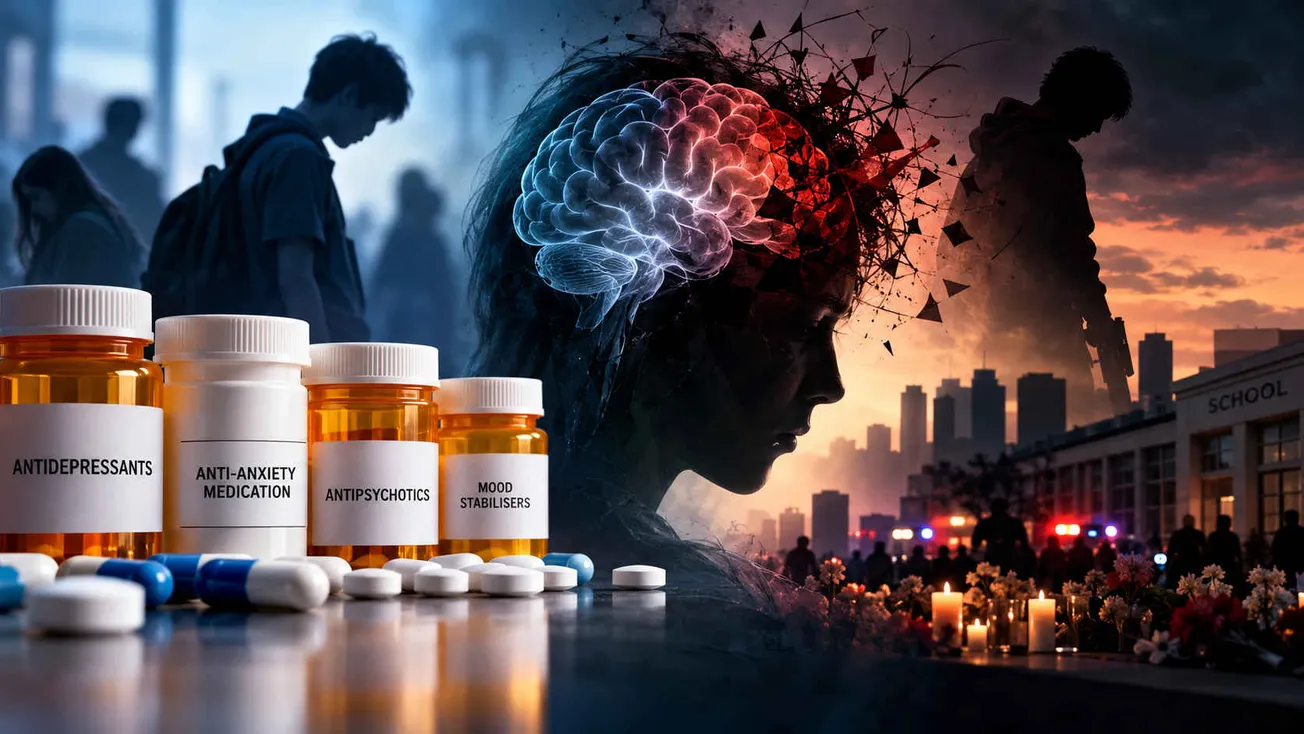
And fail, they unerringly do. It seems a paradox of an age of Therapy Culture that we spend more and more, and yammer endlessly on about ‘mental health’ and ‘resilience’, yet more and more people are miserable failures. We spend more money on therapy than ever – we even paint trees blue, as if that somehow makes a jot of difference – and mental health statistics just keep getting worse.
It’s almost like the ‘cure’ is what’s making us sick in the first place. We bang on endlessly about ‘building resilience’ while we turn out generations of snivelling sissies.
As one who’s always been keen on putting their hand up and admitting to their faults (a perverse form of boasting, I suspect), I was always suspicious of the medicalization of character flaws which apparently render us helpless in the clammy hands of Fortuna. It was bad enough when friends who’d generally always seemed highly capable jumped on the ADHD bus in later life, suddenly flinching at loud noises when they’d spent a good deal of their lives dancing to ear-splitting techno. But it was another sort of annoying when ex-friends who were merely awful people started blaming all their past ghastliness first on ADHD and then – still not feeling special enough – on autism, a serious condition which affects a tiny amount of people.
Therapy-speak has become the new vernacular of the perpetually aggrieved. Terms once reserved for genuine clinical conditions are now flung about like confetti at a wedding: toxic, triggered, narcissist, on the spectrum. The result is that everyday human failings – lateness, selfishness, bad temper, plain old being a bit of a shit – are rebranded as medical conditions for which the sufferer bears no responsibility.
Even some psychologists have had enough of their shit.
In the Times of London this week, Charlotte Alt writes: “Therapy-speak, which is the casual use of psychological jargon, has made its way into everyday conversation and is thrown around in millions of videos on social media purporting to explain how to spot if someone is ‘toxic’ or if something is ‘triggering’.” Experts warn that casual use of terms which have specific meanings in clinical contexts risk diluting their significance and “over-pathologizing” everyday human emotions. Or, as the clinical psychologist Marianne Trent put it: “One of the trickier aspects of being a human is to feel awful, but it doesn’t mean that every uncomfortable feeling we have is a mental health condition. In the same way, not every difficult person has a personality disorder.”
You’re not oppositional: you’re just an arsehole. You’re not ‘working out your childhood trauma’: you’re just a whore. Someone I knew belatedly started claiming to have ‘recovered’ memories of childhood trauma, ‘which is why I did so many drugs’. Could have fooled me, mate: from where I stood, it seemed pretty clear that it was just because all your friends were doing them and you liked it.
It’s not just me. The similarly jaded journalist Katie Glass recounts: “People turning up late/forgetting plans/not answering texts – and blaming their ‘neurodiverse brains’.” One friend’s ex claims to have “Oppositional Defiant Disorder” which means he gets angry if she asks him to do anything with their children. Another one has a funny line about dating self-diagnosing men in which mental health is the new ‘It’s not you, it’s me’ because they all blame their selfishness on it now: “I’m autistic, I can’t help behaving badly!”
Similarly, in a particularly odious ‘stolen valour’ case, a woman’s husband claimed he was violent because of his experiences in the Vietnam War, which he related very convincingly and movingly. Then she saw the movie Hamburger Hill, and realised it was, beat-for-beat, her violent husband’s ‘war memories’. He really was just an arsehole.
Yet the self-diagnosis industry rolls on. Autism diagnoses have risen 640 per cent this century; ADHD nearly 1,600 per cent. One in four Britons now claim disability status, driven not by those who cannot walk or who are dying of cancer, but by people who feel a bit ‘miz’. Britain spends more on health and disability benefits than on defence.
It must be even more galling for people who are genuinely disabled. Here they are, actually struggling with a debilitating condition, and then they see some witless ‘influencer’ bragging that their ‘autism’ is a ‘superpower’.
Doctors know this but few speak out. Many privately describe the visible ‘exhilaration’ on the faces of patients they have just diagnosed with in-vogue conditions such as ADHD. They’re gobsmacked when they see the same patients announce the news on social media as though they’ve won the Lottery rather than received confirmation of a lifelong disorder […]
The ‘Worried Well’ have become the ‘Smug Sick’ – sensitive flowers so complicated and precious that we ‘neurotypical’ (the narrow-minded Normies who are only good for paying the taxes that enable the ‘neurodiverse’ to put their feet up) can never begin to understand the exquisite torment of being in their very special shoes.
The incentives are obvious. Corrections departments, imams, clinicians and the diagnosed themselves all benefit from the fiction that these programmes and labels ‘work’. The patient gets absolution. The professional gets a fee and a clear conscience. The system gets another tick in the ‘successful intervention’ column. Meanwhile, ordinary character flaws are pathologised into oblivion and personal agency is quietly euthanised.
Life used to be simpler when we were less ‘compassionate’ but far more brutally realistic. People got drunk and took drugs because it was fun. Unless they were actually hearing imaginary voices, some people were just fuckwits.
They still are: they just get a taxpayer-funded life of Reilly for it.