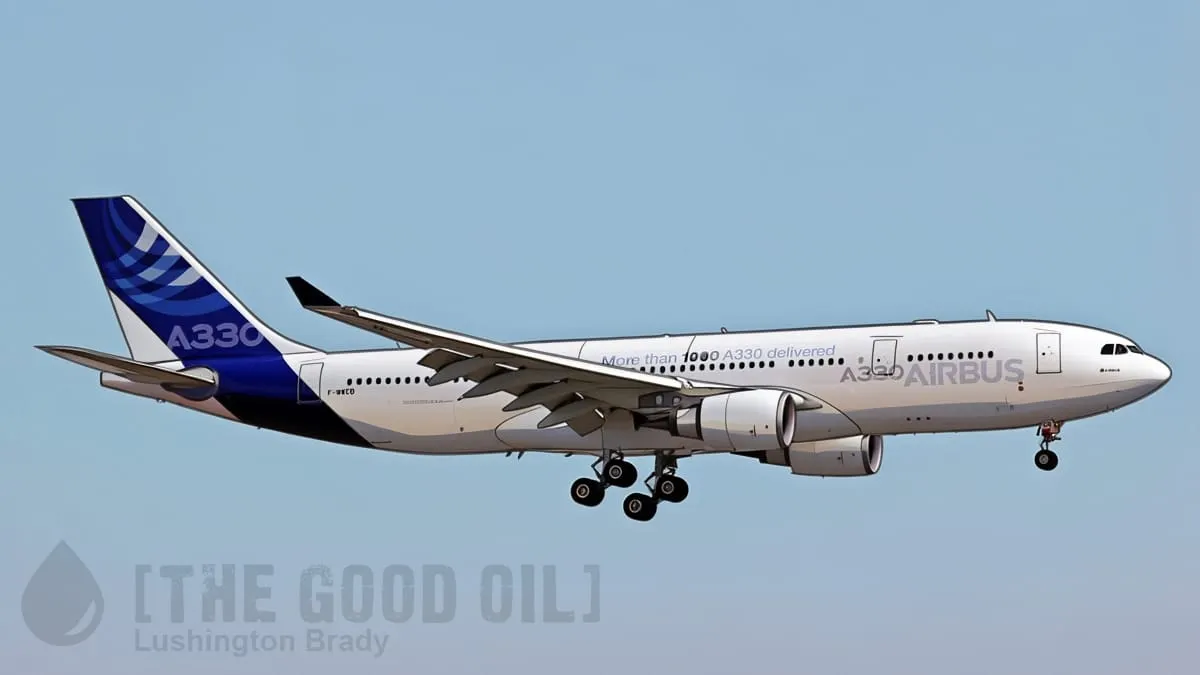
In James May’s book How to Land an A330 Airbus and Other Vital Skills for the Modern Man, the basic advice for the title skill was: don’t bother. As May pointed out, not only is an A330 Airbus designed, post-9/11, to make sure that passengers can’t get into the cockpit, but they’d be wasting their time if they did. That’s because the A330 is such a pure marvel of modern aerospace engineering that, not only can it fly itself, at a pinch it can handle the landing, too.
We are indeed at the point where, for routine flights, we could get by without human pilots. But, not only is there the psychological necessity of having a living, breathing human at the controls, when the flight becomes not routine, a skilled human pilot is an existential necessity. Just ask the passengers of Chesley “Sully” Sullenberger.
Just so long as that living, breathing human is awake.
High over Indonesia, a Batik Air Airbus A320 was doing exactly what modern airliners are designed to do: flying itself. Autopilot engaged, steady at 36,000 feet, 153 passengers and six crew aboard, on a routine hop from Kendari to Jakarta. In the cockpit both seats were occupied, yet neither pilot was conscious.
Air traffic control called. No answer. Called again. Still nothing. For 28 minutes the radio remained silent while the aircraft, locked on its last heading, drifted steadily off the assigned route.
Behind the two control sticks, both pilots are fast asleep, and the plane is drifting off its route.
How do two trained pilots, both cleared as fit to fly that morning, end up asleep at the same time?
How does that happen? Because they were both knackered, and, while both men had passed the pre-flight medical checks that morning, that doesn’t measure anything as footling as fatigue. Heart rate, blood pressure, eyesight: they passed all of those with flying colours. But there’s no quick test for a heavy night or a bad sleep, so a pilot can clear every formal requirement and still climb into the seat running on fumes.
The co-pilot was healthy and badly short of sleep, worn down by month-old twins at home and a house move, and he did not flag how tired he really was.
He had logged the required time off, but not that he didn’t catch a wink in any of them.
Apparently the captain hadn’t done much better. When he asked to ‘rest his eyes for a bit’, once they reached cruise altitude, he handed control to the co-pilot – and both of them set course for the Land of Nod.
And the plane did exactly what its designers had intended: flew on, straight and level, no problem.
Its autopilot held the last heading faithfully, but a held heading is not the assigned route, so the A320 slid steadily away from where it should have been while controllers called with no reply. For 28 minutes the radio went unanswered.
The aircraft itself never misbehaved. It did not stall, dive or lose altitude. It flew straight and level the entire time. The danger was subtler and, in busy airspace, still real: an airliner off course and out of radio contact. When a call finally got through, the co-pilot woke, presumably made some feeble excuse and the crew hurriedly corrected course. They landed without injury.
Indonesia’s transport safety committee traced the episode to unmanaged fatigue. The airline required a cockpit check every 30 minutes, yet never assigned clear responsibility for performing it. An exhausted pilot left alone at the controls was effectively asked to police himself. The paperwork had a hole, and two tired men fell through it.
The incident was not a freak mechanical failure. It was the predictable result of rest rules that lean on self-reporting from people who are already too tired to judge their own condition accurately. You can measure blood pressure. You cannot fully measure the cumulative drag of a new baby and a chaotic household. The only reliable fix is to build genuine rest into the roster rather than leave it to an exhausted and fallible human’s self-assessment of just how rooted they really are.
Modern airliners are astonishing machines. They can hold altitude, track a heading and, in many cases, land themselves. What they cannot do is decide, in the middle of the night over the archipelago, that both humans in the pointy end have quietly checked out. For that, we still need the pilot: living, breathing and preferably awake.