Table of Contents
As Ernest Benn said, “Politics is the art of looking for trouble, finding it whether it exists or not, diagnosing it incorrectly and applying the wrong remedy.” Few politicians are better at that dark art than the green left. Not content with wrecking the nation and beggaring households with their twin dogmas of mass immigration and ‘Net Zero’, they’re determinedly ruining the environment in the name of saving it.
Creating explosive bushfire conditions with their relentless campaigns against fuel reduction burns, or pushing Tasmania to the brink of environmental disaster with the Gillard-era carbon tax were, and are, disasters. But it’s not just the big stuff: the green-left also love to make our lives just that little bit more irritating with useless, pettifogging ‘environmental’ laws. The ban on plastic straws, for instance. There’s nothing quite like watching the paper straw that came wrapped in plastic fall to soggy pieces to engender seething rage against ‘environmental’ idiocy.
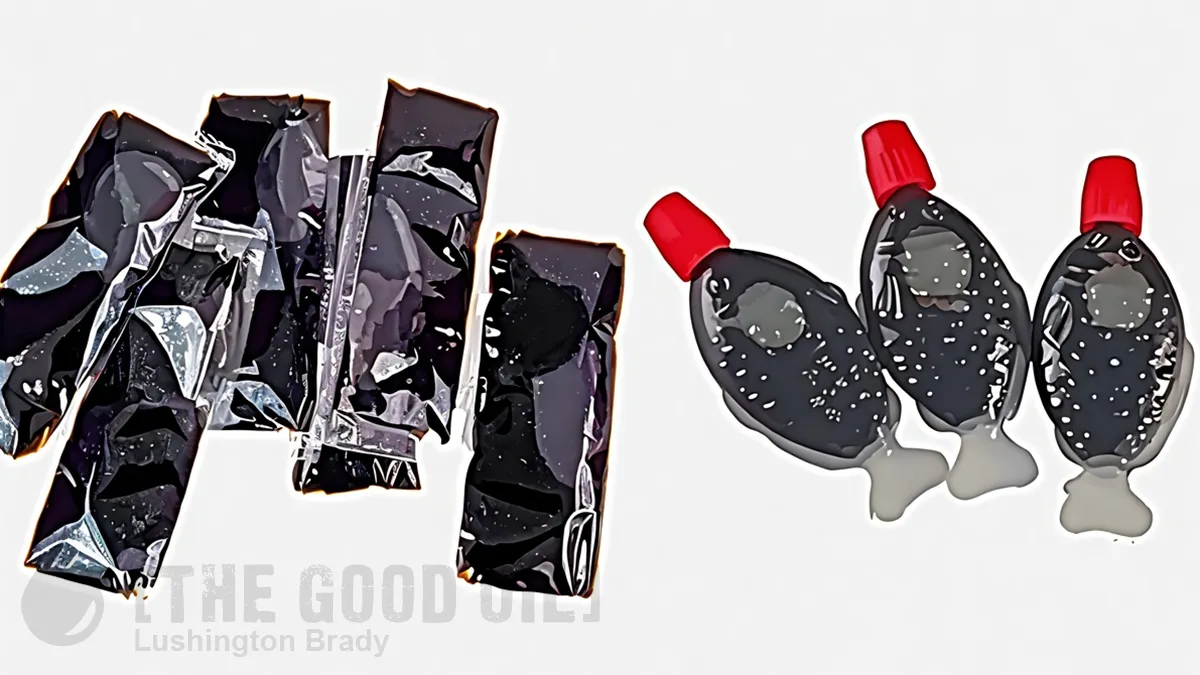
Unless it’s getting soy sauce all over yourself as you try to rip open the plastic sachet that you were forced to use instead of the plastic ‘fish’ container.
Under South Australia’s new regulations, soft plastic squeeze packets will still be permitted. A video on TikTok with over 256,000 views shows one of these alternatives sitting in a tub that used to contain soy sauce fish.
Big surprise: the new packets are a gigantic pain in the arse, while doing bugger-all for the environment.
The new sachets contain less plastic than soy sauce fish, but they remain difficult to recycle. Many people responded to the TikTok saying they weren’t impressed with the change. “It’s literally still plastic,” one wrote. “So they replaced plastic… with inconvenient plastic?” someone else added.
Other sushi lovers have complained that they tend to be messy to use. “They’re so hard to open,” was one common complaint. “They’ll probably end up being a massive fail [and] they’d spill all over everyone,” someone else said.
It’s likely few will be recycled, because Australia’s soft plastic recycling scheme still hasn’t fully recovered since the supermarket-facilitated Redcycle collapsed in 2022.
While they certainly seem wasteful, how much plastic do they really save? A typical soy sauce fish contains about a gram of plastic, to three grams of soy sauce. A squeeze packet contains about 0.7 grams of plastic, without six grams of sauce. So, technically, a squeeze packet uses less than quarter of the plastic. But – here’s the rub – the packets are both single-use. So, the same number of packets will be used, meaning that the actual reduction of plastic is much smaller.
There’s a more obvious solution.
Jeff Angel, the founder of the Total Environment Centre, is calling on restaurants to offer bottled soy sauce, rather than just switching to another disposable plastic alternative.
This is much more sensible, but, again, there’s just one problem: people tend to just pick up their sushi, already boxed, and walk, rather than sit and use bottles at a table. What would be required is a significant change in behaviour. Which isn’t really such a big ask, if we really do want to reduce plastic waste.



![[The Good Oil] Stuff Up of the Day](/content/images/size/w1304/format/webp/2024/09/Stuff-up-image-1.webp)