Table of Contents
The scandal that finally brought down the Gough Whitlam government was the Khemlani Loans affair. It emerged in 1975 that the government had secretly and illegally tried to borrow four billion dollars (equivalent to 350 billion dollars today) from a shady Pakistani loan shark. The staggering loan amount and extortionate interest rates would have seen Australians still paying off the money today.
Even after being dismissed, Whitlam tried to borrow half a million (4.5 million dollars today) from Saddam Hussein’s Ba'ath party to fight the subsequent election.
Currying up to brutal dictators and foreign loan sharks is still in Labor’s DNA.
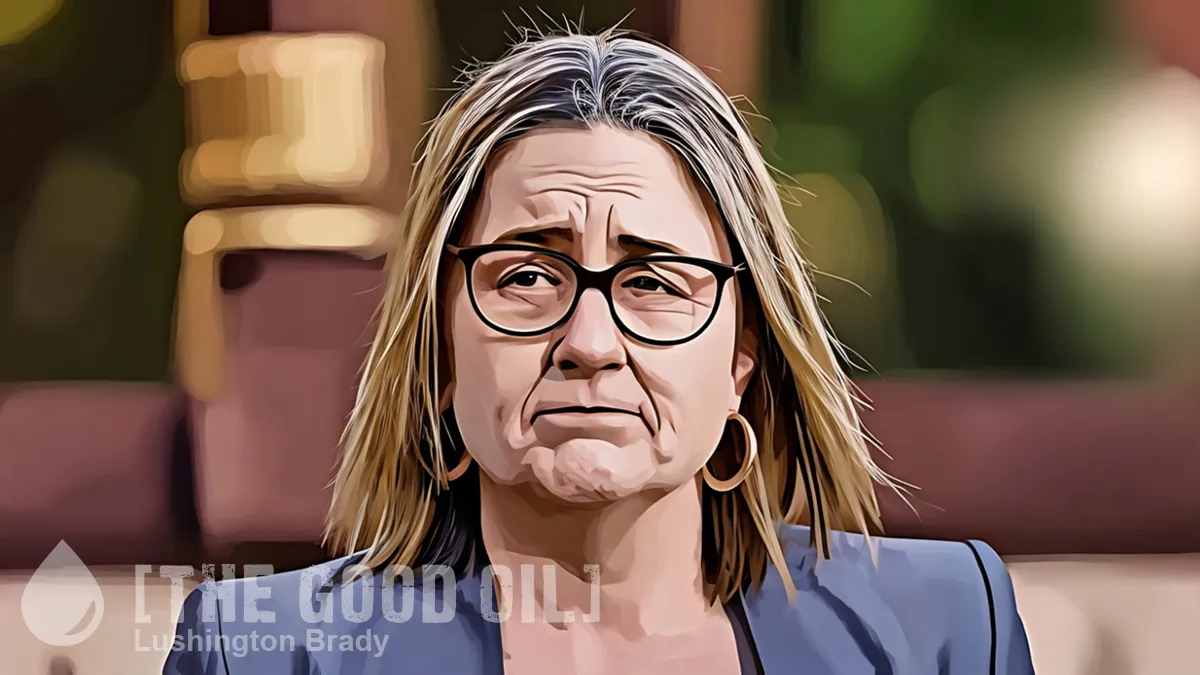
Jacinta Allan’s new China strategy could set Victoria on a collision course with Canberra after the premier said she would not be deterred from asking Anthony Albanese to raise the international student cap and flagged more Chinese investment in hi-tech industries.
Ms Allan on Monday night in Beijing released the state’s new China plan, which is centred heavily on increasing the more than 64,300 Chinese students who enrol in Victorian universities. The strategy aims to position Victoria as the “favoured destination” for Chinese students by expanding the state’s transnational offerings, promoting TAFEs and advertising the state “as Australia’s safest and most welcoming destination for international students”.
Make no mistake, this is all about getting their claws on Chinese money. When they talk ‘foreign students’, they’re really talking about ‘foreign money’. The ‘China strategy’ also entails chasing tens of billions of ‘investment’ in Victoria’s debt-ridden, collapsing, infrastructure programs.
Allan is doing the equivalent of approaching a shady guy in a back alley who’s holding a briefcase full of money.
And so Victoria arrives at the last stop on its fall from grace. Its only recourse is the sovereign equivalent of a payday lender or loan shark. China.
China is, however, a much more dangerous creditor or investor than the average loan shark for a couple of reasons. First, China has a long-term perspective. It doesn’t need high short-term returns but can play a patient game. It can offer investment on initially attractive terms knowing that over the long term, it can ratchet them up when the borrower or investee is in an even weaker position. Second, China is a strategic not a commercial investor. It can invest in things with poor commercial returns if the political or strategic payoff is there. Finally, and most worrying, the strategic payoff that China seeks is geopolitical dominance.
Unlike commercial investors whose motives and reactions are predictable because they are primarily financial, China’s motives are opaque and depend on its perception of what gives it greater power. And its payoffs can be huge. Nobble the right cabinet minister and you can block a treaty, or two. Witness the shenanigans in Papua New Guinea, where a treaty set to be signed with Australia was not so mysteriously delayed after a meeting with the visiting special envoy of China’s President Xi Jinping.
Like Whitlam in the ’70s, Allan is running a broke state with no chances of getting herself out of the hole. Taxes are already at breaking-point, with investors fleeing to other states.
The cost of doing business in Victoria is growing so dramatically that it risks becoming uninvestable for ordinary commercial enterprises […]
It’s highly unlikely any commercial entity – or even any sovereign wealth fund, pension fund or other entity with a commercial imperative – would sink money into an almost uninvestable state. That is why Allan is visiting the last-chance saloon.
Allan needs more money to get her through the next election and China may well be the only place she can raise it.
Which is exactly the position Whitlam was in, in 1975.
Allan is proving even more cluelessly reckless than even Whitlam.
While Kevin Rudd was warning us that “in the Indo-Pacific, a principal driving factor in the pan-regional disruption that we are facing is the rise and rise of China, strategically, militarily and economically”, Allan was busy courting the disrupters, and aiding and abetting the disruption. While Allan was in China, Lieutenant General Susan Coyle, who leads our defence forces’ digital warfare effort, was telling a conference we are “in conflict in the cyber domain now”.
And the Chinese are playing her like a fiddle.
Alastair MacGibbon, chief strategy officer at Cyber X and a former cyber security adviser to former PM Malcolm Turnbull, used the same conference to urge public officials not to ride in Chinese-made EVs.
“Those cars that we talk about, whether they are electric or not, are listening devices, and they’re surveillance devices in terms of cameras,” he said.
While in China, was Allan riding around in a mobile spy vehicle talking to her colleagues about things that China would find fascinating – and useful to its objectives?
Maybe I was wrong to characterise her as approaching dodgy loan sharks in back alleys. It’s more like she’s standing on the Pacific street corner, leering, “Me love you long time!”