Table of Contents
As I’ve been writing, Japan is working hard on turning what was long the realm of science fiction into hard science reality. The technology in question is deep-sea mining. Deep-sea mining is a potential bonanza of critical rare earths: vast deposits of these vital minerals are suspected to litter the deep ocean floor. With China currently exercising a stranglehold on rare earths mined on land, finding alternatives is a vital strategic necessity for everyone else – especially resource-poor Japan.
A recent exploratory mission by a Japanese research vessel is turning out to be a resounding success. In fact, potentially a global game-changer.
Japan pulled back the curtain on a vast trove of rare earth elements that could satisfy more than 700 years of global demand. The deposit sits near Minami Torishima, inside Japan’s exclusive economic zone, far from usual trade bottlenecks. Beyond economics, the revelation carries weighty strategic meaning. Indeed, it could rewire supply chains and recalibrate regional power.
The research vessel Chikyū led the mission, retrieving sediment rich in rare earths from roughly 6,000 meters below the surface. The cache is believed to be entirely within Japanese waters, conferring exclusive rights and a clearer regulatory path. If early estimates hold, Japan could enter the top three for rare earth reserves, a sharp pivot in its resource strategy (and a rare degree of control at sea).
The latter points stand to be a massive blow to Japan’s traditional enemy China.
Today, Japan relies on China for about 70% of critical rare earth metals, while China refines an estimated 92% of global supply. That imbalance has long pressured automakers, defense primes, and electronics leaders. Tokyo now sees a path to dilute that leverage. Prime Minister Sanae Takaichi framed the find as a chance to build resilient supply chains and cut excessive dependency.
What, exactly, has Japan found, in its deep-sea treasure trove?
Two elements anchor the strategic promise, each central to energy and defense systems that define modern industry.
Dysprosium: Used in high-performance magnets for EV motors, wind turbines, and missiles; reserves could cover 730 years of global demand.
Yttrium: Key to lasers, displays, and defense tech; deposits may meet 780 years of worldwide use.
There is, of course, the minor difficulty that ‘deep-sea’ is an understatement: these deposits lie in some of the deepest parts of the ocean. At six kilometres deep, the water is not only just above freezing, but a crushing 600 atmospheres. Enough to flatten a human diver like a bug. So, how does anyone mine minerals at such a depth?
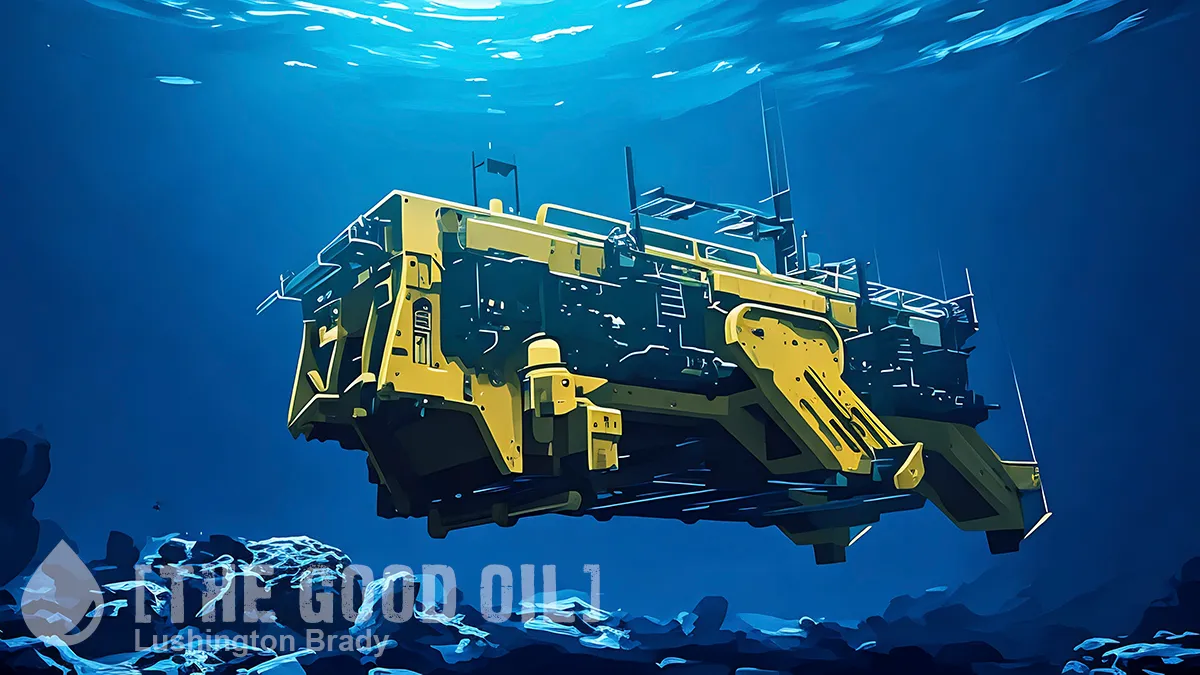
Using technology the Japanese are very familiar with: robotics. The minerals are found scattered on the seabed in ‘nodules’: potato-sized rocks. One technique involves robots plucking the nodules from the ocean bottom and depositing them into carry-baskets, which are transported to the surface. The other, used by the Chikyū expedition, involves driving glorified robot vacuums along the seabed, pumping nodules up a riser pipe to a ship and shipping concentrates ashore for processing.
Wherever there is mining, though, you can bank on armies of eco-activists following.
Extracting minerals at six km depth pushes engineering and environmental limits. The pressures are extreme, power needs are high, and seabed habitats remain poorly understood. Japan plans industrial-scale tests by 2027, yet public scrutiny is growing. As geologist Aurore Stéphant notes (in interviews critical of deep-sea mining), long-term ecological costs must be weighed against resource security and market gains.
The ocean floor is all but a desert. The densest biomass depths of the oceans are kilometres above where the sediment plumes will spread.
Oh, but, who will think of the hadal snailfish?