Simon O’Connor
Husband, step-father, foster dad, and longtime student of philosophy and history. Also happen to be a former politician, including chairing New Zealand’s Foreign Affairs, Defence, and Trade Committee.
Just one more sleep and New Zealand will know the election result. To state the obvious, it is extraordinarily close. Yet beneath the poll numbers lies a much bigger story: the continued decline of Labour and National as New Zealand’s dominant political forces.
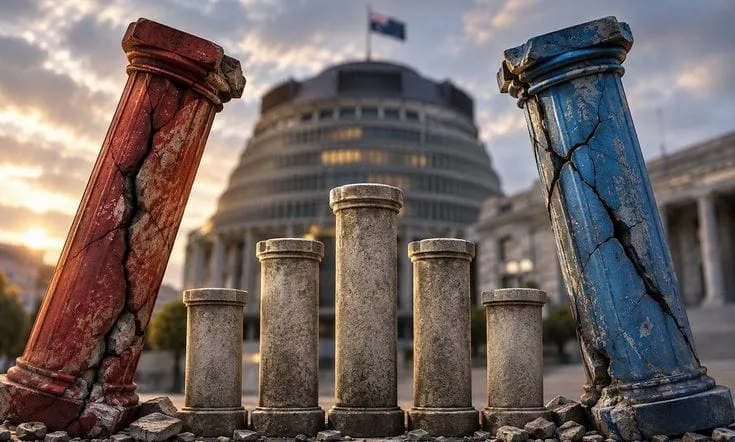
In a nutshell, Labour and National are no longer the dominant electoral forces they once were. They are both consistently polling under 30 per cent, which suggests they are now largely relying on their core supporters, plus a small number of additional voters. Consequently, their now previous voters have gone to other smaller parties.
My own prediction is that the centre-right will hold onto the Treasury benches. I largely base this on an overhang developing and a stronger party vote for New Zealand First and ACT. Whether driven by the various campaigns pushing for a split vote, or simply because National was likely to win more electorates anyway – who knows. Regardless, I believe National will win more seats than its party vote entitlement would normally provide, giving the centre-right bloc an advantage through an overhang.
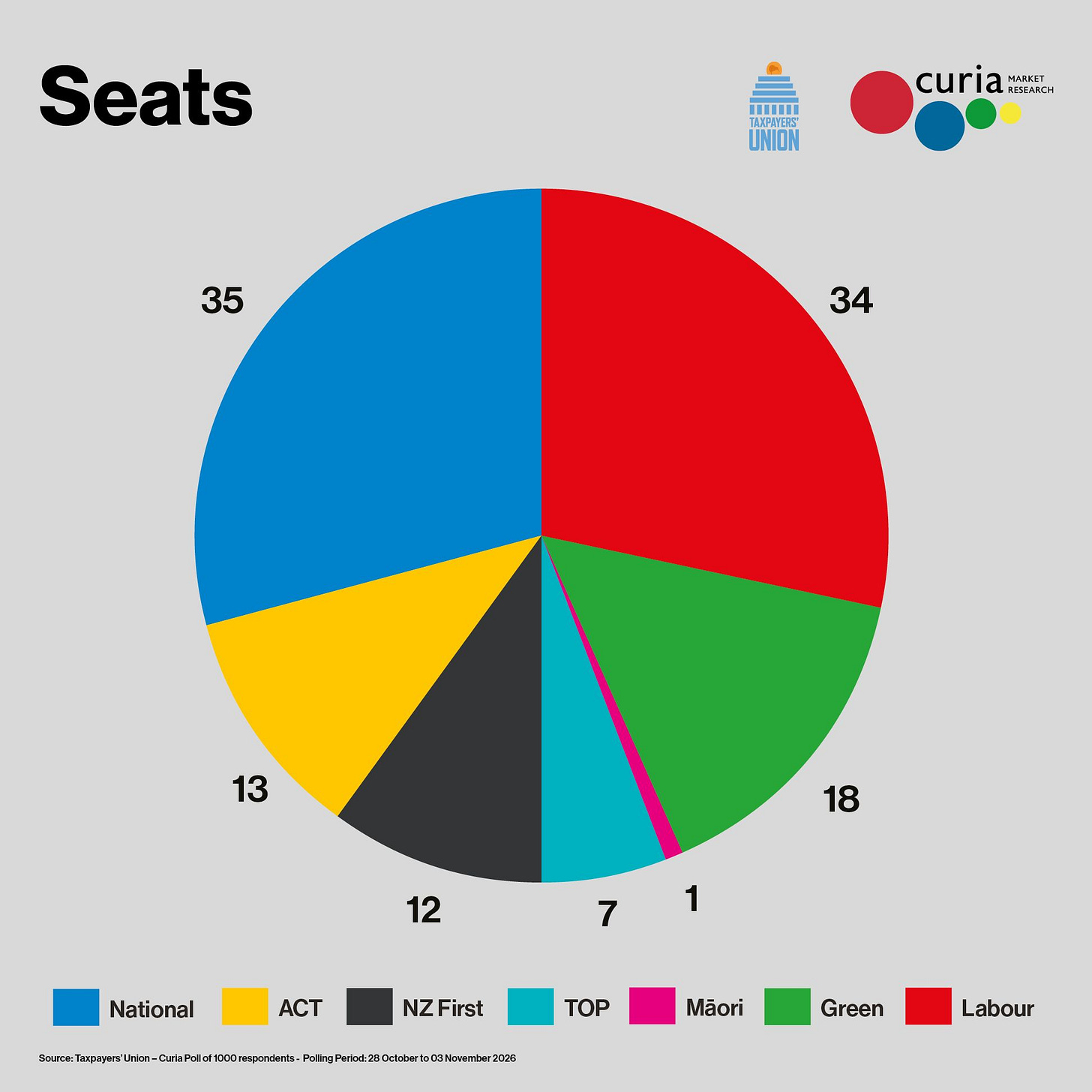
The Māori Party’s strategic voting push is working. In a recent poll, literally one person out of a thousand interviewed said they’d vote for the Māori Party. However, it is rightly anticipated they will win several electorate seats, creating an overhang. This has already been factored in through the various polls and reports we see.
As an observation of interest, rarely has mainstream media factored in the likely National Party overhang when it comes to the balance of seats. They have certainly spent considerable time discussing the strategy, yet often seem reluctant to fully incorporate its implications into their seat projections.
The other great variable is the Opportunity Party. This has been a party benefiting from endless fawning media, yet one must acknowledge those behind Opportunity for exploiting this. The key question now, and I have no answer, is whether they make the five percent threshold. If they do, I think the win on the right will be much narrower. If they do not, then I think this will confirm a right-wing coalition mostly because the Opportunity vote will be apportioned to parties who have got over five per cent, which includes of course the likes of National, ACT, and NZ First.
Despite all this, I’m particularly struck about the ‘back to the future’ aspect of this election. While Labour will need friends to form a coalition, they will remain the foundation of any new government if they collectively win. Yet this is the same party and MPs that were soundly defeated only three years ago.
What surprises me most is how quickly many voters appear willing to give Labour another chance. This is still the party of the Ardern/Hipkins era. The same leadership, most the same MPs, and many of the same policies.
Our massive government spending and debt is due to Labour. The division and social breakdown we witness is due to Labour. Many seem to have forgotten that only three years ago Labour was reducing the prison population, and we had near-daily ram raids. The health system back then was a shambles and school attendance and results declined. The list goes on and on.
It is important to stress, however, Labour is not popular. Its polling numbers are even lower than when they lost in 2023. Instead, many centre-left voters appear to have shifted their support to parties such as the Greens.
National’s challenge is simple: voters expected more. While there have been policy wins and many improving indicators, many people remain unconvinced that the government has delivered the change they anticipated.
It is useful to state this is a coalition government and, while unfair to a degree, it is National taking the blame for this gap between expectations and delivery.
Alongside this, National has moved away from its core values and principles. It is a shadow of its former self and paying the price accordingly. I would argue the same for Labour. The proof is easy to see – both Labour and National’s vote has moved to parties whose left or right credentials are much clearer.
As the saying goes, nature abhors a vacuum. As any party moves from its traditional foundation, others fill the gap. This perhaps sum up election 2026.
A final observation about the past, and this is related to NZ First. It is striking how many former MPs have joined the party, from ex-National MPs to the likes of Michael Laws. If on cue, Laws’ latest comments shows he is from era we had hoped we had left behind. His comments will understandably damage NZ First’s vote, including they remind people of Stuart Nash’s earlier comments.
This election all comes down to the coalition of parties. NZ First voters upset with the likes of Laws’ comments won’t move to the left, just as the visit to gang pads hasn’t shifted any votes from the left to the right.
So after months of campaigning, billions of dollars’ worth of promises, and endless political commentary, my prediction remains unchanged: a centre-right coalition will return to government. By this time in a few days, we will know whether that assessment was right or wildly off the mark.
An early heads up, I will be joining Radio New Zealand for its election night special. Hosted by John Campbell and Lisa Owen, I will be joining other former MPs to discuss the results and implications. You can follow via www.rnz.co.nz and via its YouTube channel.
In Media
An exclusive podcast interview. When a 5,000 per cent increase in referrals would trigger a public health emergency for any other condition – but not this one. Dr Isobel Ross joins the podcast to discuss her recent paper published in the New Zealand Medical Journal, where she unpacks the ethics behind puberty blockers, informed consent, and why autonomy shouldn’t trump evidence.
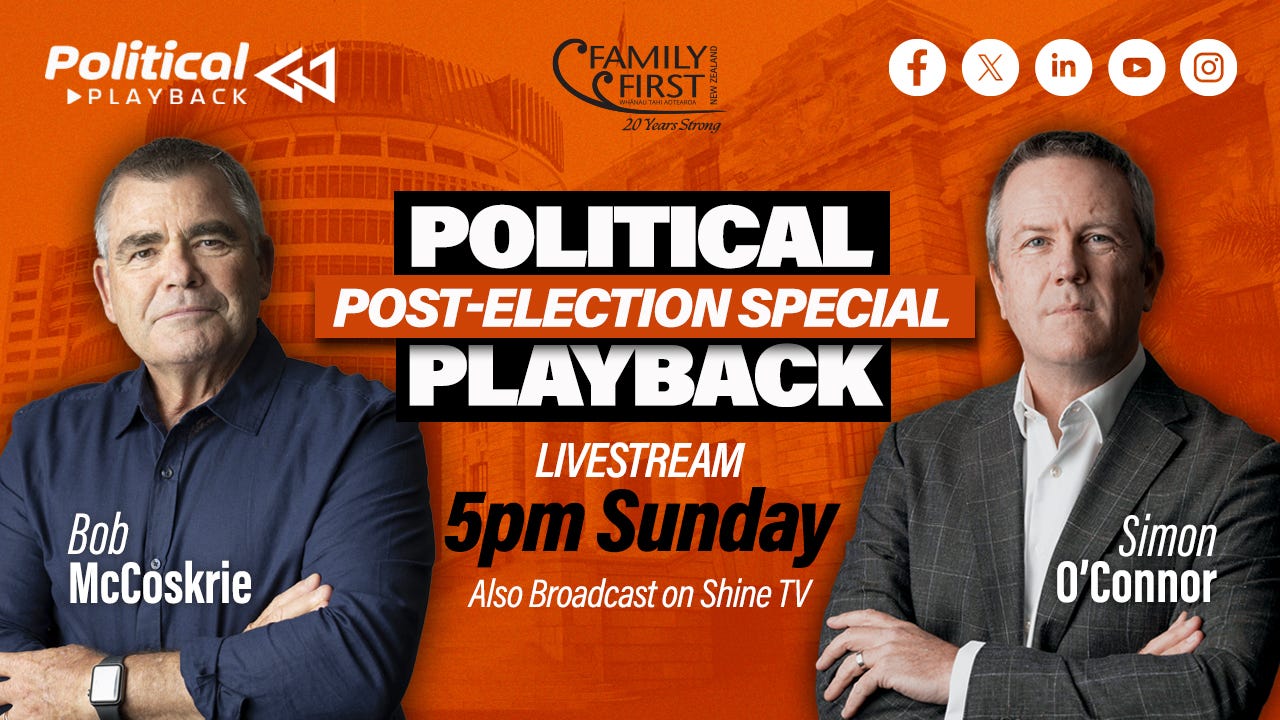
For much more political commentary, including our popular Thursday night live show – Political Playback – head over to Family First’s YouTube channel for all the latest from Bob and me, along with special guests.
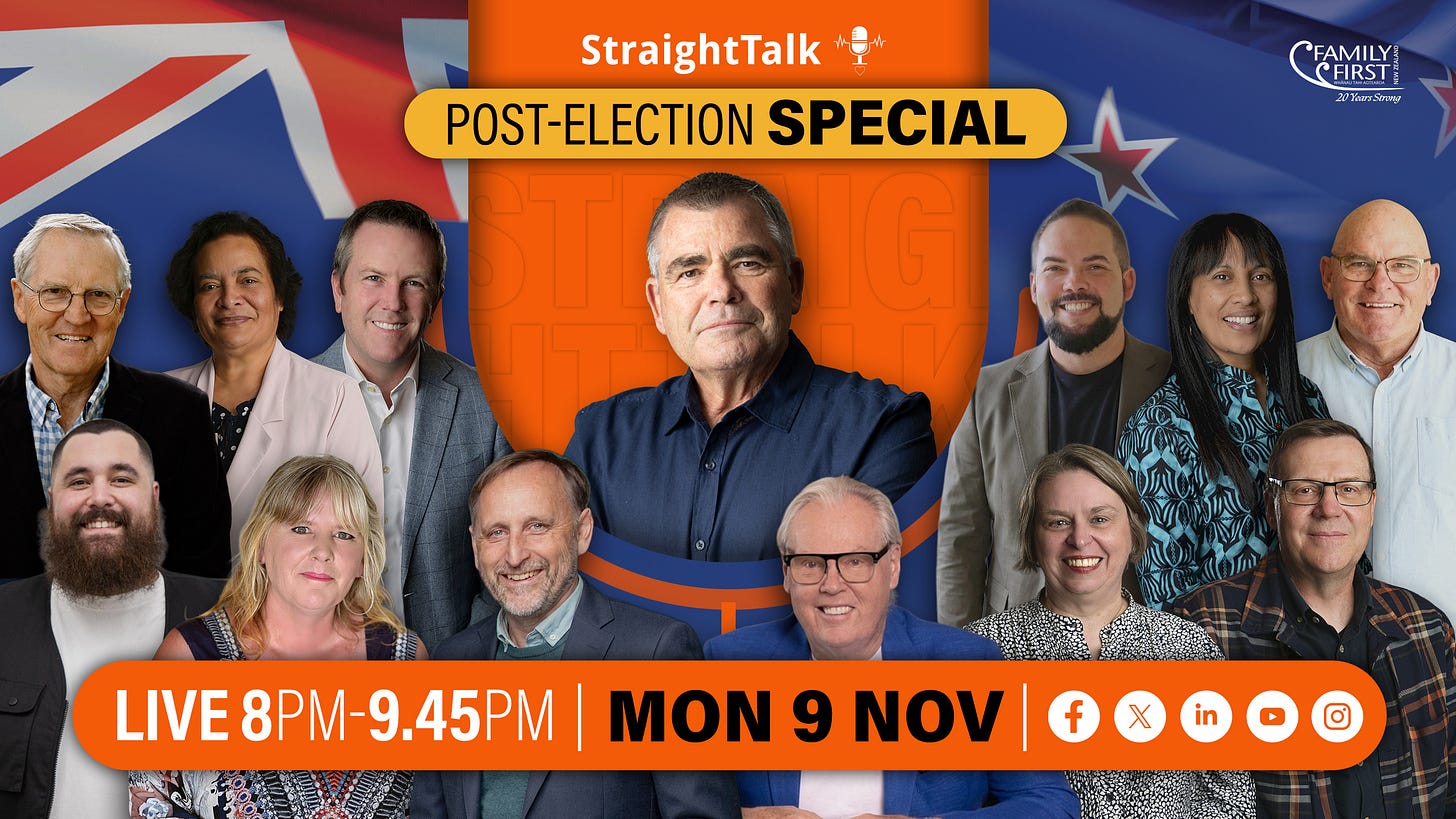
And a heads up of two post-election shows, both live and available across almost all social media platforms:
This article was originally published by On Point.