Laura Dodsworth
Writer, photographer, commentator.
In 1967, two American psychologists, Martin Seligman and Steven F Maier, published the paper ‘Failure to Escape Traumatic Shock’. It described a discovery that would become one of the most influential and dispiriting concepts in psychology: learned helplessness.
The experiment involved electric shocks. Some dogs could stop the shocks by pressing their noses against a panel. Others had no such control. They received shocks they could neither prevent nor stop, whatever they did. Their actions made no difference to what happened to them.
Later, the dogs were placed in a different enclosure, divided into two compartments by a low barrier. This time, escaping the shocks was easy. All they had to do was jump over the barrier.
The dogs that had previously been able to control their circumstances soon escaped. But some of those that had experienced uncontrollable shocks simply lay down and endured them. They did not attempt to escape, even when escape was possible. They had learnt, through experience, that nothing they did made any difference. The researchers called this learned helplessness.
Sometimes I feel like one of those dogs receiving shocks, unable to prevent or stop them, unable to see the way forward.
The shock that greeted me on social media today was footage of youths fighting with weapons on a bus in Birmingham. One young man had a large zombie knife. The passengers on the bus were clearly terrified. I was terrified just watching it.
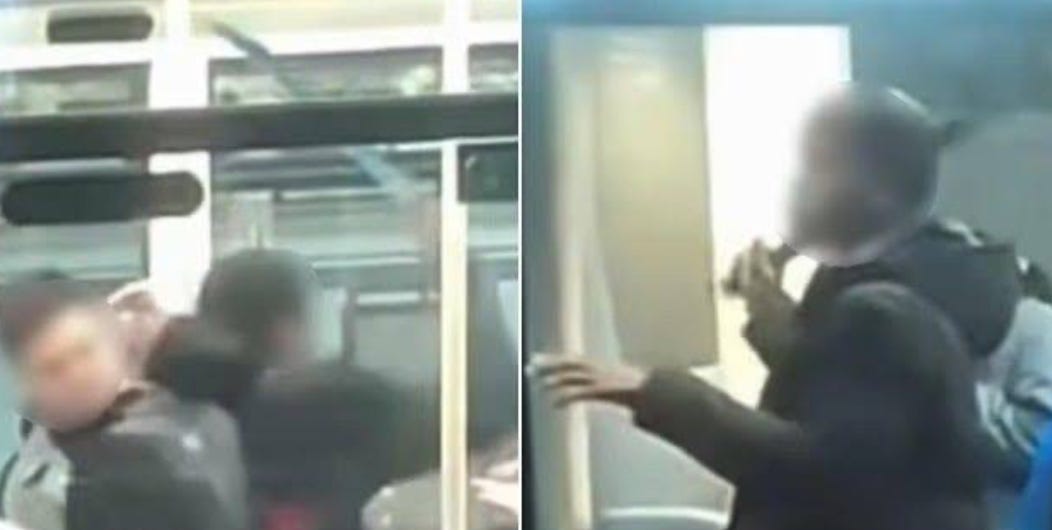
This should be a huge news story. It should preoccupy the police, politicians, commentators and sociologists for weeks. It will be a biggish news item for a day. Barely anyone will talk about it. Perhaps a Labour Party frontbencher will take online retailers to task for selling Swiss Army knives.
I’m annoyed I even know the term ‘zombie knife’. I don’t think we had regular knife attacks on buses, let alone with zombie knives, when I was growing up in the ’70s. I don’t think Zombie knives even existed then.
Attacks on buses seem to crop up in the news so often that they can’t take up the headlines for as long as they should. You might say they are coming along at once, like buses. Last month in Shropshire, a bus was stolen after the driver was attacked, and the bus was driven into cars. Also last month, a man attacked three Jewish teenagers on a bus in London.
But really, take your pick. There are so many. Type ‘machete attack London’ (or insert your city) into Google, choose any time frame you like and gaze in horror at the sheer number and variety of stories.
It’s not just buses or machetes. It’s all kinds of bad news stories, everywhere.
I wondered… is it me? Are my algorithms particularly morbid? Is it the nature of social media that we are all bombarded with bad news, brought more vividly and unpleasantly to life in colour and film?
But even if I separate myself as much as I can from the tweets, reels and photos of bad news, I can rationally collect enough evidence to know things are bad. Very bad.
This article was originally published by The Free Mind.