
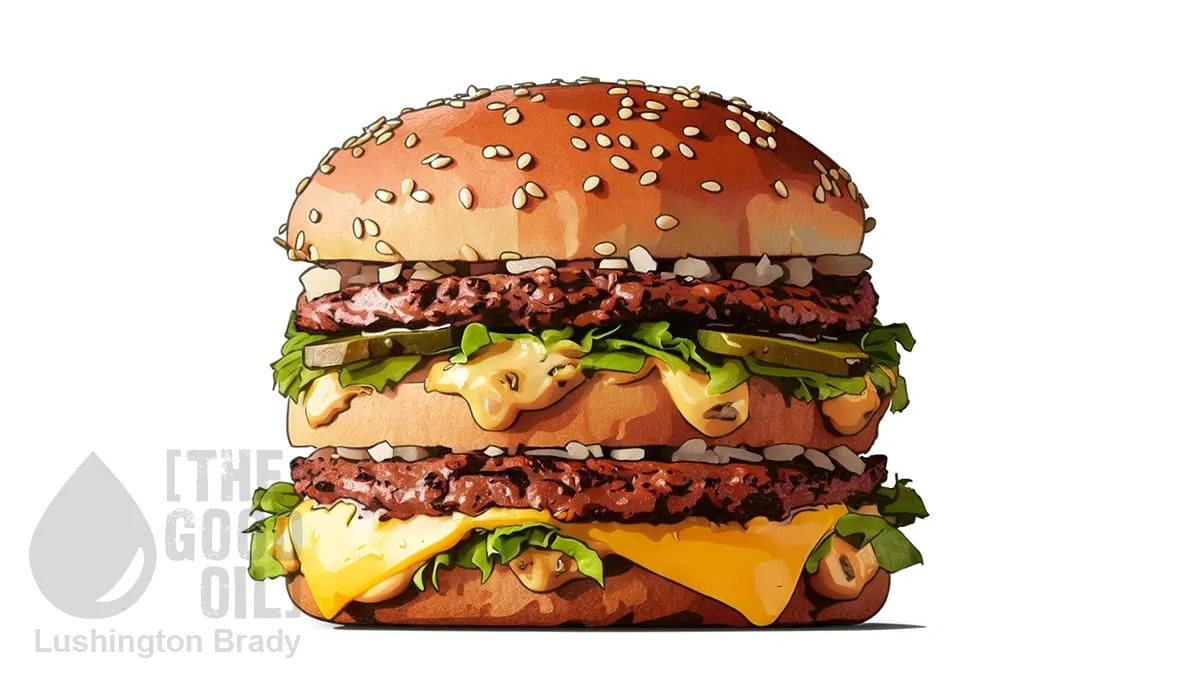
Equity is the great progressive fetish of our age. Tear down ‘unfair’ outcomes, redistribute the pie and paradise follows. But as any serious observer quickly discovers, equity looks very different depending on where you stand: and, more importantly, what you choose to count.
Most ‘equity’ fanciers, conveniently for themselves, opt for some ‘nice’-sounding intangible, like ‘happiness’ (even as they deliver misery by the truckload). The beatings will continue until morale improves.
But, what if there was something tangible, other than the ‘happiness’ immiserators’ great bugbear, GDP? Well, since 1986, the Economist, despite their tilty-headed leanings, have used the one tangible barometer more guaranteed to send the Jacinda Arderns of this world into conniptions than GDP: the Big Mac.
This is no mere junk-food fancy. The Big Mac is, in fact, a very tangible example of purchasing power parity. So, what does your buck get in burger bang, around the world?
In early 2026, a Big Mac costs about US$5.79 in America, $7.99 in Switzerland, and a mere $2.38 in Taiwan. On raw dollars, the world looks wildly unequal. But currencies are not, as any Forex trader knows, created equal. Arthur C Clarke suggested the ‘energy dollar’ as an alternative measure. But a more realistic measure of purchasing power parity is time. That is, how long the average worker must labour to afford a given standard good – such as a Big Mac.
Look at in that terms, the picture changes dramatically.
In high-productivity Denmark, with hourly earnings around $57, a Big Mac costs under six minutes of work. In Pakistan, at roughly 86 cents an hour, it takes over four hours. For the time it takes one Pakistani worker to buy their two-all-beef-patties-special-sauce-lettuce-cheese-pickles-onions-on-a-sesame-seed-bun (ah, the power of a good marketing campaign), a Dane can buy 46.
This “time price” approach, on the other hand, reveals what GDP numbers often obscure: the real divide isn’t between rich and poor countries so much as between places where knowledge, institutions and productivity compound, and places where they don’t. A burger that once demanded half a day’s wages now costs minutes. That’s not redistribution. That’s human progress through better ideas, freer markets and harder work.
Compare that with fairy-floss ‘economics’ like Gross National Happiness. On paper it sounds so nice, but like all utopian nostrums, in practice, it’s a subjective mush. How do you objectively quantify ‘psychological well-being’, ‘cultural resilience’ or ‘good governance’? Surveys and bureaucratic indices inevitably reflect the priorities of whoever designs them. Bhutan’s GNH makes for nice tourism slogans, but it doesn’t magically deliver First World living standards.
A Global Big Mac Index based on time prices would be far more honest. It’s concrete, comparable and cuts through the fog. It shows that what looks like grotesque dollar inequality is often the gap between high-trust, high-skill societies and those still wrestling with basic governance, human capital and the futuristic concept of not shitting in the street. You don’t fix that with wealth transfers or guilt lectures. You fix it by spreading the habits, rules and freedoms that turn hours of toil into minutes of leisure.
None of this is to dismiss real hardship. Poverty anywhere is a tragedy. But pretending Switzerland and Pakistan suffer the same ‘inequity’ because one Big Mac costs more in francs is the sort of category error that leads to terrible policy. True equity in opportunity comes from unleashing productivity, not punishing it.
The lesson is simple: measure what matters with clear, objective tools. Time prices for a Big Mac tell us more about genuine progress than nebulous happiness indices or envious equity spreadsheets. Productivity, innovation and sound institutions don’t just make burgers cheaper in time – they make life richer in every way that counts.
Next time someone lectures you about global inequity, buy them a Big Mac. Then ask how many hours they worked to earn it. The answer might surprise them.


![[The Good Oil] Stuff Up of the Day](https://storage.ghost.io/c/31/f4/31f4e20a-0315-499e-83ff-139e8eab53bf/content/images/size/w1304/format/webp/2024/09/Stuff-up-image-1.webp)


