Table of Contents
Ani O’Brien
Like good faith disagreements and principled people. Dislike disingenuousness and Foucault. Care especially about women’s rights, justice, and democracy.
Christopher Luxon’s State of the Nation speech was notable less for what it announced than for what it signalled about how this government intends to fight in this election year. Framed around competence, restraint, and “fixing the basics”, the speech leaned heavily into managerial reassurance rather than political ambition. There were no big policy reveals, no sharp ideological edge, and no attempt to reset the narrative in a dramatic way. Instead, Luxon positioned himself as a steady hand presiding over an economy that has turned a corner, urging voters to stay the course rather than demand bold new direction. It was an argument for continuity.
Supporters and some commentators read the speech as deliberate discipline. Steady does it with no fiscal blowouts, no election-year sugar hits, no grand promises the Crown can’t afford. The absence of fireworks was entirely the point. Luxon was signalling seriousness and control, particularly to middle-New Zealand voters fatigued by years of crisis politics and ideological churn. The emphasis on inflation easing, interest rates stabilising, and business confidence returning was intended to anchor the government’s legitimacy in economic stewardship rather than vision.
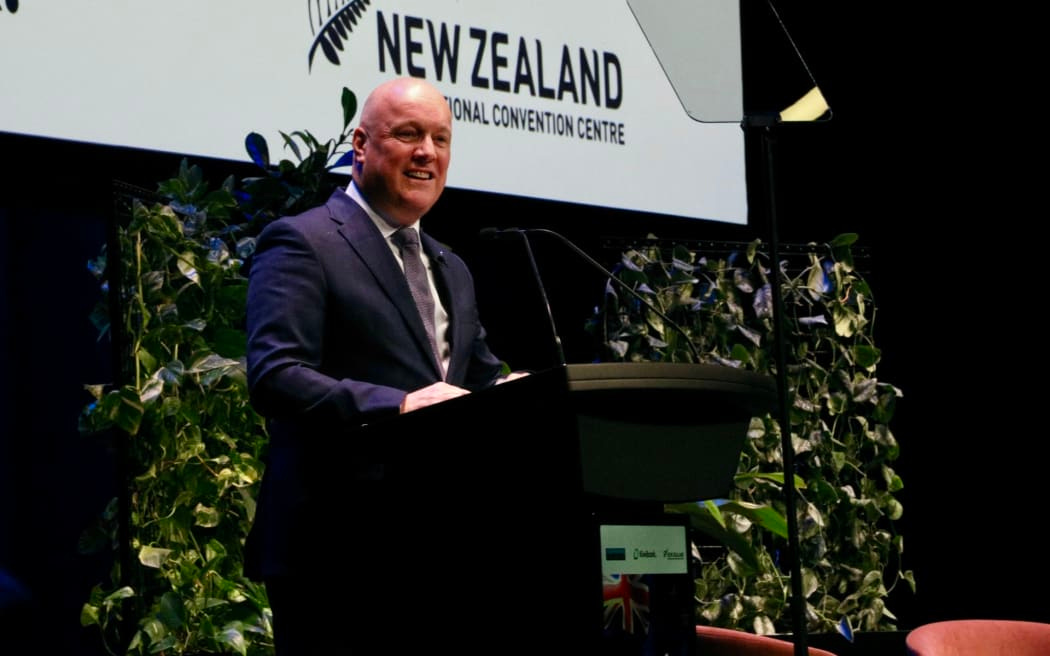
Critics, however, naturally saw the same qualities as weaknesses. Chris Hipkins called the speech “management-speak mumbo jumbo”, accusing Luxon of being heavy on abstractions, light on substance. Glaring hypocrisy aside, the lack of new policy announcements did make it easy for him to argue that the government is coasting, relying on improving global conditions rather than demonstrating active leadership. For an election year address, some commentators felt it lacked emotional pull or narrative drive. There was no defining challenge, no galvanising mission, and no clear vision of what the next three years would look like beyond incremental improvement.
Interestingly, Luxon did not mention Labour by name at all. That omission looks deliberate and like a strategic choice to not treat Labour as a credible alternative government. By refusing to personalise the contest, Luxon positioned the election not as a head-to-head ideological fight but as a referendum on his own government’s competence and delivery. It suggests confidence, or at least the projection of it, and an attempt to deny the opposition oxygen, while framing 2026 as a choice between steady management and a return to disorder rather than between two competing visions.
There was also a stark strategy in what Luxon chose not to foreground. Social issues, and questions of cultural or constitutional direction were largely absent, which drew criticism from left-leaning commentators and Māori media in particular. To supporters, this restraint signalled a move away from what some see as divisive identity politics. The speech therefore predictably reinforced existing political lines rather than shifting them.
The speech suggests a prime minister betting that 2026 will be won on trust, not inspiration. Luxon appears comfortable presenting himself as the custodian of stability rather than the architect of transformation. Whether that proves sufficient will depend less on rhetorical flair and more on whether voters feel the promised “back to basics” recovery in their own lives. For now, the State of the Nation address did what it needed to for the government – steady the frame, set expectations low, and avoid mistakes.
This article was originally published by Thought Crimes.