The low-level crime war simmering in Melbourne for years has suddenly exploded beyond black-market tobacco shops and dodgy burger joints into an all-out war on the night-life scene. Victoria Police are investigating a three-month campaign of firebombings, drive-by shootings, home invasions and kidnappings targeting Melbourne’s nightclubs, bars, brothels and strip clubs.
The prime suspects are an Iraq-based organised crime syndicate tied to the 313s’ tobacco cartel and deported kingpin Kazem Hamad. But is this just the latest reiteration of ethnic-based crime gangs (the Calabrian Mafia in the ’70s and the Asian Triads in the ’80s), or something much darker?
The gang has sent venue owners stark warnings via encrypted messages from ‘the Cartel’, as the group imaginatively calls itself:
An encrypted message sent by the gang last week to multiple venue owners warned the campaign of violence was intended to take their businesses, families, and their “souls”.
“We will take it by force if you don’t comply the police can’t help you its inevitable we won’t stop till we get what we want,” it read.
Detective Inspector Chris Murray, commander of the recently formed Operation Eclipse, has already cast doubt on the easy explanation that this is simply a fight over illicit alcohol or a bog-standard protection racket.
“[The illicit alcohol theory] doesn’t fit with Gotham City and other [targeted] venues. It’s something flying in the ether – but it’s information, not evidence,” Murray said during a police briefing to the industry last week.
Gotham City, a South Melbourne brothel, does not hold a liquor licence.
Yet it has been hit anyway.
Police sources confirm the threats originated in Iraq. Foot soldiers, often young Melbourne drill-scene recruits, are reportedly paid $500–$800 just to drive and up to $20,000 to carry out the attacks. Over 30 incidents and counting, with six venues struck in a single week in mid-April.
Legacy media reporting has framed the violence as a straightforward ‘underworld tax’ or protection racket. Police say they “[believe] an extortion demand would be made at some point”. But what if that isn’t the aim at all?
High-level sources close to the syndicate tell a different story. The Cartel’s explicit demand, delivered directly to venue owners, is not a cut of the profits. It is simpler and more uncompromising:
“This isn’t about money, or illegal booze. If they want to keep this kind of thing happening in Australia they can pay us or burn.”
In other words: a jizya.
The Muslim-run ‘Cartel’ does not view nightclubs, bars and brothels as businesses to be shaken down. They regard them as symbols of moral decay: alcohol-fuelled venues, open drug use and behaviour they consider intolerable. Payment is framed as submission. Refusal brings fire and bullets. This is not a conventional extortion operation. It is a calculated ideological campaign to suppress an entire sector of Melbourne’s after-dark economy.
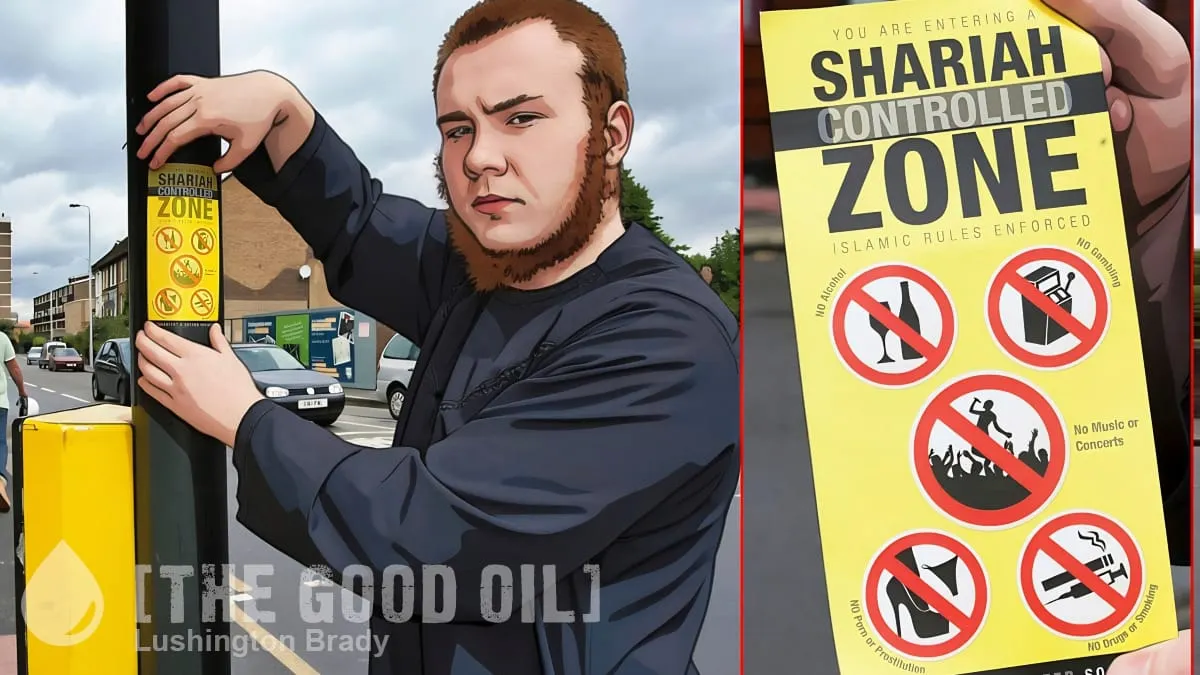
The pattern echoes earlier incidents overseas. In parts of Britain, so-called ‘sharia patrols’ have targeted drinkers, harassed women in public and sought to impose strict moral codes on nightlife. The Taliban, upon seizing power in Afghanistan, immediately banned music, dancing and most forms of entertainment. The underlying objection is not economic but cultural and religious: a rejection of Western-style nightlife as inherently corrupting.
Meanwhile, Kazem Hamad and his associates operate from Baghdad, funnelling hundreds of millions from the tobacco wars while their Melbourne proxies carry out the work. Police have the links – Interpol notices, encrypted networks, shared membership with the 313s – but the narrative is stubbornly framed as secular crime.
Victoria has spent years promoting ‘diversity’ while grappling with organised crime waves, from tobacco wars to African gang violence. This latest chapter raises uncomfortable questions about the limits of integration when imported cultural attitudes clash with core elements of Australian urban life.
Club-goers have already been advised to party at home. That caution looks increasingly wise. The Cartel is not interested in a quiet protection deal. It wants Melbourne’s nightlife brought to heel, one venue at a time.
First they came for the nightclubs…