Those of us who were there well remember the ‘Satanic Panic’ of the ’80s. Providing a dire template for latter-day conspiracy nuttiness like ‘Pizzagate’, the likes of Tipper Gore and Jerry Falwell had a great many people convinced that Satanism was everywhere. From board games to illegible noises on records, the devil was riding out like nobody’s business. Before the whole craze died down, multiple innocent lives were ruined by unhinged false accusations of ‘Satanic child abuse’.
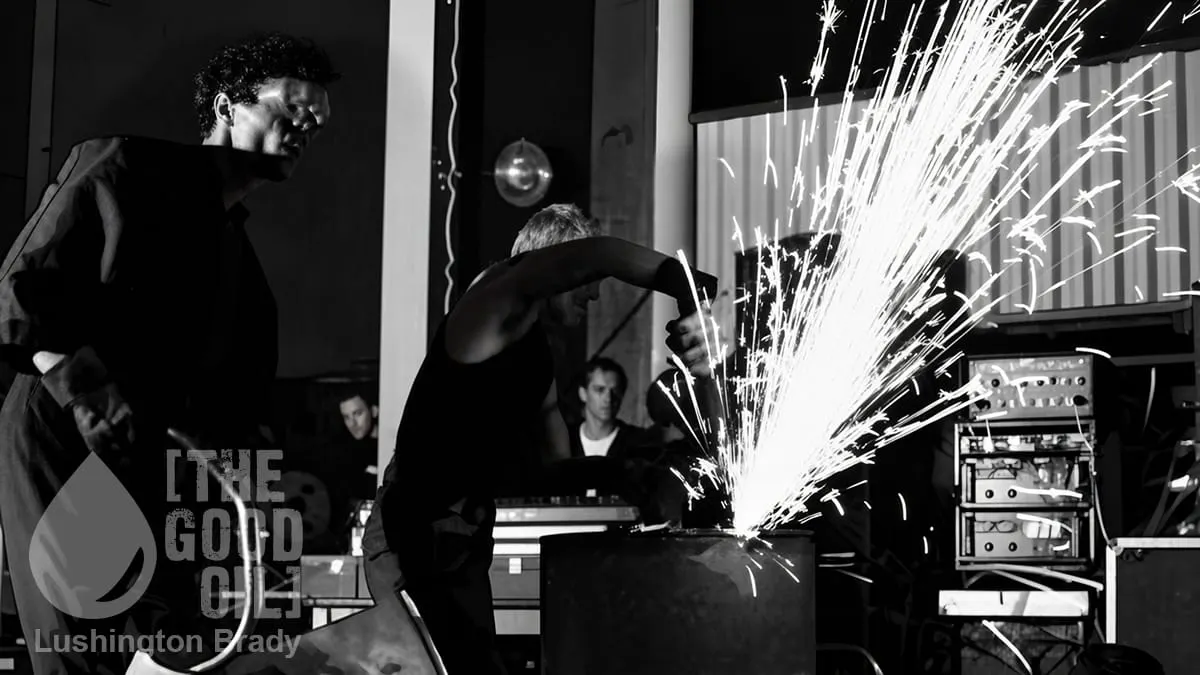
And before he became a latter-day court jester, the likes of Ozzy Osbourne were not just vilified as in league with the devil, but subjected to crazy lawfare. Osbourne was accused of driving teenagers to suicide, even though the song blamed, “The Suicide Solution”, was actually a warning against alcoholism. Even more ludicrously, an evangelical preacher in Queensland tried to blame Painters and Dockers for encouraging murder, with their tongue-in-cheek cover of a song from an episode of Get Smart.
But, as the lawsuit against Ozzy showed, it was heavy metal that bore the brunt of the ’80s inquisitors’ ire. Judas Priest were also sued, unsuccessfully, for supposedly including ‘subliminal messages’ to urge fans to kill themselves, which, as Rob Halford pointed out, would be pretty counterproductive from the band’s point of view: surely it would be more sensible to put ‘buy more of our records’ as a subliminal message?
Was there anything to the moral panic over heavy metal, though? Were the doom-and-death laden lyrics of metal driving fans to despair, the devil and suicide? In fact, a 2015 study backs up what I recently wrote: forget therapy, “lock yourself in your room and listen to some really heinous music, and rock it out of your system”.
[“Three Decades Later: The Life Experiences and Mid-Life Functioning of 1980s Heavy Metal Groupies, Musicians, and Fans”] followed 377 people and divided them into three groups: fans of heavy metal from the 1980s, fans of other music from the same era, and a group of current college students so that they could compare across generations. They looked at what these people experienced growing up, how happy they were, and how their lives turned out overall.
As it turned out: pretty damn good.
In a nutshell, what the data revealed about metalheads was a remarkable level of resilience. It showed that despite the high-intensity lifestyle that’s often associated with the scene, the metalhead group emerged in middle age as significantly better adjusted and more satisfied with their lives than their mainstream counterparts.
But I think to give the full picture here, we actually have to back up a little bit because this outcome is even more impressive when we look at the bigger picture, which starts with the fact that the metalheads did report having much more difficult early lives. They were much more likely to describe challenging childhoods and higher levels of risk-taking behavior when they were young than either of the control groups.
This might seem to back up the anti-metal crusaders… until you realise what the rest of us knew, all along: the music wasn’t the cause of difficult lives, it was the symptom. Not just a symptom, in fact: a prophylactic. Metal fans were drawn to loud, angry, chaotic, doom-y music because it “sounded like their lives”. It reflected their emotions and experiences – and acted as a catharsis.
Heavy metal is known for exploring intense themes like anger, alienation, and struggle. Instead of amplifying those feelings in a harmful way, the music gave fans a healthy way to process and release them. It created space to confront emotions directly rather than avoid them, which made listening to the music an emotional outlet.
They literally rocked it out of their system.
The further findings showed that these very same individuals as adults at minimum were doing just as well as everyone else and in many cases were actually found to be doing dramatically better. They reported higher levels of happiness, stronger adjustment in their personal and professional lives, and a greater sense of satisfaction overall compared to both their peers from the 1980s and the current college group.
So despite starting out with more challenges, they ended up with better mental health outcomes than all of their peers.
At the same time, far from being ‘the wrong crowd’, fellow metal fans acted as a vital support group.
For a lot of people, the scene provided a true sense of belonging, which is something they were simply not finding anywhere else. Most of the metalheads in the study said that they felt like outcasts and that they just did not align at all with mainstream culture or ideology.
Being part of a group that openly embraced feeling different created extremely strong social connections and a real sense of self-acceptance. Going to concerts and having these shared experiences and a clear cultural identity gave people a support system that stayed with them for years and years. In fact, many are still involved with the scene to this day.
The generosity and support of the metal community was shown, in Australia, by the “Metal for the Brain” festival. First organised by local act Armoured Angel, after a Canberra teenager, one of their friends, was left quadriplegic with dire financial complications for his parents. “Metal for the Brain” grew from a six-act roster, to a 14-hour, 30-band marathon. The festival raised funds for the National Brain Injury Foundation for 16 years.
Anecdotally, metalheads, despite their fearsome appearance, almost invariably came across as, well… nice. As a friend once commented, when a neighbour sniffed at their son’s outlandish appearance, ‘Well, at least I know where he is on the weekend: in the garage, practising with his mates.’