Pee Kay
No Minister
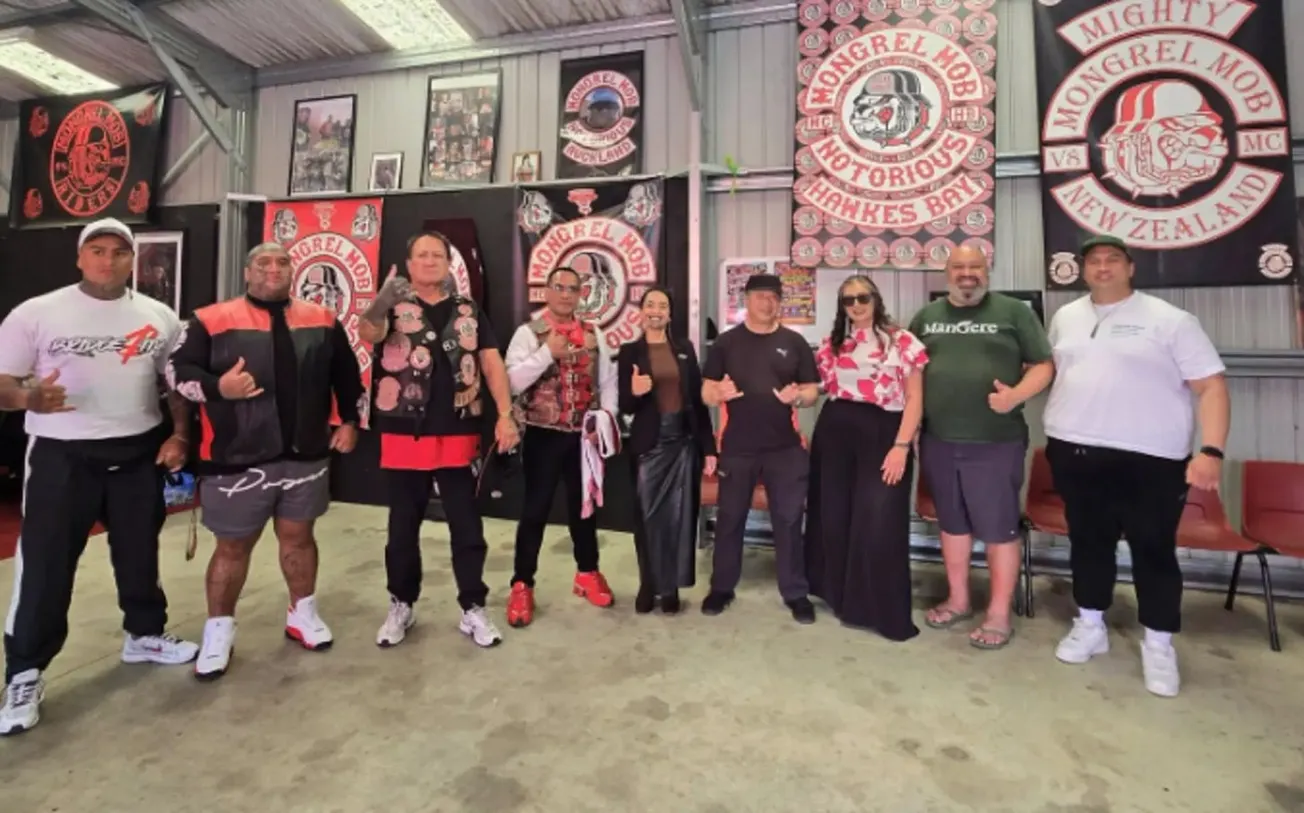
New Zealand is witnessing the formidable operations of a highly sophisticated, unified political force, the Māori sovereignty machine.
Or is it more a case of what too many in New Zealand are not witnessing? We are sleepwalking into a constitutional crisis.
Do the majority of New Zealanders actually realise what is happening right in front of them? The Māori sovereignty machine is enormous, perfectly oiled, and moving at speed. This isn’t just about street protests: it is a calculated campaign actively making deep inroads to take control of our country and replace the democratic system we all rely on.
The uncomfortable truth is that this machine thrives on the overwhelming apathy of the average New Zealander. Most Kiwis are blissfully ignorant, operating on a naive, “the gummint wouldn’t do that” wavelength. They genuinely believe our democratic institutions possess built-in guardrails against a radical constitutional rewrite. This indolent complacency creates a massive blind spot, allowing a super disciplined, corporate backed minority to quietly re-engineer the state behind closed doors while the general public assumes someone, somewhere, is keeping watch.
The Māori sovereignty machine is coordinated seamlessly under the strategic steering of the National Iwi Chairs Forum and this apparatus moves with an absolute collective purpose and they present a stark contrast to the fragmented, very individualised groups that oppose them.
Nothing showed the power of this well-oiled machine better than the way the 2024 hīkoi was organised and the publicity it generated and the blind support it created.
The Hīkoi mō te Tiriti officially started on the 11th of November, 2024, when it departed from Cape Reinga and finished at parliament grounds on 19 November 2024, drawing a crowd that was estimated to be between 20,000 to 100,000 people, depending on who you spoke to.
The 100,000 figure was estimated and claimed by Te Pāti Māori co-leader Rawiri Waititi and Winston Peters claimed the crowd size was significantly lower, at around 22,000.
Central to the seamless execution of the hīkoi was Eru Kapa-Kingi, the son of MP Mariameno Kapa-Kingi, who left the Māori Party to sit as an independent MP. Eru Kapa-King was the spokesperson for the activist group Toitū te Tiriti. By bridging the gap between direct street activism and institutional power by having previously stood as a parliamentary list candidate for the Māori Party, Kapa-Kingi represents the highly coordinated apparatus where political positioning and grassroots activism operate in perfect harmony.
This political and activism synchronisation of the sovereignty machine is personified by how it extended deep into the machine’s commercial engine. Far from a spontaneous, non-profit uprising, Toitū Te Tiriti Limited was incorporated as a private company wholly owned by Kiri Tamihere-Waititi, the daughter of the Māori Party President John and wife of its co-leader Rawiri. By leveraging off public sector concerns and disquiets, the party elite commercialized the movement, monopolising merchandise sales and funnelling immense public revenue into a private corporate structure.
This setup essentially gifted the Māori Party a massive, off-the-books campaign vehicle financed by the very marchers they were mobilizing. Do we see any of the defenders of our democracy, the advocates of the right, coalescing in this way? Sadly no.
What our blatantly biased MSM never reported was the backing the hīkoi received from unions. Backed by the immense logistical muscle of public sector and education unions like the PSA, NZEI, and PPTA, organisers masterfully manipulated mainstream left-wing apprehensions around the Treaty Principles Bill. By transforming, what was, a symbolic, doomed legislative debate into an urgent moral emergency, they whipped up a massive, unquestioning show of force.
From the PSA website –
Te Tiriti o Waitangi is about all of us. It offers everyone an opportunity to work together and share decision-making to look after people and our planet.
We need that visionary foundation for public, community, and health services to effectively care for communities and our shared future. Navigating toward the promise of Te Tiriti is some of the most important work of our time, building on the mahi of generations before us.
But the coalition government is trying to push back progress through ongoing attacks on Māori rights and wellbeing, and Te Tiriti. The Treaty Principles Bill is an attempt to stray us further from the path of unity by rewriting our past.
This kaupapa is about showing the kotahitanga of millions supporting Te Tiriti as our future, stopping the Treaty Principles Bill, and continuing the haerenga onward for future generations.
The crowning irony was the sheer oblivion of the crowd – thousands of everyday liberal marchers that included waves of school teachers, who abandoned classrooms along with many parents and their children who were meant to be in said classrooms, marched passionately in absolute ignorance. It was a masterclass in political theatre, heavily populated by gullible white liberals marching in lockstep. Caustically speaking, thousands of these useful idiots took to the streets completely oblivious to basic parliamentary reality: David Seymour’s Treaty Principles Bill was structurally dead on arrival, guaranteed by National to never progress past its first reading and a select committee burial.
Crucially, the movement’s leadership intentionally kept the crowd in the dark, deliberately burying the reality that the Treaty Principles Bill was already guaranteed to fail its second reading. By hiding this fact to keep numbers high, organisers successfully used these well-intentioned allies as political stooges in a protest against a threat that had already been structurally neutralised behind the scenes.
And we all know who was responsible for that.
Make no mistake, the Māori sovereignty apparatus is no loose collection of activists. It is a massive, highly coordinated, and heavily funded corporate engine. Right now, it is making quiet, rapid progress in its ultimate quest to dismantle and supplant our democratically elected government.
Driven by a desire to avoid prolonged civil unrest and maintain coalition stability, Chris Luxon pre-emptively choked off the Treaty Principles Bill by declaring it dead on arrival post its first reading. Rather than standing firm on a fundamental debate about democratic equality, the prime minister chose the path of least resistance, capitulating to the pressure of the Māori activists in the streets before the marchers even reached Wellington.
By signalling his absolute refusal to support the bill further, Luxon didn’t just abandon his ACT coalition partner – he handed the Māori sovereignty machine its easiest victory yet, proving that a loud enough show of force could break the government’s political spine!
Providing further proof of the prime minister’s political cowardice, Luxon walked onto the Waitangi Treaty Grounds in early 2024 only to be publicly humiliated, heckled, and lectured on indigenous sovereignty.
Instead of drawing a firm line in the sand for state authority, he emerged from private meetings with the Iwi Chairs Forum beaming, calling the scolding “positive and constructive”. The sovereignty machine had its claws out and they smelled blood. It was clear to them that a sharp public telling off would always be met by a polite National Party apology and a request to keep talking.
By 2025, completely terrified of facing another round of hostile optics that might damage his corporate brand, Luxon skipped the Waitangi commemorations entirely. He left his coalition partners, Winston Peters and Shane Jones, to hold the line and take the heat. This tactical evasion didn’t project strength: it signalled to the entire country that the prime minister would physically flee the stage if the corporate iwi collective applied enough heat.
History provides a chillingly predictable blueprint for this kind of political mismatch. The Māori sovereignty machine has effectively evolved into a modern, indigenous reincarnation of New York’s infamous Tammany Hall. Tammany Hall was a highly powerful, corrupt political machine that controlled New York City politics for over a century moving with absolute corporate discipline to control the narrative, dispense political patronage, and seamlessly outplay its opponents.
It is a flawless rerun of the 1917 Bolsheviks. A hyper-focused, highly disciplined minority that successfully steamrolled a disorganised, hyper-individualised majority simply because they know how to coalesce around a single, ruthless objective while their adversaries fracture into isolated silos.
Like a Roman Phalanx locking shields to march right over a scattered rabble of proud but fragmented Celtic tribesmen, this apparatus moves with total collective purpose, effortlessly crushing their opponents.
While principled, well-intentioned defenders of democratic equality, such as Hobson’s Pledge, Democracy Action, the NZCPR, and Julian Batchelor’s Stop Co-Governance, exhaust their limited resources fighting dedicated, independent battles to safeguard local freedoms, they face an overwhelming institutional force. These right-leaning groups operate as passionate, self-funded watchdogs, individually, trying to protect our democracy from multiple angles.
In stark contrast, the National Iwi Chairs Forum operates a massive, multi-generational apparatus backed by deep structural power. They don’t just react: they combine forces to deploy a singular, highly mobilized front that has repeatedly shown it is capable of bending the state to its will.
And who funds this apparatus that is capable of bending the state to its will?
Just like a government covertly funding a coup in a foreign country, this machine’s financial pipeline is carefully directed through strategic back channels to obscure its true origin. While the National Iwi Chairs Forum operates under the guise of an independent funding model, its strategic sub-groups, known as Pou, negotiate directly behind closed doors for millions in targeted Crown grants.
This secretive approach enables the organization to secure massive amounts of taxpayer funding without political or public oversight. Witness the $10 million slipped into Budget 2026 for Tama Potaka’s, Te Māori Tū initiative. This government backed financing is funnelled through Te Puni Kokiri, which directly bankrolls the forum’s strategic Pou divisions under the banner of targeted community grants. Furthermore, TPK regularly funds and delivers the targeted engagement workshops, policy blueprints, and administrative resources needed to sustain the forum’s radical Pou Tikanga (Constitutional/Treaty) working groups.
By routing these millions through a complex web of joint venture contracts and public/private partnerships, the exact dollar amounts remain completely shielded from transparency laws, turning it into a textbook unaccountable back channel.
Does that not prove the time is here when it must surely be more productive for these defenders of our democracy to pool their resources, their donors, their mailing databases, and the considerable talent they harness to create a formidable opposing ‘counter-machine’?
By remaining isolated silos doing their own thing, actively competing with each other for the exact same pool of centre-right donations their influence is constrained, just as a train is by the railroad tracks!
The lesson is brutal but clear: in the modern political arena, fractured individual forces are doomed to failure. A collection of solitary actors, no matter how principled, will always be crushed by a disciplined, coordinated machine.
This article was originally published by No Minister.