Yvonne van Dongen
Veteran NZ journo incredulous gender ideology escaped the lab. Won’t rest until reality makes a comeback.
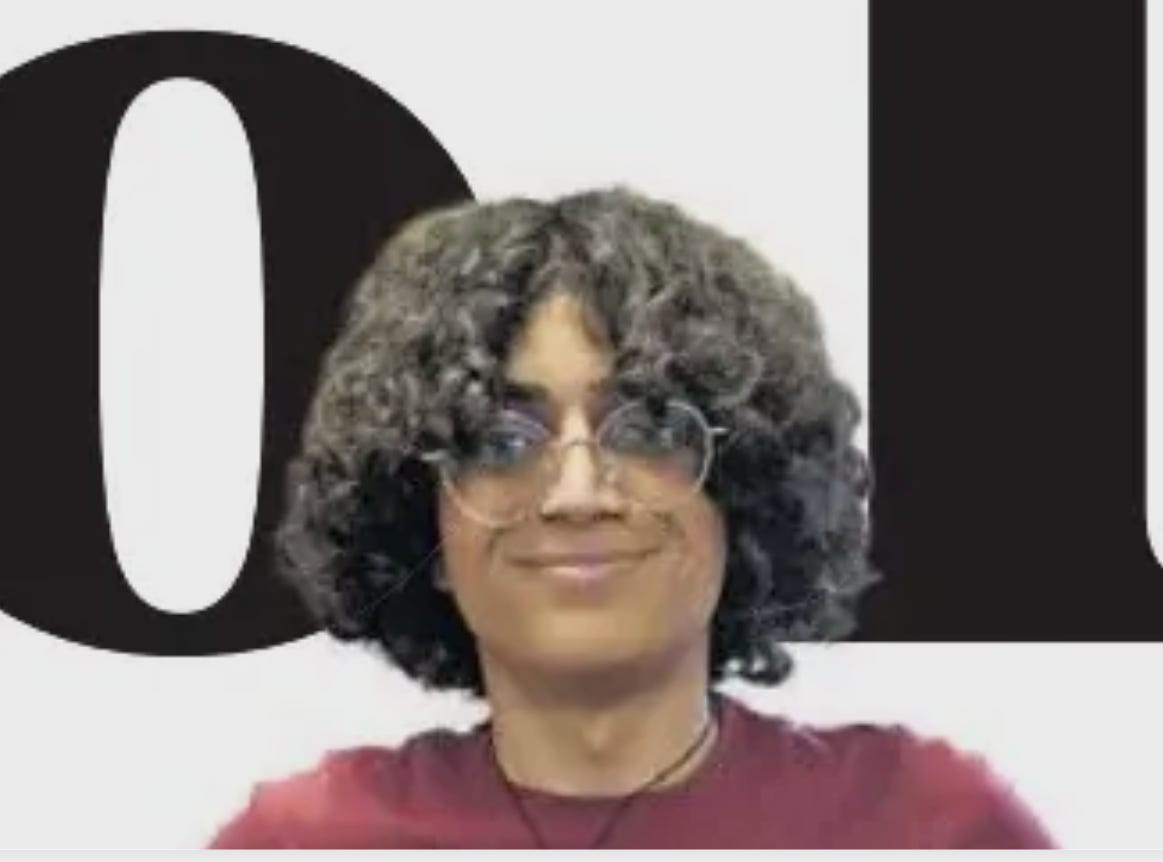
The news that a male student from Oman identifying as trans was able to access New Zealand funding raises serious questions about our immigration policies in such cases.
The Otago University student came here on a scholarship to study commerce from his home country. That scholarship is worth $340,000 to the student and, by implication, also New Zealand.
He has been here for 18 months. During that time the 19-year-old was appointed president of the student queer social and advocacy club. He did this despite receiving a warning from Oman that participation in the club violated the guidelines for an overseas scholarship.
Oman was true to their word. Their cultural attaché in Canberra emailed the student telling him his scholarship was terminated. So far so predictable.
Mental health and homeless worries follow. Also predictable. Not to mention the indignity of the attache’s email being addressed to his male name, not his new made-up girly one.
Our young man coped. Very well. Saw a lawyer. Got an asylum seeker claim. This ensures deportation is off the table. Next an application for refugee status – something that could take years to process.
But without a student visa, he cannot stay in the country. What’s a broke trans Omani student to do? Appeal to the most woke vice chancellor in the country, obviously – Grant Robertson. It worked. Days later, he was offered a $15,000 Vice Chancellor’s Scholarship for semester two.
That’s how he went from being a net financial positive to the country to a net drain. And that’s only one semester. The scholarship was for a four-year study period. Our student has two-and-a-half years left. That’s at least five more semesters.
Cue a tiny violin when he explains that since he does not have refugee status, he cannot access StudyLink or Job Seeker benefits.
Returning to Oman is off the table. Why? ‘‘Continuous judgement and harassment.” Also he claims there is a chance of a long prison term, with the risk of rape and physical abuse. Maybe even capital punishment given his public profile. Which presumably he knew when he became president of Otago University’s queer social and advocacy club.
If this young man is successful in his various applications, expect to see more pleas for assistance from gay students hailing from socially conservative (Muslim) nations. Some may claim vulnerable homosexuality; others may pull the trans card (higher up the victim totem pole, after all).
Questionable asylum seeker stories are nothing new. A 2022 story in the NZ Herald detailed several scams, including people posing as gay in order to boost their refugee application.
This has resulted in a pushback by ‘queer’ refugees as evidenced in this May 2026 article on the University of Auckland website, where the media accounts are described as ‘dehumanising’ and the discourse ‘harmful’.
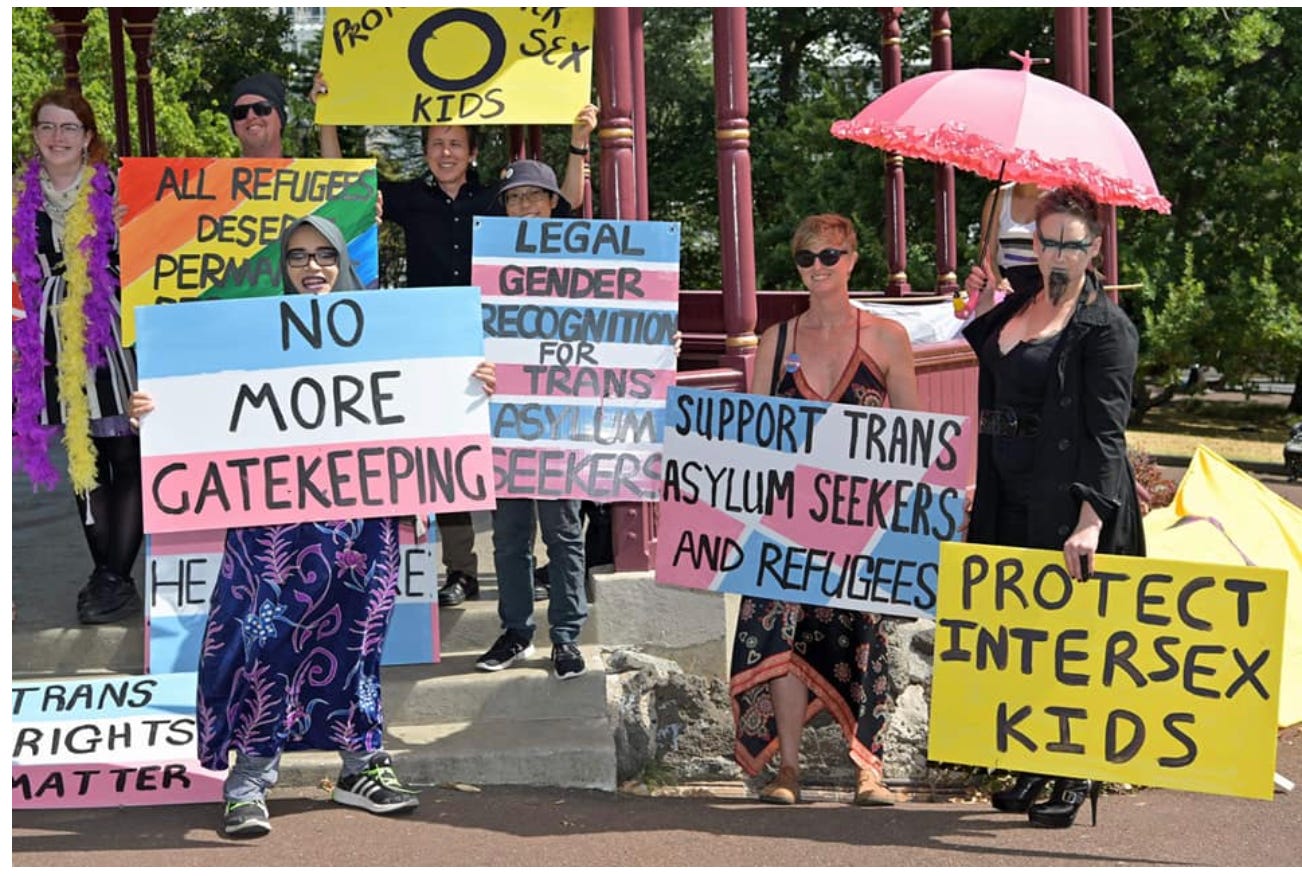
The rainbow fraternity has moved quickly to support claimants. RainbowPathNZ describes itself as “an advocacy and peer support group for the rights of Rainbow refugees and asylum seekers living in Aotearoa New Zealand. It is led by Rainbow refugees and asylum seekers, with support from other Rainbow human rights defenders.”
RainbowPathNZ was only registered in 2024 so has little funding to date. They advise that it is rare for people with citizenship or permanent status in North America, Western Europe or Australia to be granted refugee status in New Zealand.
However, it may be easier for you to come to visit, study or work in New Zealand. If you manage to get a visa that allows you to live in New Zealand, especially if you find work here, there are potential pathways for you to apply to stay here longer or permanently, including through the humanitarian appeal against deportation.
New Zealand has already welcomed a goodly number of trans folk. Our enterprising Omani joins a growing cohort of foreign-born, high-profile trans types such as Shaneel Lal, a Fijian Indian who arrived when he was 11, Eliana Rubashkyn, intersex and trans from Colombia and transvestite Emily Aung from Burma.
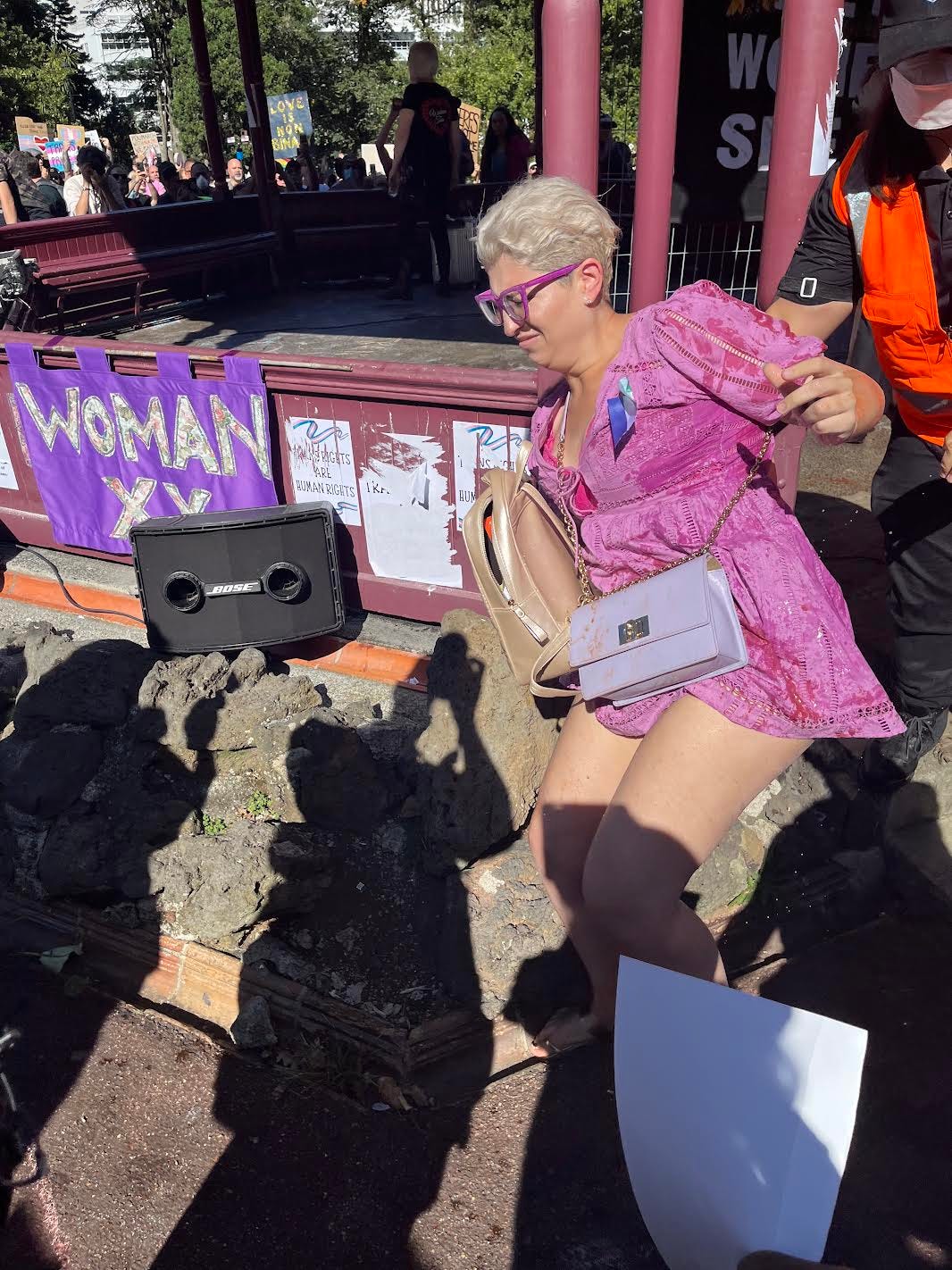
Then there is this Stuff story from last year outlining the journey to New Zealand from the Philippines (for a female-to-male) and a Chinese male-to-female. The latter revealed that, in China, trans is not tolerated and that New Zealand is regarded as a “rainbow haven”.
The Stuff story above reports that Waikato University researchers surveyed overseas-born transgender people who reported that safety, social acceptance and the ability to live openly were the strongest “pull factors” drawing people here. The study claimed to have surveyed 576 overseas born trans people aged 14 and above. The abstract from the study Transgender Migration Study (2025/2026): co-authored with Calvin C Fernandez, Jack L Byrne, and Jaimie F Veale, used the data from the Counting Ourselves survey. That survey has been discredited by evidence-based, gender critical group Genspect.
In 2025 another media sob story told the tale of a trans asylum seeker from an undisclosed location trying to find housing in New Zealand.
New Zealand has been welcoming transers for a while now. Almost 20 years ago, a UK male was granted residency on “exceptional humanitarian grounds”. He had suffered years of persecution due to his ‘gender identity disorder’. The transvestite is an IT specialist and said to be “highly intelligent and skilled”.
The Guardian story reports that this man had gender reassignment surgery while living in the UK but still experienced overt discrimination. The man moved to New Zealand in 2009, joining his parents and sister who were already here.
Since then several American families have come to New Zealand for similar reasons. The Rodriguez family moved from Austin, Texas with their trans daughter in 2022 citing how easy it is to change sex on birth certificates here, among other such blessings. New Zealand appealed because of “the country’s friendlier policies toward queer and trans people”.
Three years after the Rodriguez clan arrived, Brandon and Candace Watts from Denver, Colorado relocated to Queenstown with their two transgender children in mid-2025. In an interview in the NZH they cited Trump’s policies on their children. The story tells us that six days after Trump took office, the family got a notification from the gender-affirming care department of their local children’s hospital.
“They were no longer going to provide medical services to trans folks ... they would lose funding for other departments within the hospital if they did,” Candace said.
The husband works as a sales representative for a winery in the Gibbston Valley. The winery sponsored the family’s work visas.
Their visas are reportedly valid for five years. The couple told the newspaper they hope to remain in New Zealand long term, so their children can complete their schooling without another major move.
Perhaps they read this American blog extolling the virtues of New Zealand for the LGBT community. Must be old, or maybe old-school, since they didn’t include the Q or mention the word ‘queer’ once.
Also from the United States is computer engineer Kevin Bravestone from Minnestoa, who is now Violet Bravestone, living in Wellington. He was the principal engineer at Xero (based in Te Aro, Wellington) and currently teaches at Dev Academy Aotearoa.
Finally meet Rochelle Zettlemeyer, formerly from Pennsylvania. He describes himself as “your favourite transbian aunty” who needs funds for his asylum application. Hence his GoFundMe page launched in August 2025. So far less than $US4k has been raised.
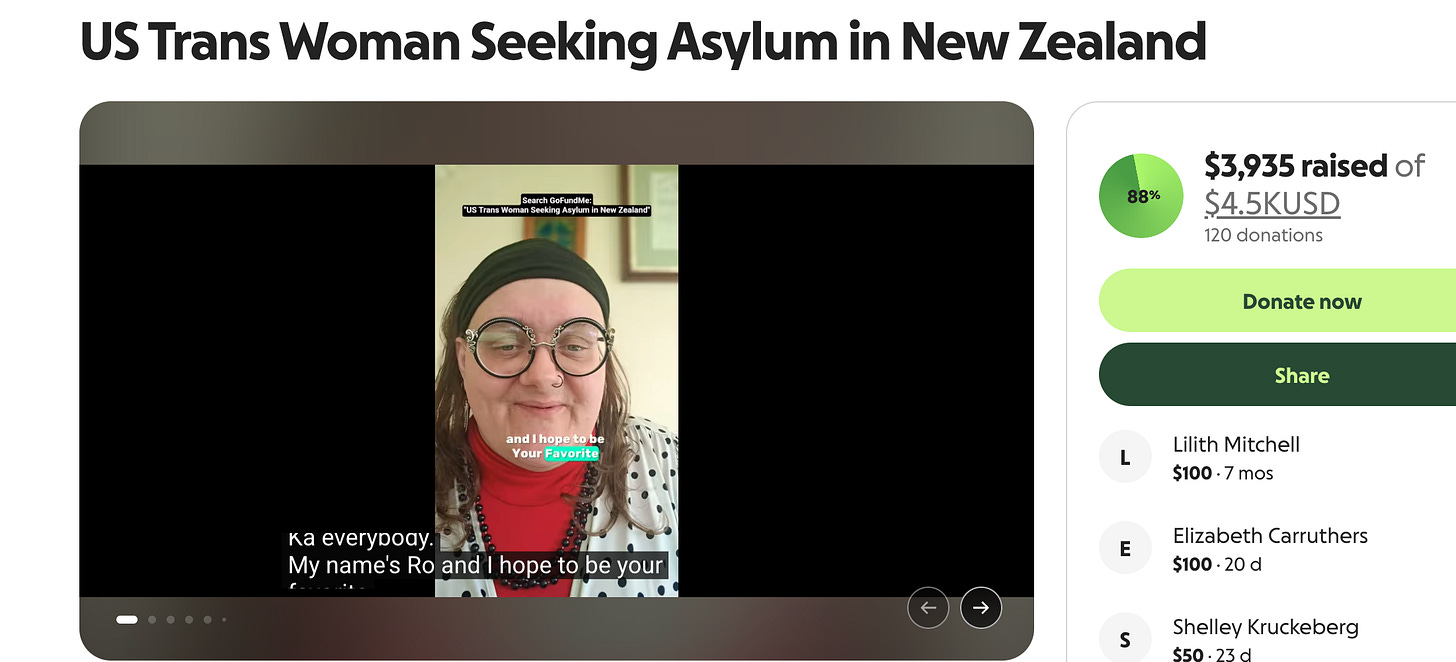
Here’s what he says about his application:
“As anti-trans rhetoric and legislation escalated, the danger to me became undeniable. My platform and identity painted a target on my back. My wife was terrified for my safety every time I left the house.
“Fleeing was not optional. It was survival.
“Now in Aotearoa New Zealand, I’m navigating the long and costly asylum process. While I work to establish my life here and continue my online work, I’m facing steep expenses: rent, groceries, filing and mailing fees, and other costs tied to the asylum process. I’m still creating content daily – not just to survive, but to keep building the community that helped carry me this far.”
This gentleman is here now. As are many others, though we don’t keep stats on gay or trans asylum seekers. Instead they walk among us and if the Omani student is anything to go by, we may have to pay for the privilege.
This article was originally published on the author’s Substack.