This is edition 2026/210 of the Ten@10 newsletter.
Hi all,
This is the Ten@10, where I collate and summarise ten news items you generally won't see in the mainstream media.
Enjoy!
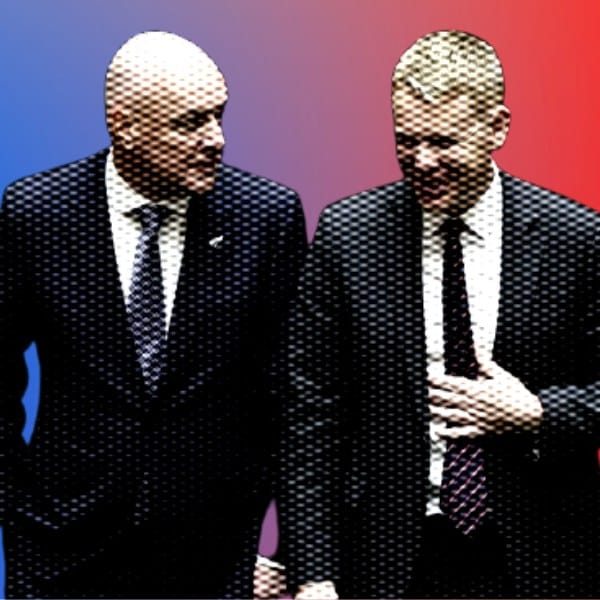
1. Grand Coalition: Stabiliser or Suicide?
Ani O'Brien - Thought Crimes
- 🏛️ Ani O'Brien writes after businessman Guy Haddleton urged Christopher Luxon and Chris Hipkins to sit down together before negotiating with any of the smaller parties. She has no objection to the two majors hashing out long-term problems such as infrastructure, the ageing population and housing, but says a Grand Coalition gives her "the heebie jeebies".
- 📊 On the preliminary count, she notes, National, ACT and New Zealand First have 67 seats in a Parliament of 131, where 66 is a majority. National is ahead in 42 electorates on 29.2% of the party vote, and the 11-seat overhang has left National with no list MPs, so Nicola Willis, Chris Bishop, Paul Goldsmith and Gerry Brownlee have missed out.
- 🧮 Labour has 36 seats, the Greens 16 and Te Pāti Māori 5. Even with Opportunity's 7, she says, they are two short of a majority on 64. David Farrar's projections suggest the coalition is likely to get back, even with some favourable movements on specials.
- 🤝 Haddleton sees the narrow margin as uncomfortable amid global economic uncertainty, and notes the two majors together have 78 seats. O'Brien sets out the case for cooperation on infrastructure, superannuation and health, citing Iain Lees-Galloway and Audrey Young, including a possible trade of a limited capital gains tax for a rise in the superannuation age.
- ⚖️ But she says that vision is a nightmare for people who believe in their side's principles, and for those who value a strong Opposition. In a Grand Coalition, she argues, there would be less scrutiny, and no prospect of replacing the government with its principal critic.
- 🇩🇪 She points to Germany, where Oliver Hartwich says Angela Merkel's reform plans were shelved, Grand Coalitions entrenched the status quo, and after the second Merkel coalition Alternative for Germany entered the Bundestag in 2017 as the voice of opposition.
- 🇮🇪 In Ireland, she notes, Fianna Fáil and Fine Gael joined forces with the Greens in 2020 in part to keep Sinn Féin out, and Sinn Féin remains the highest polling party as of an October 2026 poll. In Austria, Alfred Gusenbauer's Social Democrats failed to secure key promises and were dumped by their partner after 18 months.
- 📌 Takeaway: More than half of New Zealand, she says, voted for one or other of the main parties expecting a coalition with their allies, not their primary opponent. Adding those votes together and calling it a mandate is "pretty audacious and disingenuous". After the specials, the bloc with the numbers should form a government, and the disappointed should take their place across the aisle.