Even way back in the ’80s, cartoonist Ron Tandberg portrayed a young couple striving vainly to grasp a house. Interest rates drop: ‘Our dream home just moved half a per cent closer!’ they celebrate. And still struggle to reach it.
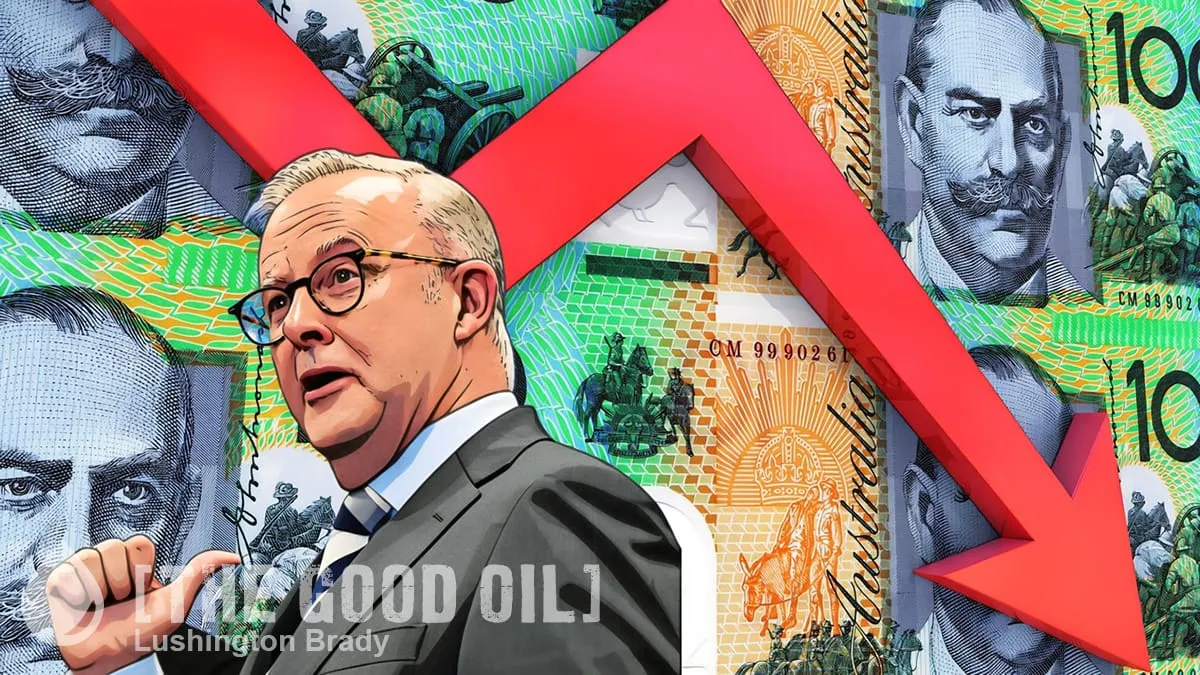
Similarly, the news that the Albanese government’s changes to negative gearing and capital gains tax are already sending house prices crashing might seem like good news to aspiring homebuyers. But it’s a lot more complicated than that. Firstly, it’s leaving recent young purchasers who used the government’s other flagship ‘generational equity’ measure, the five per cent deposit scheme, staring down the barrel of negative equity in their new homes. Secondly, it’s driving out investors, for sure – but that’s only making the rental market even tighter.
Worst of all, it’s threatening all of us with a recession. Lower house prices might make for a buyer’s market – but that’s not much good if the buyers are as broke as everyone else.
Back in the first week of May, prior to the budget, just one Reserve Bank director – and we don’t know which one – voted not to increase official interest rates.
The other eight Reserve Bank directors voted to increase interest rates and, in my view at the time, headed Australia towards a 1990s-style recession.
My prediction would have taken some time to eventuate, but thanks to the federal budget we are now headed into a severe downturn at a much faster rate.
That was written two months ago. Events are conspiring to prove him ominously right.
The May budget was supposed to deliver generational fairness. What it has delivered instead is a sharp, structural shock. Westpac has already reported a 20 per cent drop in new property investor loans and a steep decline in overall mortgage applications. Bank shares, those reliable barometers of confidence, have collectively fallen around 25 per cent from their recent highs. ANZ’s chief is talking about the need to return to wealth management and insurance because ordinary home lending no longer looks profitable enough. When the banks start sounding like that, the rest of us should listen. And young people should get very worried.
Young people are finding it incredibly difficult to obtain work and the current youth unemployment rate of 11 per cent is likely to rise sharply in coming months. Other enterprises are simply cutting back hours worked, so underemployment is also set to skyrocket.
The fall in the housing market in Melbourne and Sydney has been severe in the $1.5m to $10m bracket, where large numbers of middle Australians have borrowed heavily. Many of these dwellings provide the capital backing for family businesses.
State governments, particularly in NSW and Victoria, are badly managed with inflated costs, but suddenly their main revenue – stamp duty – is set to slump. Pruning will be required and, again, it will be young people who are not hired.
If this is all starting to sound grimly familiar, it should. Consumer confidence has collapsed to levels last seen on the eve of the 1990 recession. The ANZ-Roy Morgan index is sitting near 70 – well below the neutral 100 and matching the record lows of 1989–90. More Australians expect to be worse off than better off. More expect bad times than good. Consumers often sense trouble before the official numbers catch up. This time the numbers are catching up fast.
Economists are now openly discussing what size house-price fall tips the economy over.
Labor’s tax changes and high interest rates are smashing confidence and pushing the economy to the brink, with senior economists warning a property slump of more than 15 per cent could trigger a recession.
Banking giant ANZ’s revised forecast this week that capital city home prices would fall 10.6 per cent from peak to trough in the current slump – led lower by Sydney sinking 14.5 per cent and Melbourne falling 12.8 per cent – is the most dire prediction made following the May federal budget.
At that point the wealth effect kicks in hard. Housing is where most Australian households keep their net worth. Each 10 per cent fall in household wealth tends to knock about one per cent off consumer spending. Spending is 60 per cent of the economy. Businesses see weaker demand, cut investment and hours and start shedding staff.
Crisis? What crisis? says Sunny Albo, giddily claiming victory. Homebuyers are no longer competing with investors at auctions, he says. Negative equity is still low. For now.
The danger is a classic debt-deflation spiral: falling prices, reduced spending, higher unemployment, more forced sales and further price falls. Australia has not seen a national housing downturn of more than 10 per cent in half a century. We are testing that limit now, under the combined weight of high interest rates and a deliberate tax assault on investors. The government set out to punish the ‘greedy’ landlord class and gift the next generation a fairer go. Instead it risks gifting everyone a recession.
They haven’t talked about liquidating the kulaks just yet. Give it time.