Table of Contents
The growing protest movement in the First World against mass-importing the Third World is sweeping into Western-aligned nations in Asia. Despite just three per cent of their population being foreign-born, Japanese aren’t waiting to allow their leaders to repeat the mistakes of Europe, America and Australia. Especially not when their leaders seem determined to outdo even the Starmer government in pandering to Third World interlopers.
Migrant protests have erupted in Japan after “hometowns” for four African countries were set up in Japanese cities.
Controversy was sparked last week after authorities announced a new initiative under the Japan International Cooperation Agency (Jica), who describes its goal as creating a “peaceful and prosperous world where people can hope for a better future and explore their diverse potentials”.
At the Tokyo International Conference on African Development, Jica announced the roll-out of an “African Hometown Initiative”, which declared four “hometowns” in Japanese cities for Nigeria, Ghana, Tanzania and Mozambique.
That sounds like WEF-speak. So, what exactly are they up to? It sounds suspiciously like the Albanese government’s secretive negotiations to establish foreign-built Indian enclaves in Australia.
Amid fears that the hometowns were being set up to accommodate future African immigrants, Jica and the Ministry of Foreign Affairs affirmed the programme aims to tackle challenges in Africa while supporting local communities in Japan.
Nigeria’s government fanned the flames by posting a now-deleted announcement that “the Japanese Government will create a special visa category for highly skilled, innovative, and talented young Nigerians who want to move to Kisarazu (city) to live and work”.
Chief Cabinet Secretary Hayashi Yoshimasa addressed the concerns on Tuesday, saying that while the Jica will be taking on African interns as part of the scheme, they will be returned back to their countries after completing training.
As they will when they get caught, the government is hurriedly trying to backpedal.
Japan’s Foreign Ministry published a statement afterwards which read: “There are no plans to take measures to promote the acceptance of immigrants or issue special visas for residents of African countries, and the series of reports and announcements concerning such measures are not true".
Many Japanese aren’t buying it.
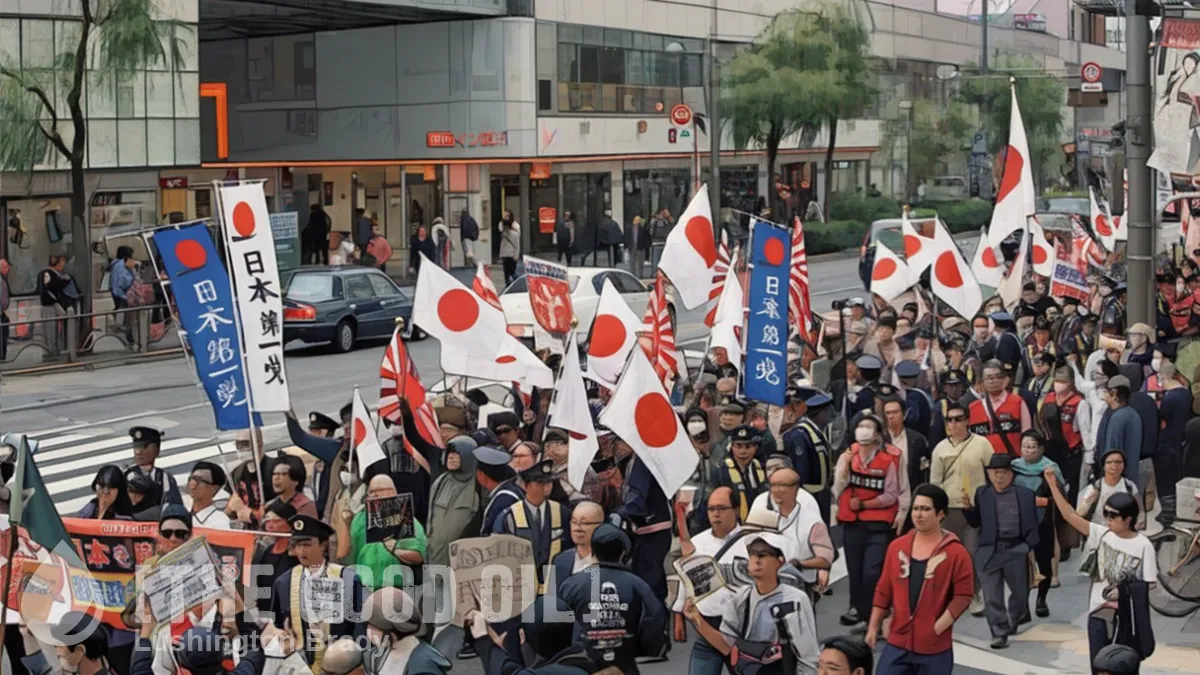
After the Nigerian Government’s statement, crowds gathered outside the Jica headquarters in Tokyo to oppose what they believed to be a relaxing of Japan’s strict immigration policy.
Protesters hit out at the creation of the hometowns and Prime Minister Ishiba Shigeru, after he announced that Japan would be increasing its investment into the African continent to $36.7billion (£27.1billion).
Demonstrators were seen waving placards which vowed to “protect the Japanese people” and were heard calling for an “end to mass migration”.
In particular, the Japanese aren’t buying the ‘good for the economy’ argument for mass immigration. Instead, they see their own safety and culture as far more important than a tenth of a percentage point of GDP.
The significant increase in foreigners coming to Japan has increasingly frustrated locals, with some blaming a rise in both crime and the cost of living on them.
Two weeks ago, the Japanese Government created a new office designed to crack down on foreigners “who do not follow our rules” amid fears over rising crime within the country.
Shockingly, compared to Western governments, the Japanese government is at least paying lip service to addressing concerns.
A new task force is expected to be established soon in order to conduct surveys on the impacts of rising foreign resident numbers, with the findings to be used in shaping future immigration policies.
The main concern, according to the report, is to prevent social division between foreign nationals and citizens, as seen in other Group of Seven developed nations. Caps on foreign nationals coming into the country may be considered “if signs emerge that friction has exceeded tolerable levels,” the report says.
“Other countries have struggled with integration, leading in many cases to social division or political turmoil. Japan, too, must prepare early,” Suzuki said during a news conference Friday.
Of course, when it comes to immigration, doublespeak is the government way.
“Safeguarding the safety and security of Japanese citizens must remain the government’s top priority,” the report says. “Japan must work toward true coexistence with foreign nationals, while preparing for an era when foreign nationals comprise 10% of the population.”
How is doubling a foreign population who are already provoking mass demonstrations in Japan consistent with the rest of what the government claims to prioritise?
The West stands as a cautionary tale for Japan.