Peter Williams
Writer and broadcaster for half a century. Now watching from the sidelines although verbalising thoughts on www.reality check.radio three days a week.
It’s surely a unique tourism experience in the true sense of the word. Is there any other disused prison anywhere, particularly one used to detain political prisoners, where the tour guide was once an inmate?
Such is the arrangement on Robben Island, the five-square-kilometre outpost in Table Bay around seven kilometres from the South African mainland at its closest point.
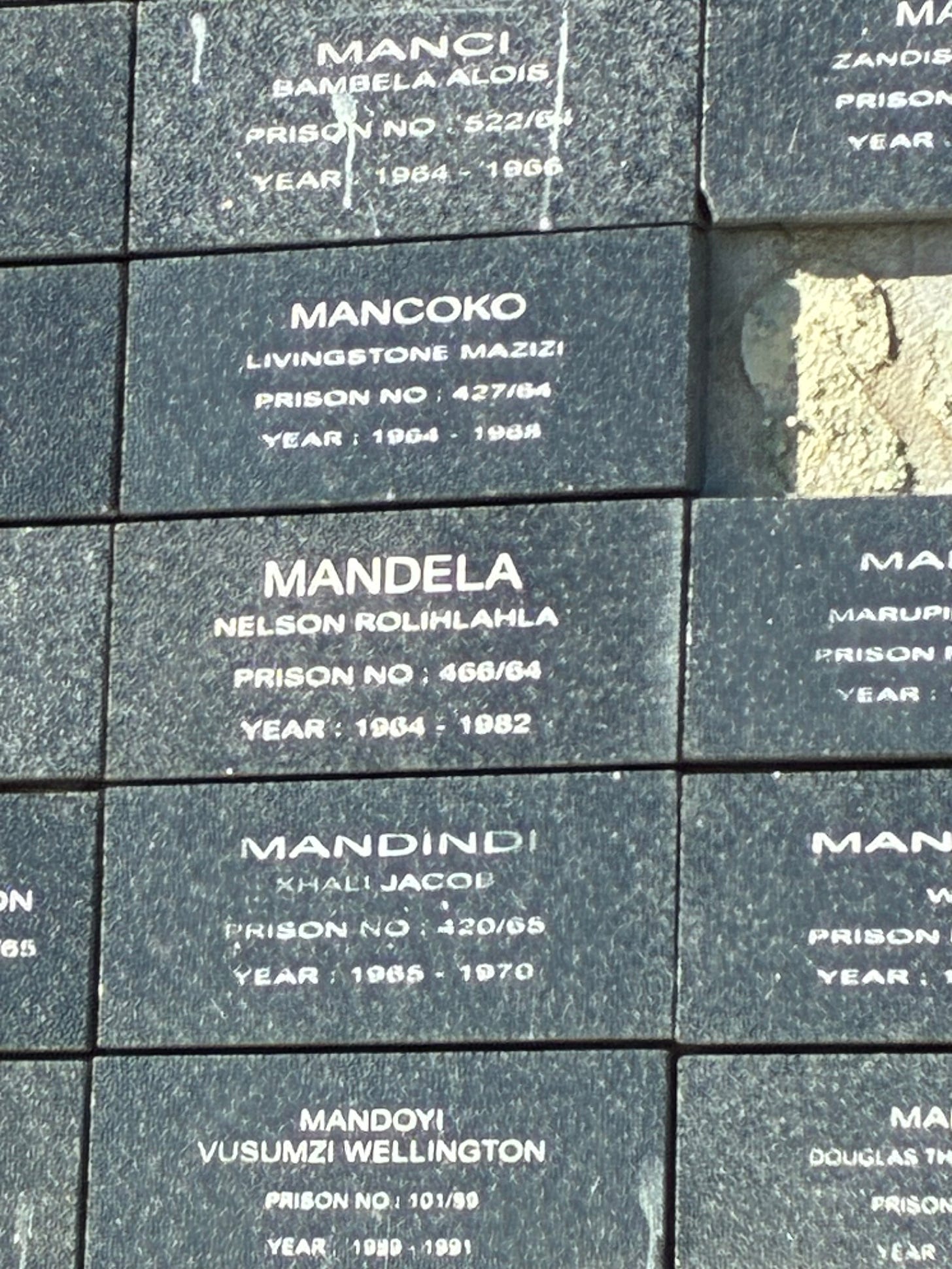
Its most famous inmate was future South African president Nelson Mandela, who was incarcerated there from 1964 to 1982. Many other future political leaders of post-apartheid South Africa were also held there.
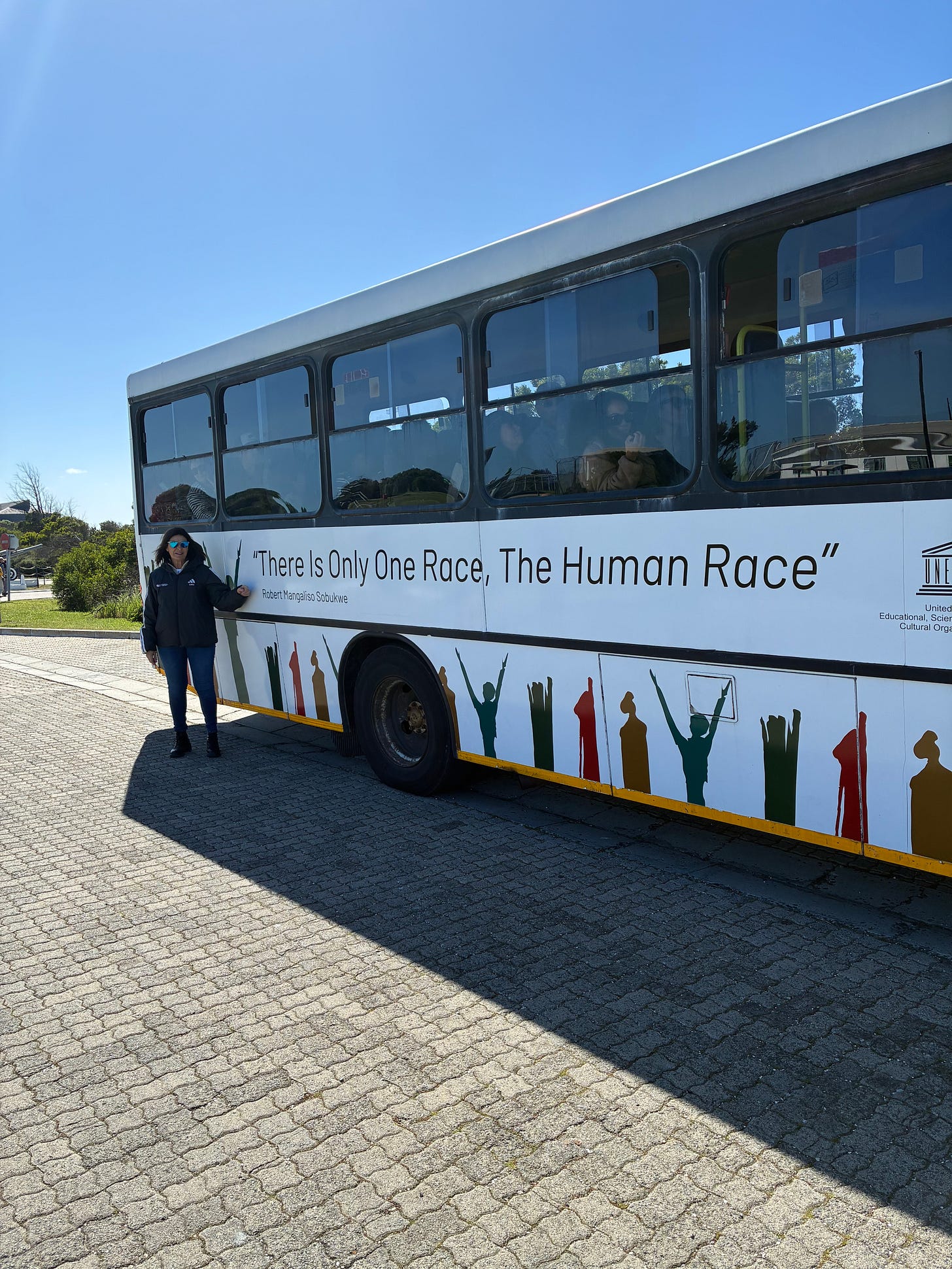
There are two parts to the tour: first a short jaunt around the island by bus, where the various grades of prison security are shown along with the cemetery and chapels and the limestone quarry where Mandela and his colleagues worked, and held political discussions out of sight from the guards and their dogs who patrolled only at ground level.
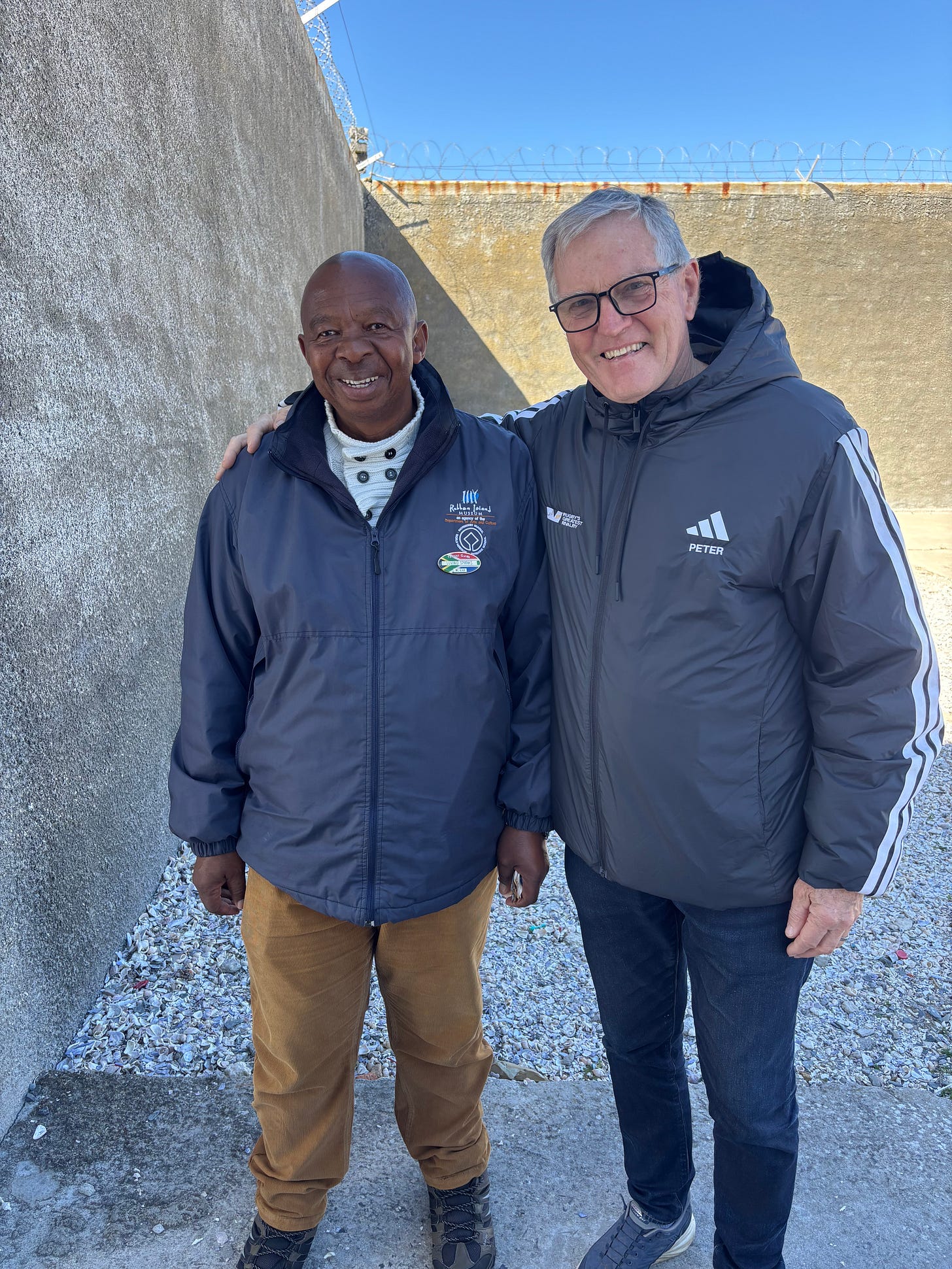
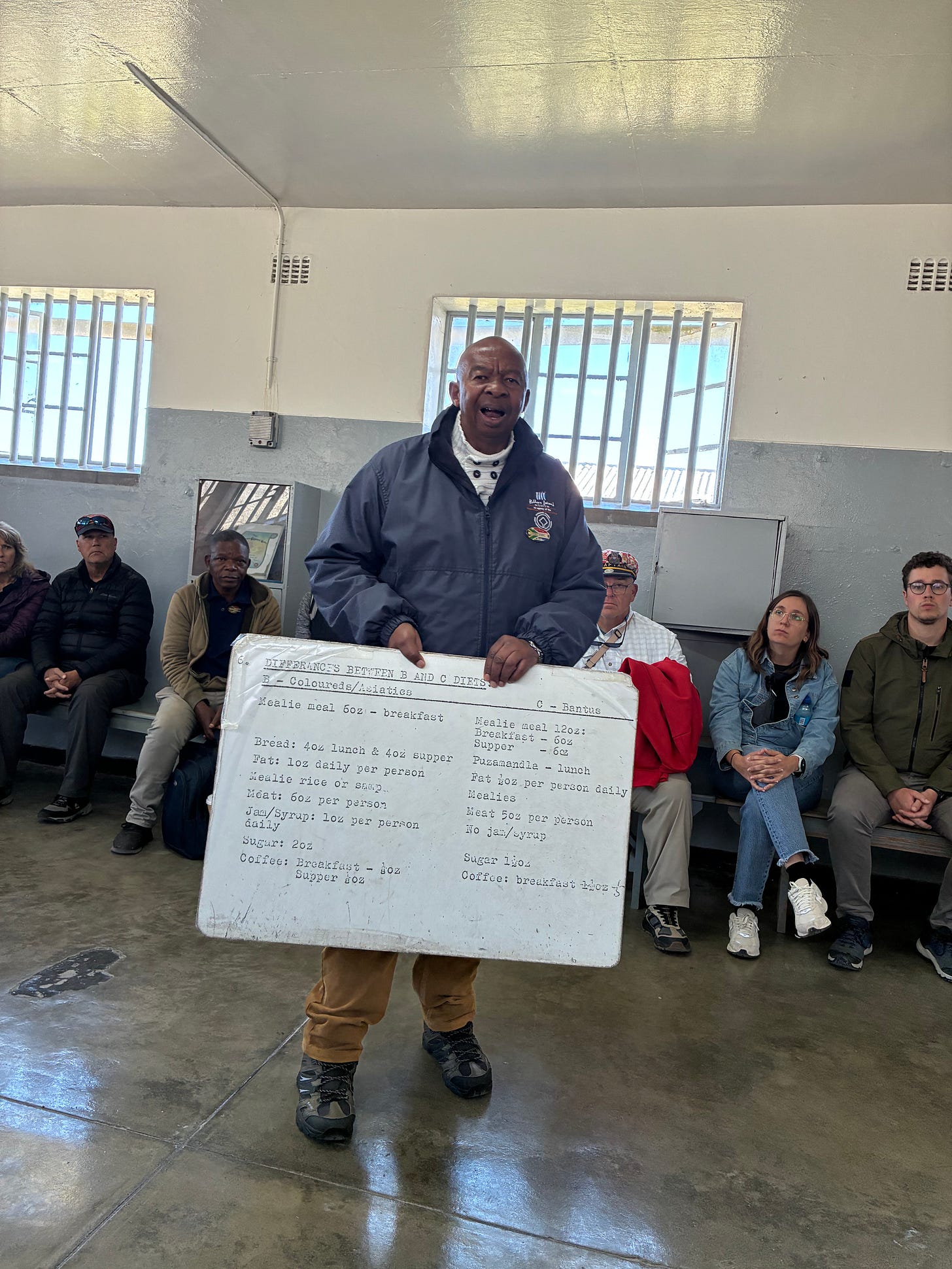
Then the bus stops outside the maximum security prison and we were met by Luviwo Sparks, a solidly built 59-year-old who spent seven years there as a prisoner from the ages of 17 to 24 starting in 1983.
Originally from the Eastern Cape, his crime was to recruit other teenagers into the African National Congress.
To a large tour group of around 60, many of them white South Africans, he explained in an authoritative staccato delivery a little of what life was like on Robben Island back in those grim days.
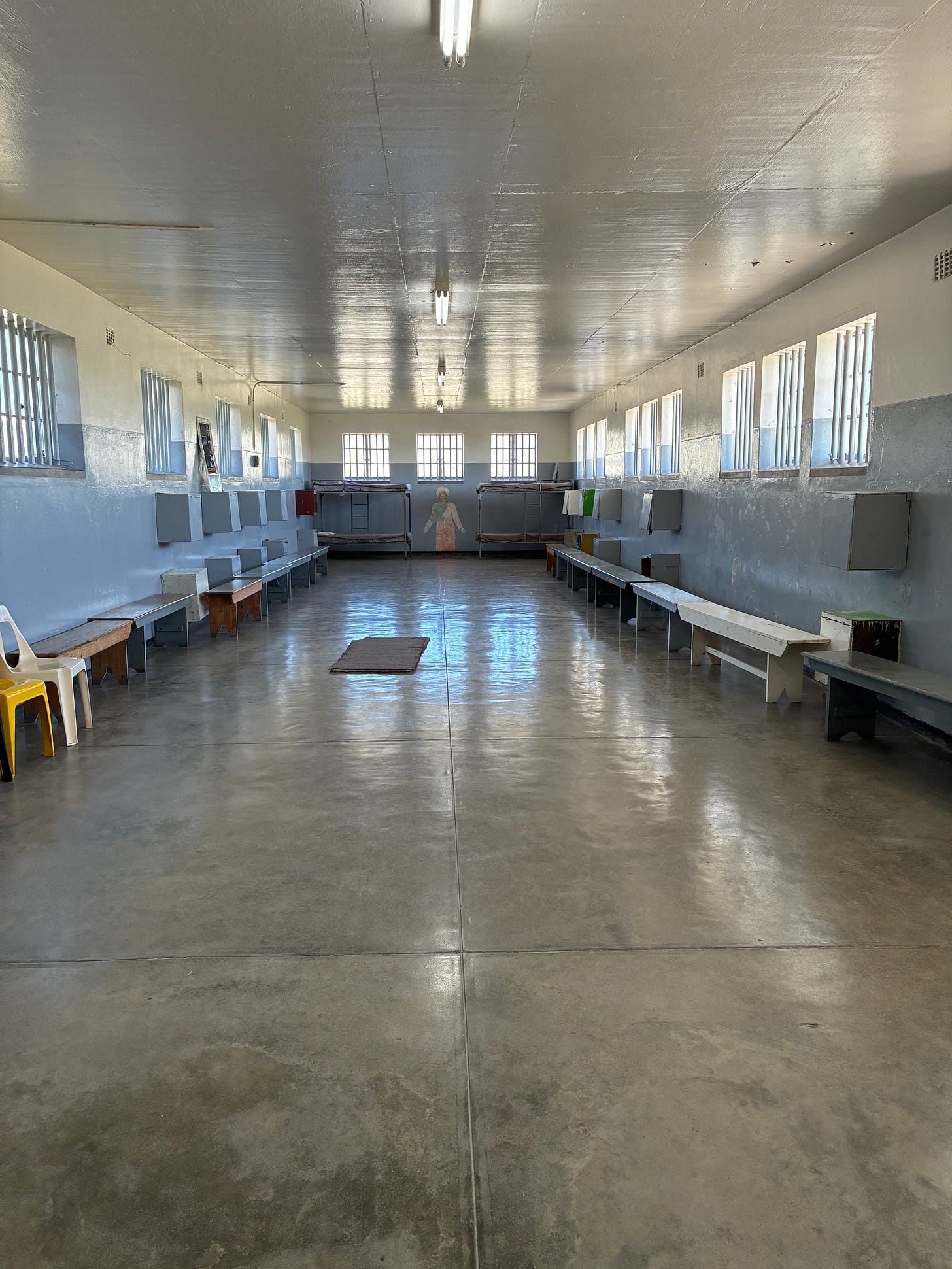
He took us to a large rectangular communal cell, perhaps a hundred square metres in area. It has glass in the windows now and polished concrete floors. Back then there were just steel bars and a rough gritty floor. The prisoners slept on mats with no blankets. Later the Red Cross supplied some bunks but no mattresses. Anti-apartheid campaigner Helen Suzman eventually provided a few thin mattresses for those bunks.
Black prisoners, and Mr Sparks explained the discrimination even between races inside the prison, were provided only short sleeve shirts and shorts.
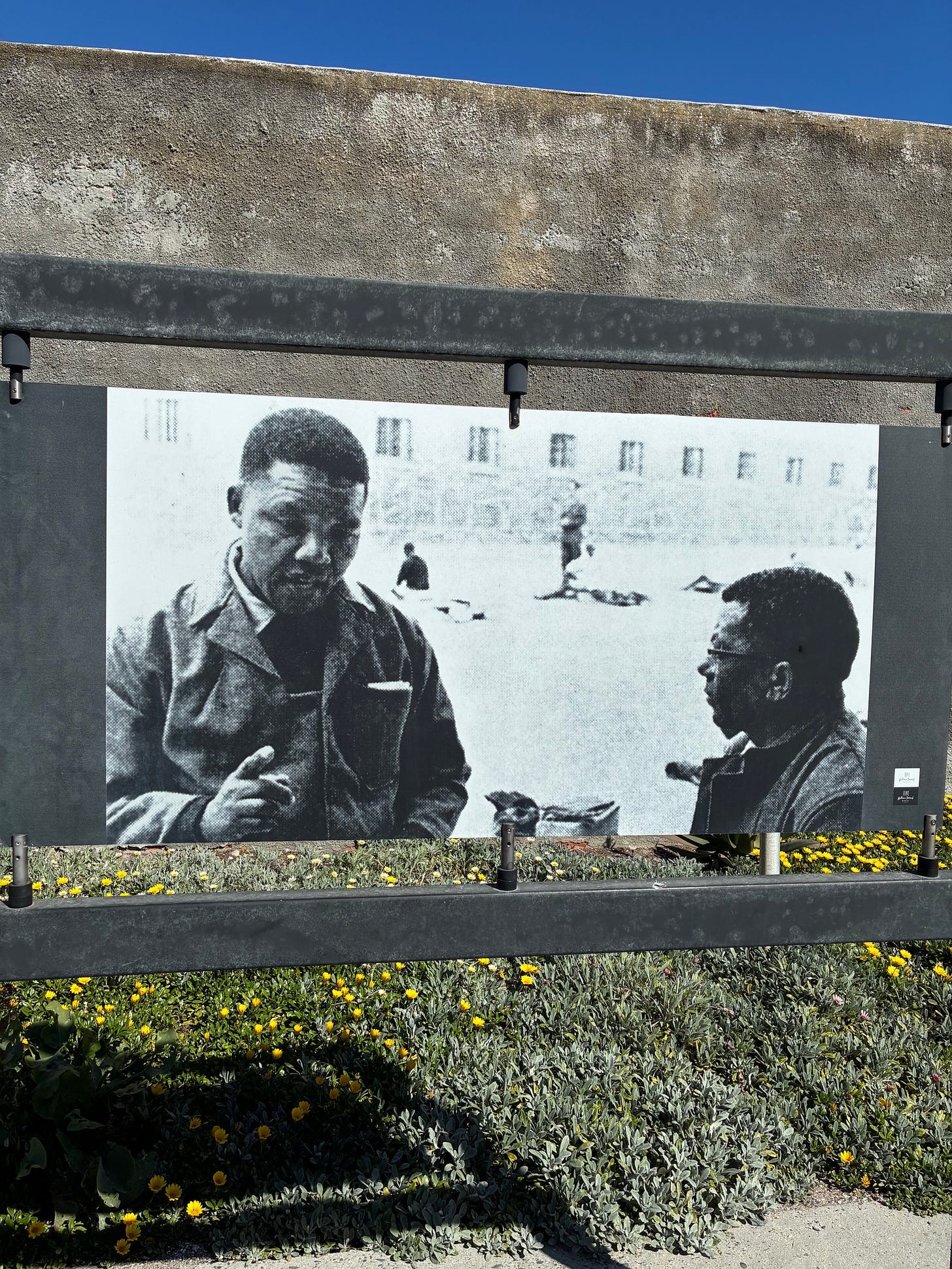
A photo of Mandela and his colleague Walter Sisulu in the prison courtyard shows them in jackets. It was taken in 1966. Mr Sparks says they were given warmer clothes just for the international media visit that day.
Cape Town gets cold in the winter. We wore jackets out there the day after the test but the idea of sleeping on a thin mat with no cover in a cold cell when the southerly wind is biting and the rain is coming through the grill is appalling to contemplate. Yet it was happening only 40 years ago.
Inevitability prisoners became ill. Double pneumonia was common but the doctor came just once a week – on Wednesdays. As Mr Sparks said, ruefully, “It was never a good idea to be sick on a Thursday.”
The discrimination against black prisoners was never more stark than when it came to food. Mr Sparks showed us a chart with the rations for “coloureds/Asiatics” and “Bantus.” The coloureds and Asians, mostly Indians, were given four ounces of bread for each of lunch and supper. The bantus (blacks) had no bread and instead were given something called puzamandla for lunch, a so-called high energy food which many of the prisoners came to believe made them sterile. Mr Sparks never ate it. He now has three children.
The coloureds and Asians were allowed six ounces of meat daily, the blacks only five. Jam was available to the coloureds and Asians but not to the blacks. And so it went on.
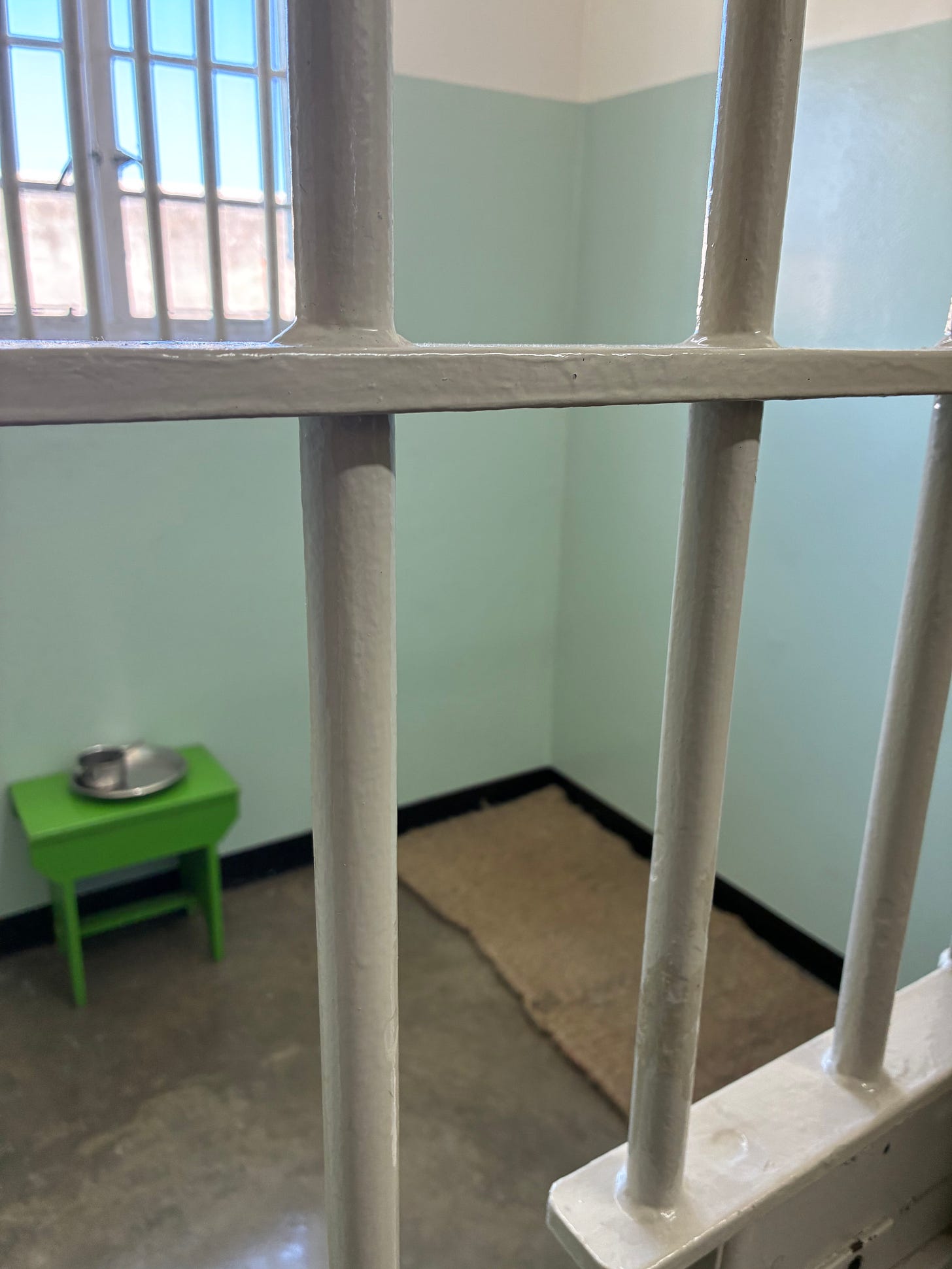
Mr Sparks told us of the regular use of solitary confinement for so called bad behaviour. He even explained that if you’d been well behaved and avoided solitary there would come a time when the guards decided you should be put away in solitary for a while anyway. It seems their vindictiveness knew no boundaries.
Yet now Mr Sparks bears no grudges. He’s been a guide on the island for over 20 years. He lives there for weeks at a time before going back to his hometown in the Eastern Cape for his time off.
He says he has forgiven his former guards and in fact is now friends with some of them. The spirit of Nelson Mandela lives on in this man.
Between 1961 and 1990, there were over 3000 prisoners sent to Robben Island. Only about 400 are still alive. Mr Sparks says it’s important that the stories of those years, an era which is a stench on human history, are told by those who experienced them first hand.
After this three-hour Sunday morning excursion, the events of the day before, when we couldn’t get our tickets for the game and the All Blacks lost, were put completely in perspective.
It’s uncomfortable to remember that while these men (there was only ever one woman imprisoned there) were incarcerated and forced into hard labour in that quarry, the All Blacks twice played test matches at the old Newlands ground in Cape Town, less than 30 kilometres away.
Robben Island today is a museum and heritage site. It is a tourist experience like no other.
That such cruelty and inhumanity could be inflicted on others in my lifetime is just incomprehensible. Yet the forgiveness and reconciliation of those affected is by far the most profound part of the story.
The banner on the side of the tour buses reads “There is only one race, the human race.”
And isn’t that a message for our country too?
This article was originally published on the author’s Substack.