Table of Contents
As the poll-conquering One Nation faces its first real tests at the ballot box, with both the South Australian state and Farrer federal by-elections fast approaching, its poll numbers continue to rise across the country. Even in Labor’s heartland. In NSW, though, they’re still a long way from claiming a lower house seat, let alone government. But they are certainly looking to increase their representation in the NSW upper house.
Support for One Nation has grown in NSW, with Pauline Hanson's party on track to win more upper house seats than the coalition at next year’s state election.
Let’s be honest: that isn’t saying a hell of a lot.
The DemosAU poll shows the coalition sinking to 23 per cent in the lower house, a seven‑point slump since October and a massive 12.4‑point slide from the 2023 election.
New Liberal leader Kellie Sloane is also struggling to connect, polling worse than Mark Speakman, the man she replaced in November.
One Nation has climbed to 21 per cent, putting the party ahead of the coalition for upper house seats as conservative voters desert the major parties.
That still leaves the Labor government with a comfortable lead, unlike in Victoria.
One Nation’s upper house vote has surged 16.1 points, putting the party on track to win five seats, ahead of the coalition on four.
However, there were some signs of weakness for the Minns government and Labor on a series of key issues.
The poll shows 70 per cent of voters believe the Minns government is performing poorly on cost‑of‑living pressures, making it the government’s weakest result.
It also finds housing remains a major vulnerability, with the government recording a minus 52 per cent satisfaction score on the issue.
Voters are also deeply unhappy with the government’s record on energy, electricity and crime.
Minns’s belated, and too often ham-fisted, reaction to the Bondi anti-Semitic terror attack (after doing nothing about rising anti-Semitism for two years) isn’t convincing many voters.
Support for the premier’s approach to protest laws sits at 25 per cent, while 42 per cent say his performance in this area is unsatisfactory.
The electorate remains evenly divided on gun laws, with no clear majority forming on either side.
Nearly half of voters, 48 per cent, believe NSW is heading in the wrong direction, reflecting growing unease in the electorate.
Federally, though, it’s a very different story, with One Nation continuing to go gangbusters.
A survey by YouGov for Sky News Australia showed One Nation has reached a 24 per cent primary vote, placing the party ahead of the coalition at 22 per cent and behind Labor at 29 per cent.
On such a result, One Nation could win 20 parliamentary seats at the next federal election.
The party would also likely win an extra five seats in the Senate.
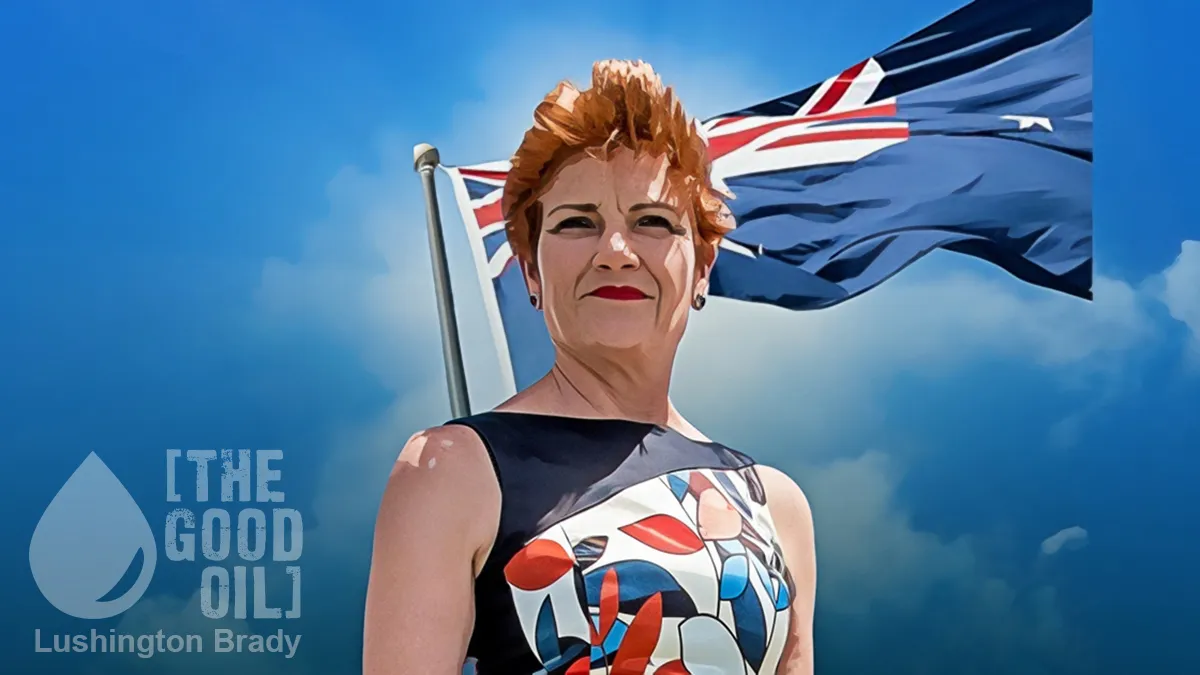
Perhaps unsurprisingly, Pauline Hanson is growing increasingly ebullient. So much so that she’s apparently confident enough to start walking back from previous hints at possibly entering a power-sharing agreement with the coalition, should it enable them to take government at the next federal election.
One Nation leader Pauline Hanson has declared she is “not interested” in joining forces with the Liberal and National parties at the next federal election, pushing back on speculation that her party’s growing support could lead to a formal alliance aimed at defeating Labor.
Hanson’s party has been in the spotlight after a run of strong polling suggested One Nation is now the second most popular political force in the country, behind only Labor. The surge has come as the coalition has been dealing with internal infighting and dysfunction, splitting and then reuniting twice in the space of nine months. Against that backdrop, One Nation’s rise has sparked renewed discussion about whether it could become a central part of the conservative side of politics, or even seek to merge with Australia’s other two right-wing parties.
Hanson dismissed those rumours, rejecting any push for a combined “super coalition”. “No I don’t want a super coalition, not interested,” she said.
Her reasoning is not that she thinks One Nation can form government, either in its own right or as part of a ‘super coalition’, but that her party’s continuing role is in standing apart from the political establishment.
She also insisted she is not chasing power or a role in government, adding: “I don’t want any ministerial positions, I want to remain completely independent and judge the legislation that’s been put up.”
This is an obviously strategic move, to try and blunt what will certainly be the growing attacks on the party as its popularity becomes a threat to the establishment duopoly. It’s also Hanson telling her supporters what they want to hear.
Rather than working with the major parties, Hanson and high-profile One Nation recruit Barnaby Joyce believe the coalition and Labor will instead focus on trying to halt One Nation’s momentum as the election draws closer. “When we get close to a federal election I can assure you of one thing – it’ll get dirty,” Mr Joyce said. “It will be a concentration, I believe, in both the National Party and the Liberal Party, and the Labor Party, to get rid of the One Nation Party.”
Hanson echoed that view, arguing her movement is seen as a challenge to the existing political order. “I’m a threat to the establishment,” she said. Even so, she suggested the criticism only strengthens her resolve. “I’ve still got the fight in me,” she said.
The legacy media and the two-party establishment are terrified by One Nation’s rise. The attacks have already begun in earnest and will only intensify.
The strategy from the establishment will be to try and scare voters off. One Nation’s counter-strategy is to shore up their established role as gadfly outsiders. To borrow an old phrase from the now-defunct Australian Democrats, they’re there to ‘keep the bastards honest’. That way, they’ll be able to play down the ‘threat’ of an actual One Nation government, and blunt any attacks as a defensive, corrupt establishment Goliath trying to take down the brave little guy David.