Table of Contents
HG
Hi team
Happy New Year – I hope you all had a good festive season.
I’m just emailing to get your thoughts on something. I figured it was an interesting story, given your critiques of the tax-and-spend policies of the last government – and the current government, for that matter.
The folks over at the Official Aotearoa Music Charts just listed the most popular songs in New Zealand in 2025. As is often the case, the songs that Kiwis are mainly listening to are non-NZ songs. However, there are still a handful of Kiwi anthems that enjoyed modest success in 2025. Accordingly, a list of the most popular Kiwi songs of 2025 was also unveiled:
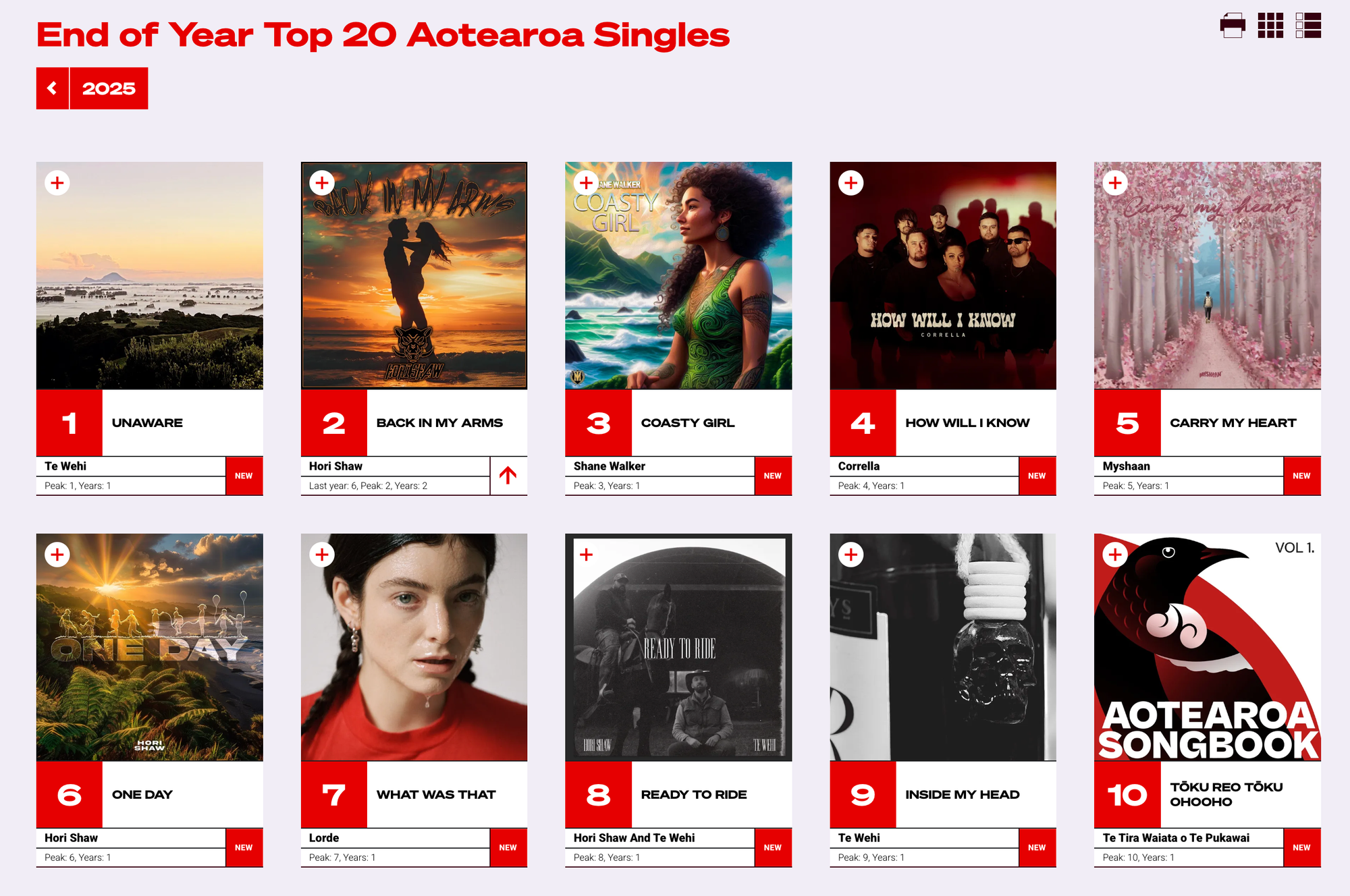
According to this, the number one most popular New Zealand song of 2025 is a song called “Unaware” by Eastern Bay of Plenty reggae musician Te Wehi. I’ve heard this track on the radio quite a bit over the last year. In addition to just being a really nice tune, the lyrical content is quite fascinating. “Unaware” is an overtly political track that criticises wasteful government spending and high taxes.
The song opens with the lines Every day, the deficit grows/You spend more than you own – which really echo the concerns that have dominated New Zealand’s economic discourse under this government and the last Labour government. Other lines like Every day, taxes increase/So is this our land or is this our lease? really speak to the pinch that we’ve all felt over the past five to six years.
Te Wehi’s “Unaware” is actually a cover of a 2011 song by American R&B singer Allen Stone – with the lyrics basically unchanged from the original. That song was written against the backdrop of US deficit concerns in the early 2010s (think of the Tea Party, the rise of Ron Paul and the dominance of figures like Paul Ryan, etc). It’s interesting how Te Wehi’s cover, released well over a decade later – and in a different country – has really found resonance in New Zealand. Like I said, it was the biggest NZ song of the year.
I’d be interested to get your thoughts on what this song’s popularity says about the economic mood of the country – especially as we’re now in an election year.