Table of Contents
Monica Wilkie
Monica Wilkie is a Sydney-based freelance writer. She has worked at the Centre for Independent Studies, written for the country’s major newspapers, appeared on Sky After Dark, and been interviewed many for podcasts.
The term paper terrorism is creeping in to describe the sovereign citizen movement’s use of pseudo-legal terms and processes. It will be expanded to encompass everyone in the freedom movement and needs to be stopped.
The American Southern Poverty Law Centre describes paper terrorism as “…[using] legal loopholes in order to circumvent the law…” One of the earliest references to this term, I have found, was from a 1996 journal article.
I recently came across the term paper terrorism on the ABC’s Four Corners episode, “Lawfare”, which followed sovereign citizen individuals and groups. The description of the episode reads:
A growing anti-government movement in Australia is challenging the authority of the courts, councils and cops. Supercharged during the Covid lockdowns, some call themselves sovereign citizens, others freedom fighters.
The documentary begins with the host, Mahmood Fazal, telling us, “An offensive from the fringes has been launched against mainstream of society.”
The program trotted out the obligatory academics to provide the imprimatur of truth and factuality. Dr Joe McIntyre, professor of law at the University of South Australia, follows the rise of ‘pseudo law’, which he describes as made-up legal sounding phrases and laws which have no basis. This includes everything from people claiming they do not have to pay their mortgage, to holding trials against Scott Morrison on the charge of genocide.
Australian Human Rights Commission wrote some weasel words about how freedom of expression is fundamental.
They interview a man later whose sovereign citizen ex-wife bombards him with legal sounding emails and requests which are nonsensical and extreme. This man now takes extreme precautions to protect himself and his children from his ex-wife and her associates.
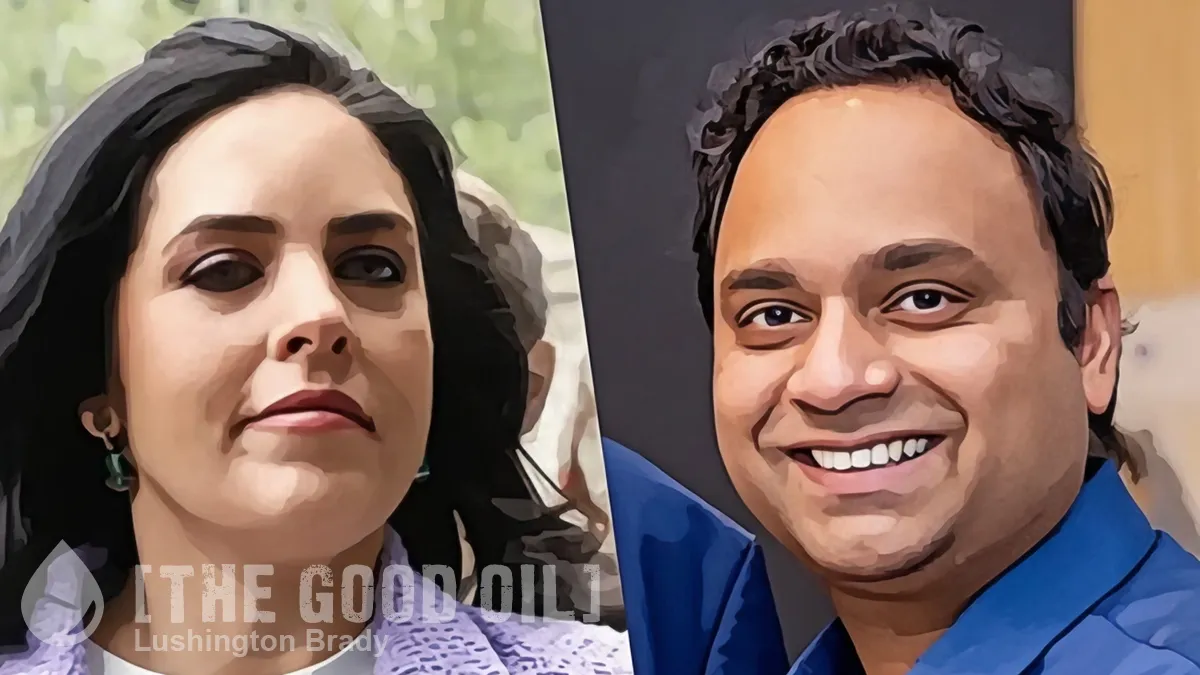
The program follows magistrates, local councils, and other law enforcement professionals who have encountered ‘paper terrorism’. Anti-government types in Northern Tasmania are, apparently, “…forcing their agenda on local councils”. Fazal then asks one of the local figures in this movement, Kush, “What about the councillors who feel threatened when people come into these council meetings in big numbers?”
Imagine signing up to be a councillor then whining when a lot of people, who you do not agree with, come to a public meeting. Astonishing.
Herein lies the first problem with the term paper terrorism. When it covers everything from quirky citizens claiming they do not need a driver’s license to harassing a bloke and his kids with nonsense emails and threatening him with imprisonment and hard labour, we have a problem.
This is, almost, a reverse ‘Motte and Bailey’. That is, proposing something drastic then retreating to a safer position when challenged. Paper terrorism is talking about mundane nuisances then ramping it up when challenged. If I argue that calling people terrorists if they do not believe in the state’s authority to issue driver’s licenses is extreme, someone can point to sovereign citizens who are murderers, dismiss my argument and make me look crazy and extreme. An American academic, Dr Christine Sateseki, tells us that it is a myth that sovereign citizens are ‘only’ paper terrorists, and that she has recorded several instances of violence.
In fact, it is a deliberately broad and vague term so it can be deployed against someone’s political enemies when required. The term terrorist is so emotive and invokes fear and disgust that people will dismiss and fear anyone slapped with the label.
And it gets worse. Our public lexicon has simultaneously been eroded and exaggerated.
NSW Opposition Leader and full-grown adult – I do not want to assume his gender – Mark Speakman claimed he was the victim of “brazen bullying” after being criticised by pro-life activists. Member for Warringah and full-grown adult (gender unspecified) Zali Steggall wants to ban “objectionable words” in the House of Parliament. Before Scott Morrison became our Lockdown Minister-in-Chief, he claimed most discrimination starts innocently with jokes and mockery.
Again, the spectacle of watching full-grown adults (perhaps in body only) crying about mean words and ‘bullying’ would be funny if it did not have serious consequences.
Governments around the world, tech companies, and importantly, Australian laws, restrict the encouragement of terrorism online. Could using social media to organise a protest at a council meeting be considered ‘encouraging in paper terrorism’? As the ABC tells us, councils are being bombarded with this sort of nonsense.
Of course, we will be told no, do not be ridiculous – slippery slope arguments are fallacious. This same story happens when, every few years, we go through the process of debating and introducing new hate speech laws.
The program follows magistrates, local councils, and other law enforcement professionals who have encountered ‘paper terrorism’.
In 2018, after a lengthy period of lobbying and debate, NSW lowered its threshold for incitement so no one needs to commit violence – it just needs to be likely that one’s words could incite violence. After new federal and state hate speech laws were introduced this year, the Australian Human Rights Commission wrote some weasel words about how freedom of expression is fundamental but can be limited in the right circumstances. Funny how the circumstances remain unspecified and ever shifting.
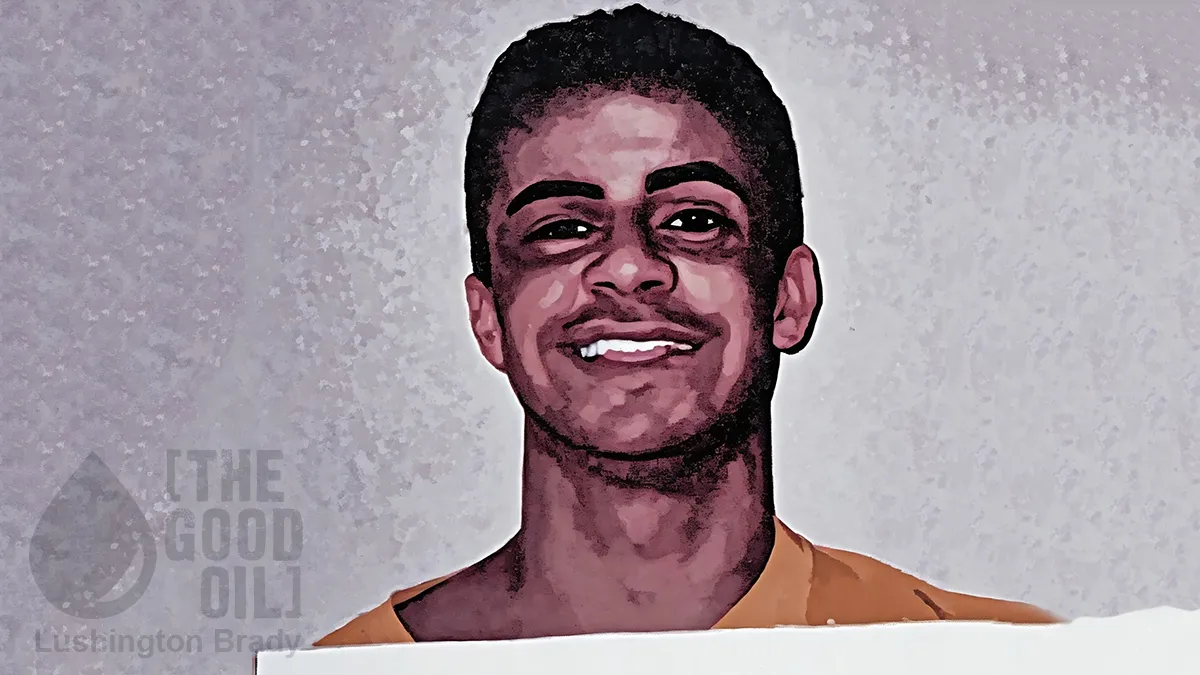
In the last 25 years, there have been 32 federal bills introduced which deal with terrorism, not including state laws or the various other acts, surveillance technologies, and bureaucrats intruding in our business in the name of protecting us. When a young man faces gaol for holding a blank sign in front of the Chinese Consulate, just wait until ‘paper terrorism’ becomes its own specific offense.
The ABC’s blurb for Lawfare refers to anti-government movements and freedom fighters. Many of us would use those labels to describe ourselves.
Will writing a spicy op-ed or petitioning be classified as ‘paper terrorism’? I do not see why not. Once you have a term like that at your disposal, you can use it to muddy the waters and provoke fear. During the lockdowns, our public masters used fear and a constant barrage of bad stories to control us into staying indoors. What will they do when they can scare our fellow citizens into thinking there are terrorists hiding in plain paper?
Fighting over language may seem trivial but it never is. The words we use to think and communicate are of vital importance.
We cannot let ‘paper terrorism’ become the new scare campaign to take away more of our liberties. Call it out whenever you hear it and let’s start mocking those who use it.
This article was originally published by Liberty Itch.