In brief
- The government has asked Erica Stanford to develop options for restricting under-16s from social media.
- David Seymour says ACT would block any VPN ban, warning that a foolproof child ban risks adult privacy.
- Apple, Google, Samsung and TikTok already give parents tools to block apps, set limits and control access.
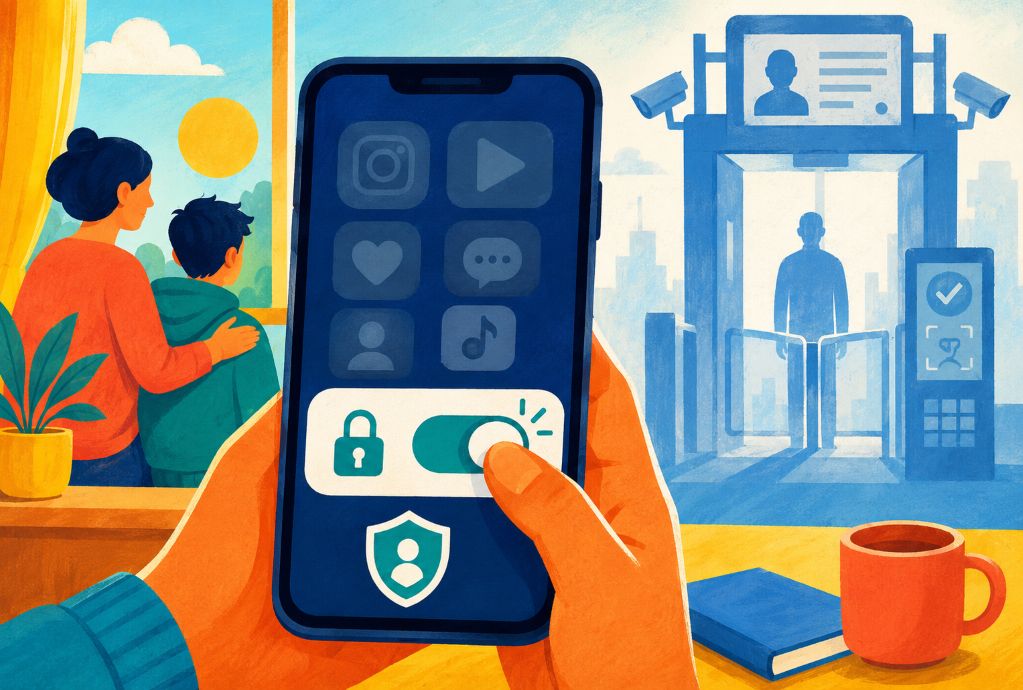
- Is the real danger a child-safety policy becoming a digital ID by stealth?
A child safety policy becomes something bigger
The proposed under-16 social media ban is being sold as child protection. That is the attractive part of the policy. Most parents know smartphones and social media can be harmful, addictive and corrosive for young people.
But the political danger is that a policy aimed at children may become a system of online control for everyone.
The Post initially reported that the government was considering a VPN ban or restrictions as part of the policy work.
Stanford has since said she is not pursuing VPN restrictions, after ACT made clear it would block any such move.
VPN stands for Virtual Private Network. It encrypts a user’s internet connection and can make their device appear to be accessing the internet from another location.
ACT leader David Seymour took to X to say that “the government” is not pursuing such a thing. He said National MPs had been keen on a VPN ban at select committee, while Education Minister Erica Stanford has been developing proposals to ban under-16s from social media.
But the question remains how the government plans to enforce an under-16 social media ban without pushing adults toward online age checks, identity verification or other forms of digital access control.
While the government may not have adopted a VPN ban, the episode shows how quickly a child-safety policy can raise wider questions about privacy, enforcement and state control of the internet.
The Prime Minister previously announced that social media restrictions for under-16s would become part of the government’s work programme, with Stanford assigned to lead the work and bring options to Cabinet.
Parliament’s Education and Workforce Committee has also recommended age restrictions for social media platforms and further work on restricting social media access for under-16s.
Seymour is right about the privacy risk
Seymour’s broader warning is that any ban strong enough to stop determined teenagers will almost certainly require intrusive checks on adults.
If a social media company must prove a user is over 16, then every user may eventually have to prove their age. That is where a child-safety policy begins to drift toward digital ID.
According to Seymour, “there’s no point calling out China’s missiles if we’re going to copy their policies anyway”.
InternetNZ has also warned against VPN regulation, saying, “We do not support VPN regulation and share many of the concerns raised by the ACT and Green Parties in their alternative reports.”
InternetNZ argues that people use VPNs for valid reasons, including security and protection from surveillance. It has described VPN technology as standard practice for good cybersecurity, used by businesses, government and others.
That is why VPN restrictions are such a red flag. They are privacy and security tools used by workers, businesses, journalists, and ordinary citizens who do not want every online action exposed to platforms, advertisers, or network providers.
Big tech already gives parents tools
The deeper problem with Stanford’s approach is that it treats family discipline as a problem for the state to solve, when most parents already have the power to restrict social media at the device level.
Apple’s Screen Time allows parents to set age-related restrictions for content, purchases, downloads, privacy settings, inappropriate web content and app access. Parents can also prevent children from installing or deleting apps or making App Store purchases.
Google’s Family Link lets parents block apps, set individual app time limits, require approval for new apps, block inappropriate sites and manage settings across Chrome, Google Play, YouTube and Search.
Samsung directs Galaxy users to parental controls and Google Family Link, including the ability to block apps, lock devices, restrict content and set screen-time limits.
TikTok also has Family Pairing, allowing caregivers to manage screen time, safety settings and content controls for teenage accounts. These tools are not perfect. But neither is legislation.
That does not make parenting easy. In today’s smartphone culture, turning off access can be a hard fight inside the home. But a hard parenting decision is not automatically a job for Big Brother.
A motivated teenager may try to evade household rules. That does not prove the answer is a national identity checkpoint for the internet.
This is really about digital ID
Perhaps the better approach is to make parental controls easier to use. Require device makers and platforms to make them visible at setup. Educate parents. Improve default settings for young users.
New Zealand already has a Digital Identity Services Trust Framework, which is the legal framework for accredited digital identity services. The Govt.nz app also now includes a digital wallet intended to hold credentials such as licences, IDs and qualifications as they become available.
The government says these systems are about convenience and trust. The risk is function creep. A digital wallet that begins as a voluntary way to access services can become much less voluntary if private platforms are pressured to verify age at scale.
The burden should be on Stanford to explain why existing parental controls are not enough before the country is pushed toward broader online verification.