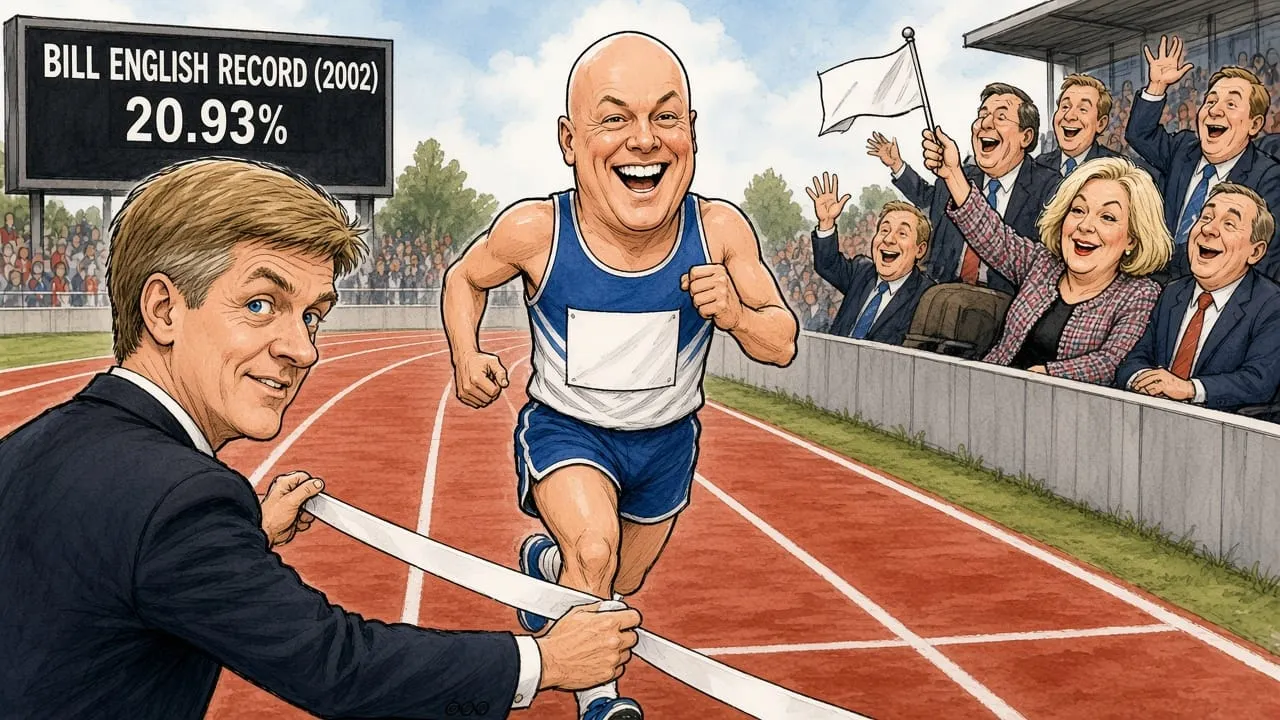
In brief
- Luxon ran Air New Zealand; Willis managed at Fonterra. Hipkins and Edmonds built careers largely inside government.
- Swarbrick and Wong started small businesses; Peters practised law, Seymour worked in policy, while Te Pāti Māori leaders held iwi roles.
- The experience gap: Few have demonstrated they can run a major commercial enterprise. Ministerial experience is no guarantee either: school attendance plunged under Hipkins, unemployment rose under Willis and housing waiting lists grew under Davidson.New Zealand’s political leaders bring vastly different experience, but what have they actually managed, and what results can they show for it? Christopher Luxon — NationalLuxon comes with a corporate track record that can be measured.He spent 18 years at Unilever, from 1993 to 2011, rising to president and chief executive of its Canadian business. He then ran Air New Zealand, a listed, majority Crown-owned airline, from January 2013 to September 2019.During those years, the airline's workforce grew from 10,336 to 11,793 full-time-equivalent employees, an increase of 1,457. Net profit rose from $182 million to $270 million, although profit fell 31% in his final year.Chris Hipkins — LabourHipkins has spent most of his professional life in and around government.There were brief excursions into the private sector, including training-management roles at Todd Energy and the Industry Training Federation. But political advising and public office have dominated his career.He worked in Trevor Mallard's and Helen Clark's offices before entering Parliament in 2008. He went on to hold major portfolios, including Education, Police and the COVID-19 Response, before becoming prime minister in 2023.During his time overseeing Education, regular school attendance fell from 63% in 2017 to just 39.9% in 2022. His stint as Police Minister coincided with a wave of ram raids, and he oversaw some of New Zealand's most contentious COVID-19 restrictions.The pandemic had an effect on many of those challenges. Nevertheless, these were major outcomes during his period of ministerial responsibility.Nicola Willis — NationalWillis worked for Bill English and John Key before moving to Fonterra, the farmer-owned dairy co-operative, in 2012.Her management work included international trade strategy and a team focused on improving the environmental performance of Fonterra-owned farms. She reportedly resigned in November 2016.Since 27 November 2023, Willis has been Minister of Finance. She has also held Social Investment and, since January 2025, Economic Growth.Her time overseeing the nation's finances has supplied some sobering figures.New Zealand entered recession in 2024. Unemployment rose from 3.9% before she took office to 5.6% by mid-2026. Meanwhile, the government recorded an $8.7 billion underlying operating deficit in 2025/26, despite a recent return to economic growth.Fonterra provided Willis with corporate-management experience. Her performance as Finance Minister must now be assessed against the economic record, while recognising that not every movement in the economy is attributable to one minister.Barbara Edmonds — LabourEdmonds private-sector experience includes assessing insurance claims before studying law. After graduating with law and arts degrees in 2008, she joined Inland Revenue's tax-policy team that October.She subsequently advised revenue ministers from both major parties, including National's Michael Woodhouse and Judith Collins, and Labour's Stuart Nash, before entering Parliament in 2020.In 2023, she spent about seven months as Minister for Economic Development and four months as Revenue Minister.During that period, annual inflation remained above 5% and manufacturing suffered a sustained contraction. Edmonds advanced technology-sector incentives and tax proposals, but her relatively brief ministerial tenure makes it difficult to identify measurable economic improvements attributable to her leadership.Her experience is principally in tax policy, public administration and government decision-making rather than commercial management.Chlöe Swarbrick — GreensSwarbrick has started businesses. What those businesses achieved is harder to establish.While studying at university, she co-founded a clothing label called Lucid Collective, which operated from 2012 until August 2015. She also worked as marketing and communications manager for Auckland venue Neck of the Woods and was one of three founders of the Olly café and gallery.These were genuine commercial ventures, not merely entries on a political biography.But the available evidence does not establish sustained profitability or verified employee numbers. Lucid Collective eventually closed, although that does not establish the reasons for its closure.Swarbrick entered Parliament in 2017 and has since expressed interest in becoming Finance Minister in a Labour-led government.Her business background demonstrates experience starting and operating small ventures. Whether those ventures produced enduring commercial success, or any sense for numbers, is less clear.Qiulae Wong — OpportunityWong's business career has an interesting detail: an employee count.She co-founded Common Objective, a platform serving the fashion industry, and was a director of its operating company, Ethical Fashion Group, from February 2017 to July 2020.According to its Companies House filings, the business averaged five employees, including directors, in 2018 and seven in 2019.That confirms a small employer during her directorship. It does not reveal how many worked full-time, what they earned or how much of the growth Wong personally delivered.Back in New Zealand, she led the nonprofit B Lab's local operations before becoming a KPMG associate director advising companies on sustainability.Her entry into politics was rather less conventional.In August 2025, the Opportunity Party advertised its leadership vacancy on Seek, the online job website. Wong spotted the opening in a party newsletter, applied and was appointed leader that November.Debbie Ngarewa-Packer — Te Pāti MāoriNgarewa-Packer's CV covers an unusually varied collection of industries from telecommunications marketing, TVNZ, pizza-delivery business ownership to commercial iwi governance.She became chief executive of Te Reo Irirangi o Taranaki in 1999 and took an executive leadership position at Te Rūnanga o Ngāti Ruanui in 2010.A 2012 government biography also identified her as director-chair of Ngāti Ruanui Holdings, an iwi investment company. She later served as South Taranaki deputy mayor.These positions demonstrate experience across business, iwi organisations and local government. But public records leave important questions about the size, duration and measurable success of several earlier commercial roles unanswered.Rawiri Waititi — Te Pāti MāoriWaititi's working life has largely centred on education, community services and iwi organisations.His documented experience includes teaching, adult education, Whānau Ora services, arts funding and iwi relationships.In his February 2020 candidate statement, he reported spending seven years as relationship manager for Te Rūnanga o Te Whānau-ā-Apanui.David Seymour — ACTSeymour trained as an electrical engineer and undertook technical design work before moving into policy.From 2007 to 2011, he worked at Canada's Frontier Centre for Public Policy, including directing its Saskatchewan office. Political advising and further think-tank work followed before he entered Parliament in 2014.He served as Parliamentary Under-Secretary for Education and Regulatory Reform from 2014 to 2017.Since 2023, Seymour has been Minister for Regulation, alongside Associate Minister responsibilities in Finance, Education, Health and Justice. He became Deputy Prime Minister in May 2025.His experience combines engineering, policy research and considerable government responsibility. What it does not demonstrate is a history of running a major commercial enterprise.Winston Peters — New Zealand FirstLong before his decades in Parliament, Peters worked at BHP's Newcastle steelworks and on Australia's Snowy Mountains project.He later practised law at Russell McVeagh from 1974 to 1978 and ran his own legal practice in Howick between parliamentary terms, from 1982 to 1984.First elected in 1978, Peters subsequently held some of the country's most senior government positions.He served as Treasurer from 1996 to 1998, has been Deputy Prime Minister three times and has held the Foreign Affairs portfolio under successive governments.His responsibilities have also included Māori Affairs, State Owned Enterprises, Racing and, most recently, Rail.His professional experience includes manual work, legal practice and decades of senior government responsibility. His direct business ownership, however, appears largely confined to his early legal practice.Marama Davidson — GreensDavidson's path to Parliament began far from the corporate boardroom.She qualified as an aerobics instructor and taught part-time while at university. In a later personal account, she also recalled working in bars and cleaning jobs, although published accounts provide incomplete dates and hours.From 2003 to 2013, she worked at the Human Rights Commission. She also chaired panels hearing from family-violence survivors and frontline workers for the independently funded Glenn Inquiry before entering Parliament in 2015.From 2020 to 2023, Davidson was Minister for the Prevention of Family and Sexual Violence and Associate Minister of Housing, responsible for homelessness.In 2023, the Auditor-General criticised the slow progress and poor coordination of agencies implementing the government's family-violence strategy.During Davidson's three years overseeing homelessness, the public-housing waiting list grew by approximately 12%. The 2023 Census also recorded 112,496 people experiencing severe housing deprivation, a 13% increase from 2018, before Davidson took office.Davidson herself regretted not accomplishing more on homelessness, arguing that her associate ministerial position lacked sufficient authority to tackle the problem.Re-published from the Centrist with permissionOriginal article at The Centrist
- Swarbrick and Wong started small businesses; Peters practised law, Seymour worked in policy, while Te Pāti Māori leaders held iwi roles.