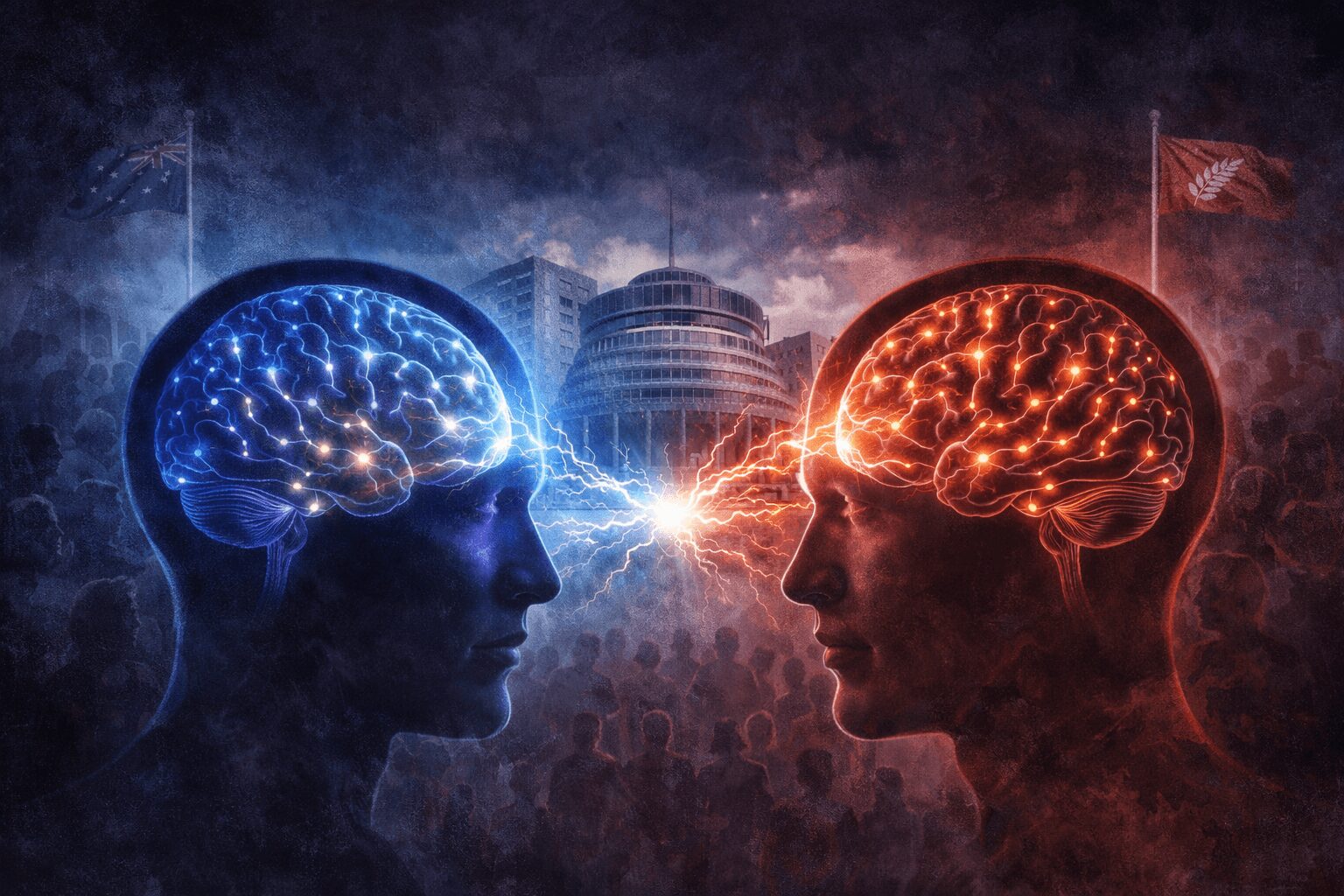
A recent Psychology Today article reaching New Zealand audiences argues that political psychology NZ research shows politics and the brain don’t mix well, fuelling cognitive bias in politics and distorting political decision making. It frames the influence of politics on thinking as a measurable shift in how people process information, especially when identity is at stake.
How politics shapes cognition
The piece says the psychology of political thinking leans on “motivated reasoning”, where people protect group identity and certainty over accuracy. In this view, partisan brain effects can make facts feel like threats, so conflicting evidence is discounted rather than weighed. The result is a narrowing of perception, not a neutral evaluation of reality.
That dynamic helps explain why political debate often hardens rather than changes minds. When identity is tied to ideology, the brain treats disagreement as social risk, which increases defensiveness. The article suggests this isn’t just bad behaviour; it’s an evolved response that prioritises belonging over evidence.
Why it matters for decision-making
For readers following New Zealand political news, the stakes are trust and credibility. If politics primes people to avoid uncomfortable facts, public debate becomes less about policy and more about tribe. The article’s core message is that “reason” is not always the driver people assume it is.
The broader implication is that democratic decision-making depends on recognising these cognitive limits. Understanding how politics and the brain interact doesn’t solve polarisation, but it does clarify why persuasion is hard and why institutions need to protect evidence-based discussion.