Judy Gill
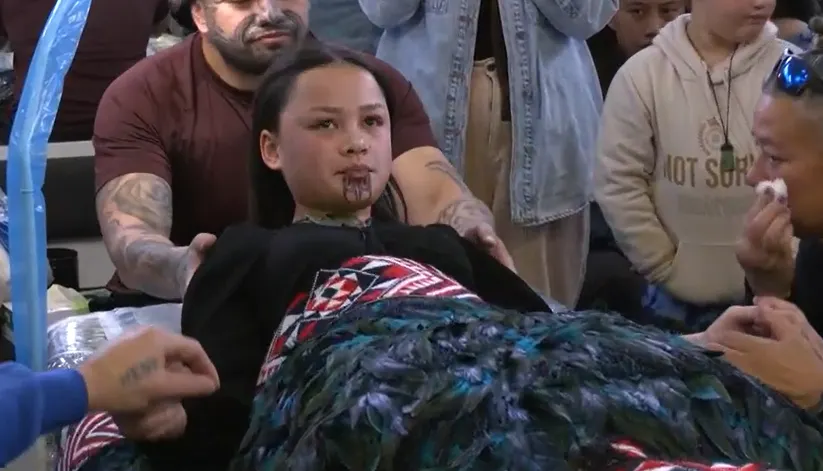
Our law allows for a 13-year-old to receive a permanent facial tattoo – even on a state-school campus – if a parent agrees.
The Short-Term Glow
This year, a 13-year-old girl was celebrated as a cultural leader and framed as reviving an ancient tradition. The identity boost, media praise, alignment with Te Pāti Māori and anti-colonial politics must have been intoxicating and empowering.
The Long-Term Reality
Facial tattoos do not fade. What seems empowering at 13 may isolate at 23.
Employment hurdles: Studies show visible tattoos lower hire-ability and pay, especially for women.
Public access restrictions: In places like Japan and Australia, visible tattoos can bar entry to communal spaces.
Permanent scarring: Tattoo removal is expensive, painful and rarely complete. Even if celebrated now, a child cannot weigh the lifelong costs of stigma and restriction.
The Health Risks Aren’t Trivial
Tattoo inks may contain carcinogenic pigments, heavy metals and nanoparticles that migrate deep into the body. The FDA hasn’t approved any tattoo ink and the EU has banned thousands of harmful substances. Infections, allergic reactions and long-term toxicity are well-documented, yet no New Zealand child is required to be warned.
Culture Cannot Override Protection
Tā moko is a taonga – but taonga does not require children’s faces. Traditionally, moko kauae was tied to adulthood, not children. Today’s moko is often applied with modern machines and inks, carrying the same risks as commercial tattooing. Culture deserves celebration – but not at the expense of child safety.
Children’s Rights Under International Law
New Zealand ratified the UN Convention on the Rights of the Child (UNCRC) in 1993, committing to protect children from physical or mental violence, abuse and harm and to uphold their best interests.
Article 19 requires states to protect children from physical or mental harm.
The CRC underscores that all actions impacting children – especially irreversible ones – must prioritise their welfare.
What Parliament Must Do
New Zealand is out of step with other democracies (e.g., the UK, Australia, US) that ban tattooing for under 18s, with no parental-consent loophole. Here’s a six-point plan to align with child protection norms:
1. National minimum age of 18 for all tattoos, including facial ones.
2. Ban tattooing on school grounds or at school events.
3. Remove all legal cultural exemptions for minors.
4. Mandatory informed-consent disclosure of medical, social and professional risks.
5. Ink safety standards consistent with EU regulation (REACH Entry 75).
6. Licencing and oversight of all tattoo practitioners, with enforced hygiene and reporting standards.
Conclusion
The adulation of today must not become tomorrow’s stigma. New Zealand must truly put child protection first.
References and Sources
Original news report: 13-year-old receives moko kauae surrounded by friends and whānau at school, Te Ao Māori News.
Opinion/critique: Matua Kahurangi, Tattooing a 13-year-old’s face isn’t culture – It’s child abuse, republished on Breaking Views NZ, Waikanae Watch, and Point of Order.
Local regulation: Invercargill City Council, Health and Hygiene Bylaw 2019 (exemption for traditional tā moko on marae).
NZ policy: Ministry of Social Development, New Zealand and the UN Convention on the Rights of the Child (UNCROC) – monitoring and compliance (1993 ratification).
International law:
UN Convention on the Rights of the Child, OHCHR.
End Corporal Punishment, CRC summary and protections.
Tattoo ink regulation and risks:
EU REACH restrictions (Entry 75, Annex XVII).
BfR (Germany), FAQ on tattoo inks (2025).
FDA (US), Tattoo Inks and Microbial Contamination Recalls (2023–24).
Lymph node pigment migration study (synchrotron-based imaging, 2017).
International comparison:
UK Tattooing of Minors Act 1969 (ban under 18).
Australia: Victoria & Queensland bans (no parental exceptions); NSW ban under 18.
US: New York & California ban under 18; Texas very limited exceptions.
Social/employment impact:
Peer-reviewed studies (2022–25) showing visible tattoos reduce hireability and pay, especially for women.
Emirates & Qatar Airways cabin-crew policies: “No visible tattoos.”
Japan: onsen, pools, gyms commonly ban tattooed patrons.