Table of Contents
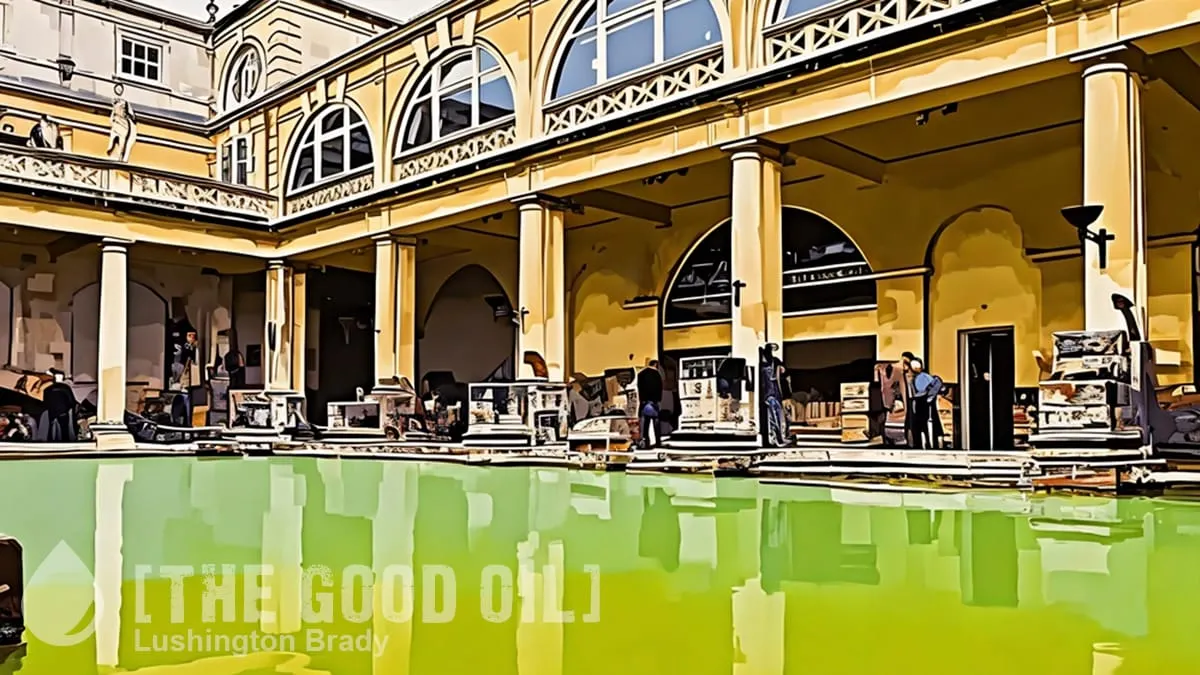
The Romans were famous for their public works, particularly aqueducts and baths. Many Romans prided themselves on bathing every day – but how clean were they, really?
After all, Romans had public toilets, too, in which wiping oneself involved a communal sea sponge or a stick, dunked after use in a communal bucket of water and vinegar – ready for the next Roman to come along and wipe themselves with it.
If that sounds unhygienic, then we might suspect that the public baths were little more than gigantic Petri dishes and, as a new study suggests, this is exactly what they were.
In the first century [AD], one of the most infamous ancient tragedies immortalized the Roman city of Pompeii. Among many things, it preserved some of its residents in their final moments – down to the weave of their clothing – as well as the city’s water system.
In a study published in what must surely be the most hilariously named scientific journal, Proceedings of the National Academy of Sciences of the United States of America, or PNAS, analysed carbonate incrustations – deposits left behind by naturally occurring salts dissolved in water – in Pompeii’s public baths, wells and aquaducts. Studying these deposits can reveal shifts in the water’s quality, origins and quantity across time.
According to the study, deep wells originally served the ancient city’s industrial areas and public baths. The Romans employed human-powered equipment to pull up water from wells with up to 131-foot-deep (40-meter-deep) shafts.
Given that pulling water up from such deep wells involved a lot of labour, it’s not surprising that Romans didn’t change the bathwater too often, with obvious results.
There were variations in the chemical composition of the deposits, indicating the replacement of boilers for heating water and a renewal of water pipes in the infrastructure of Pompeii, particularly during the time period when modifications were being made to the Republican baths. The results for the Republican baths’ heated pools, for instance, showed clear contamination from human activity, specifically human waste (sweat, sebum, urine, or bathing oil), which suggests the water wasn’t changed regularly.
Things improved considerably when the aqueduct was built. Not having to haul water, bucket by bucket, from a deep well made it easier to change the bathwater more often.
Once the aqueduct had been built, the bathing facilities were expanded with a likely corresponding improvement in hygiene.
On the whole, the aqueduct was a net good for Pompeii. “The changes in the water supply system of Pompeii revealed by carbonate deposits show an evolution from well-based to aqueduct-based supply with an increase in available water volume and in the scale of the bathing facilities, and likely an increase in hygiene,” the authors concluded. Granted, there was evidence of lead contamination in the water, particularly that supplied by the aqueduct, but carbonate deposits in the lead pipes seem to have reduced those levels over time.
And made it less likely that you’d be washing yourself with Publius’ filth from last week.