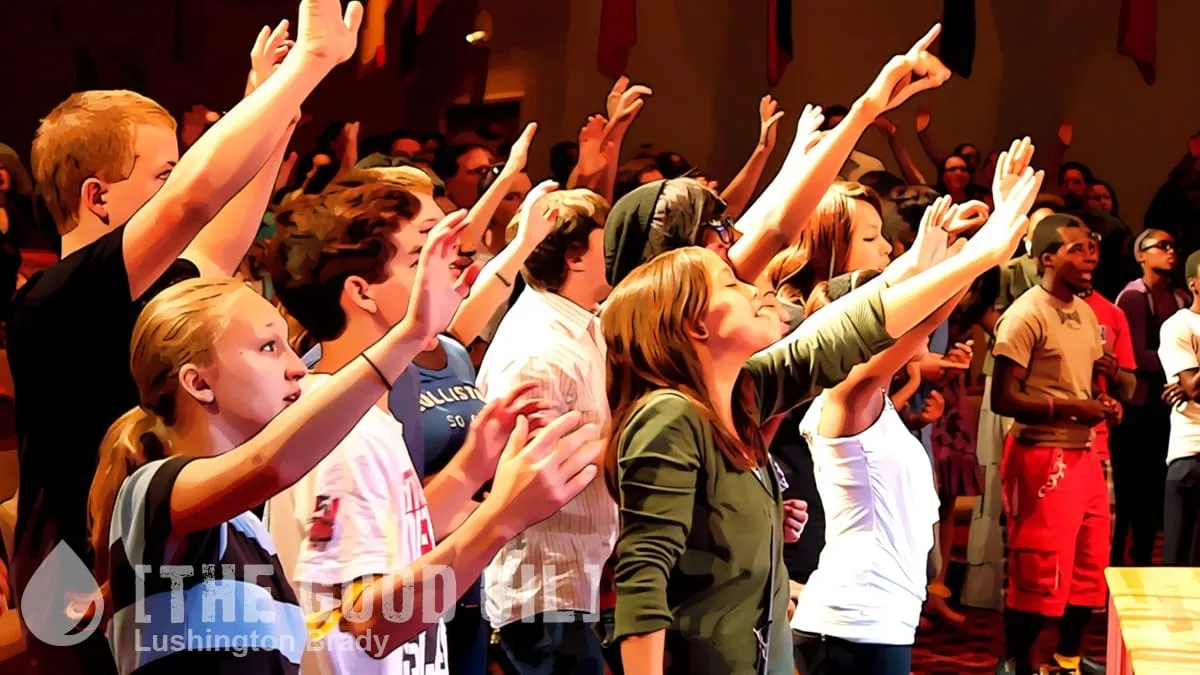
For a half-century, the story of Western Christianity has been one long and grim retreat. Declining attendance. Church closures. The relentless rise of the ‘nones’. Organised religion written off as a relic for boomers and rural holdouts.
Yet a new report from the Hartford Institute for Religion Research offers a flicker of hope. For the first time in 25 years, median in-person attendance in American congregations has ticked up.
More people are volunteering, and there also seems to be a renewed sense of optimism among pastors and other clergy.
“The headline finding is cautious optimism,” Alison Norton, co-director of the Hartford Institute for Religion Research, told reporters at the annual conference of the Religion News Association, meeting in Atlanta. She added that the data showed a story of resilience and recalibration.
From a pre-pandemic 137, it cratered to 45 during Covid, then 65, and now sits at 70 adults per congregation. Self-reported, yes. Not enough to declare victory. Still, as director Scott Thumma noted, “this is the first positive gain in median attendance in 25 years”. Forty-three per cent of congregations grew by at least five per cent and nearly half stabilised or expanded. Larger churches are doing better. Volunteers are up. Clergy optimism is rebounding. Online giving has helped finances. Many pastors report a renewed sense of purpose after the pandemic forced hard adaptation.
“Across a range of indicators, there are signs of recovery and, in some cases, renewal,” the study’s authors wrote.
Catholics and Orthodox report the highest median attendance (200), evangelicals 75, mainline Protestants a meagre 50. The South remains the stronghold. But the broader trend is clear: after years of survival mode, some congregations are recalibrating rather than surrendering.
Still, perspective matters. Seventy is barely half the pre-pandemic figure. The long decline hasn’t reversed. The ‘nones’ haven’t vanished. This is resilience, not revival… yet.
Earlier studies by Hartford showed that at first, congregations responded to the pandemic by adapting quickly to streaming and finding ways to minister when they could not gather in person. Then there was a lull as the pandemic stretched on and churches went into survival mode.
Now that period seems to be over, said Charissa Mikoski, an assistant professor at Hartford Institute for Religion Research, who also worked on the study. And the churches that are growing, said Mikoski, are implementing the lessons of resilience they learned during the pandemic.
“This is not just recovery, it’s adaptation and experimentation,” said Mikoski.
Across the Atlantic there are similar murmurs. Reports last year claimed a “Quiet Revival” in Britain, with church attendance supposedly rising and young people (18–24) jumping from four per cent to 16 per cent monthly attendance. Some surveys suggested Gen Z and younger Millennials are leading the way. Later data and methodological disputes have tempered the euphoria, but the fact that such claims gained traction at all signals something in the cultural air. Young people, adrift in a meaning-starved, screen-addled world, are once again poking their heads in to pews in search of community, transcendence and something sturdier than TikTok sermons and rainbow flags.
Father Jim Sichko, an evangelist for the Catholic Diocese of Lexington, said he’s seen the increase in churchgoers himself as he travels around the world preaching.
“In the state of our world today, people need community, church, and God,” Sichko said.
This is a cardinal – no pun intended – point. Apart from the odd “crazy, solitary Catholic mystic”, to use Jack Kerouac’s self-description, Christianity is a religion of community. C S Lewis drives home this point in books like Mere Christianity and The Screwtape Letters: “For the Church is… the Body of Christ, in which all members, however different (and He rejoices in their differences and by no means wishes to iron them out) must share the common life, complementing and helping one another precisely by their differences.”
So, is this the start of a broader recovery? Or a temporary post-pandemic bounce: the religious equivalent of people rediscovering board games during lockdown?
The data cautions against wild optimism. Decades of cultural hostility, family breakdown, secular indoctrination in schools, and churches’ own failures (theological mush, moral capitulation, corporate worship vibes) don’t vanish overnight. Smaller congregations continue bleeding out. The trajectory of the West remains downward in the long run unless something fundamental shifts.
And yet… something is stirring. Pastors report fewer colleagues eyeing the exit. Giving has stabilised via digital tools. Congregations that leaned into mission rather than Zoom are seeing returns. Young men, in particular, seem hungry for order, purpose and unapologetic truth in an age of chaos and lies. What remains to be seen is if they can mature past the edgy ‘Deus Vult!’ memes.
They’ve at least discovered that, when the secular age sold liberation from ‘oppressive’ religion, it sold them a false promise. The Fathers of Lies in fact delivered atomisation, anxiety, plummeting birth rates and a generation marinated in mindless hedonism and empty nihilism. No wonder some are quietly drifting back toward the faith that built the civilisation they inhabit.
The question for churches is whether they will treat this as a temporary reprieve or a call to serious renewal: orthodox teaching, masculine formation, family discipleship and unembarrassed proclamation of the Gospel. The post-Christian experiment has failed. The hunger for what only Christ offers is real.
Whether this flicker becomes a flame depends less on sociologists than on whether the church remembers who she is: and acts like it.