Skip to content

Science

Telling Tales – Playing With ChatGPT

Telling Tales – Playing With ChatGPT

OpenAI has trained a model called ChatGPT to interact in a conversational way. The dialogue format makes it possible for ChatGPT to answer follow-up questions, admit its mistakes, challenge incorrect premises and reject inappropriate requests. ChatGPT is a sibling model to InstructGPT, which is trained to follow an instruction in

Members Public
TheBFD. Person holding green grass during daytime

Medical Cannabis: Is it Really Just a Placebo?

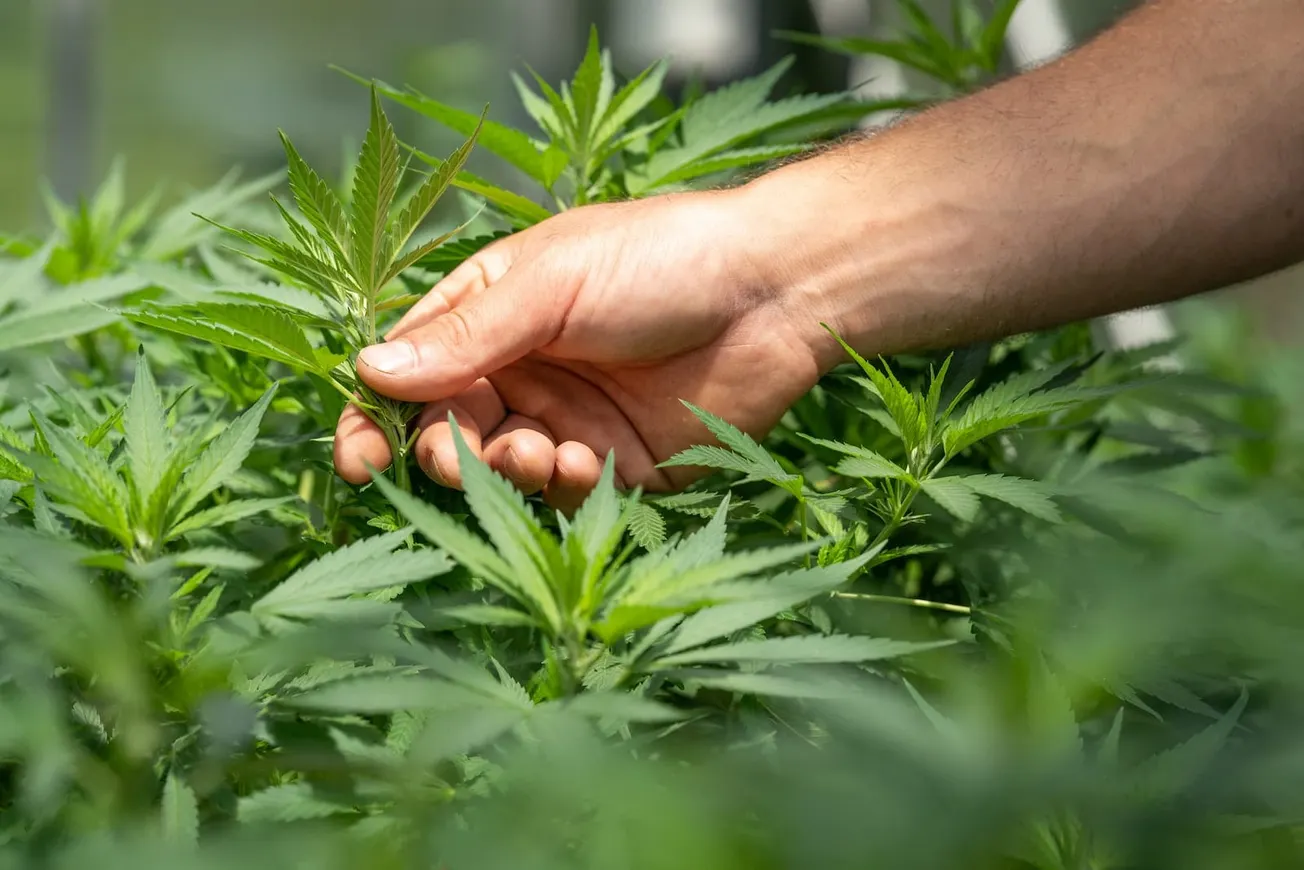
If you read a media report on a study claiming to say something, it’s a reasonable bet that the study actually doesn’t say it. Case in point: A study ‘purporting’ to show that cannabis as a pain reliever is all just placebo. Of course the mainstream media was

Members Public
When the Arctic Really Was Ice-Free

When the Arctic Really Was Ice-Free

Remember when Australia’s dams ran dry and Perth became a ghost city? What about when Britain became snow-less in 2020? How about when most species disappeared in 1995? What, none of those dire predictions of climate doom came true? Eh, can’t get everything right. But one prediction that

Members Public
red crab on black stone

The Rise of the Machines

Alex Dook particle.scitech.org.au Can fiddler crabs and barrel shrimp inspire the robots of the future? Robots are becoming more integrated into our everyday lives. They can vacuum and mop our floors, mow our lawns and even clean our barbecues. Beyond the home, robots are helping scientists find

Members Public
Distorting Science to Push an Agenda

Distorting Science to Push an Agenda

Joe Bastardi cfact.org Joe Bastardi is a pioneer in extreme weather and long-range forecasting. He is the author of “The Climate Chronicles: Inconvenient Revelations You Won’t Hear From Al Gore — and Others” which you can purchase at the CFACT bookstore. His new book The Weaponization of Weather in

Members Public
What Is Science and Who Is an Expert?

What Is Science and Who Is an Expert?

Guy Hatchard PhD HatchardReport.com Dr Guy Hatchard is an international advocate of food safety and natural medicine. He received his undergraduate degree in Logic and Theoretical Physics from the University of Sussex and his PhD in Psychology from Maharishi University of Management, Fairfield Iowa. He was formerly a senior

Members Public
Meet Baby Will

Meet Baby Will

Mary Hobbs dailytelegraph.co.nz About where people, with metaphorical masks off, really stand, about heroes and what our true priorities are, our position on issues of basic human rights, on the rights of parents throughout the nation, and also about love, compassion, care and seeking the best possible outcome

Members Public
brown mosquito

What Makes a Mossie Magnet?

We’ve all been there: high summer, and one person is continually slapping themselves, waving their arms around and complaining about “These bloody mossies!” Meanwhile, someone sitting contentedly next to them wonders, “What mossies? I haven’t been bitten once.” Around these parts, it’s my wife who gets eaten

Members Public
two people sitting during day

Can’t We Publicly Debate the Published Science?

Dr Guy Hatchard HatchardReport.com GLOBE.GLOBAL Guy is an international advocate of food safety and natural medicine. He received his undergraduate degree in Logic and Theoretical Physics from the University of Sussex and his PhD in psychology from Maharishi University of Management, Fairfield Iowa. He was formerly a senior

Members Public
kangaroos on grass field

Trusting the Experts Is Not the Same as Knowing the Facts

Patrick Carroll Patrick Carroll has a degree in chemical engineering from the University of Waterloo and is an editorial fellow at the Foundation for Economic Education. If someone were to ask you how you know Australia exists, what would you say? If you haven’t been there yourself, it can

Members Public
human anatomy model

Why are we Smarter than Other Animals?

Emmanuel A Stamatakis Andrea Luppi David Menon University of Cambridge Emmanuel A Stamatakis‘ research seeks to determine how cognitive function arises from the topographical organization and complex dynamics in the brain. Andrea Luppi is a Doctoral Researcher at the University of Cambridge, working at the intersection of network science, complex

Members Public
man in black jacket carrying baby in yellow hoodie

Does Fatherhood Change Men’s Brains?

Darby Saxbe USC Dornsife College of Letters, Arts and Sciences Magdalena Martínez García Instituto de Investigación Sanitaria Gregorio Marañón IiSGM The time fathers devote to child care every week has tripled over the past 50 years in the United States. The increase in fathers’ involvement in child rearing is even

Members Public
Is Cannabis Better than a Placebo?

Is Cannabis Better than a Placebo?

Filip Gedin Karolinska Institutet Filip Gedin, Postdoctoral Researcher, Pain research, Karolinska Institutet Cannabis is one of the most widely used drugs in the world. While there are only a few countries where cannabis is legal for recreational use, many more countries have legalised the use of cannabis for medical reasons.

Members Public
Our DNA Must Be Protected

Our DNA Must Be Protected

Guy Hatchard PhD   HatchardReport.com GLOBE.GLOBAL Guy is an international advocate of food safety and natural medicine. He received his undergraduate degree in Logic and Theoretical Physics from the University of Sussex and his Ph.D. in Psychology from Maharishi University of Management, Fairfield Iowa. He was formerly a

Members Public
Will Jacinda Respect This Science?

Will Jacinda Respect This Science?

It’s official: there’s no such thing as “indigenous people”. Not, at least, unless you’re a natural-born member of the Khoe-San groups of Southern Africa. Everywhere else – you’re just an immigrant. A “coloniser”, if you will. It’s science. As scientists find more ancient human DNA, sample

Members Public
The Secret of Vaccine Success

The Secret of Vaccine Success

Attendees at the G20 meetings in Bali last week put out a statement of intent that includes preparation for the next global pandemic. Notably, pursuing high vaccination rates remains a priority, whereas saving lives through early treatment regimes (which were successful during the current pandemic) not so much. [22] “We

Members Public