As I’ve written many times, Ronald Reagan was right. “The nine most terrifying words in the English language are: I’m from the government and I’m here to help.” Nowhere is the truth of this maxim borne out more brutally than in the socialist Albanese government’s latest efforts to ‘help’ the housing market.
The falling property market raises the risk of Australia sliding into a recession this year as a shrinking wealth effect crushes the confidence of households and businesses, economists warn.
Naturally the government is trying to put the best spin on falling house prices, and at first blush that might seem like good news for young home-buyers. The reality is quite different: the rental market is getting even worse as investors flee and banks are growing even more tight-fisted on lending to first homebuyers, who, even if they do manage to afford a place, are looking at falling into a negative equity trap.
And everywhere, the economy is diving into a tailspin, almost entirely thanks to the Labor government. Every major policy agenda for Labor, from Net Zero, to mass immigration, the NDIS and industrial relations, has in practice been nothing but a productivity-sapping, taxpayer-funded vampire.
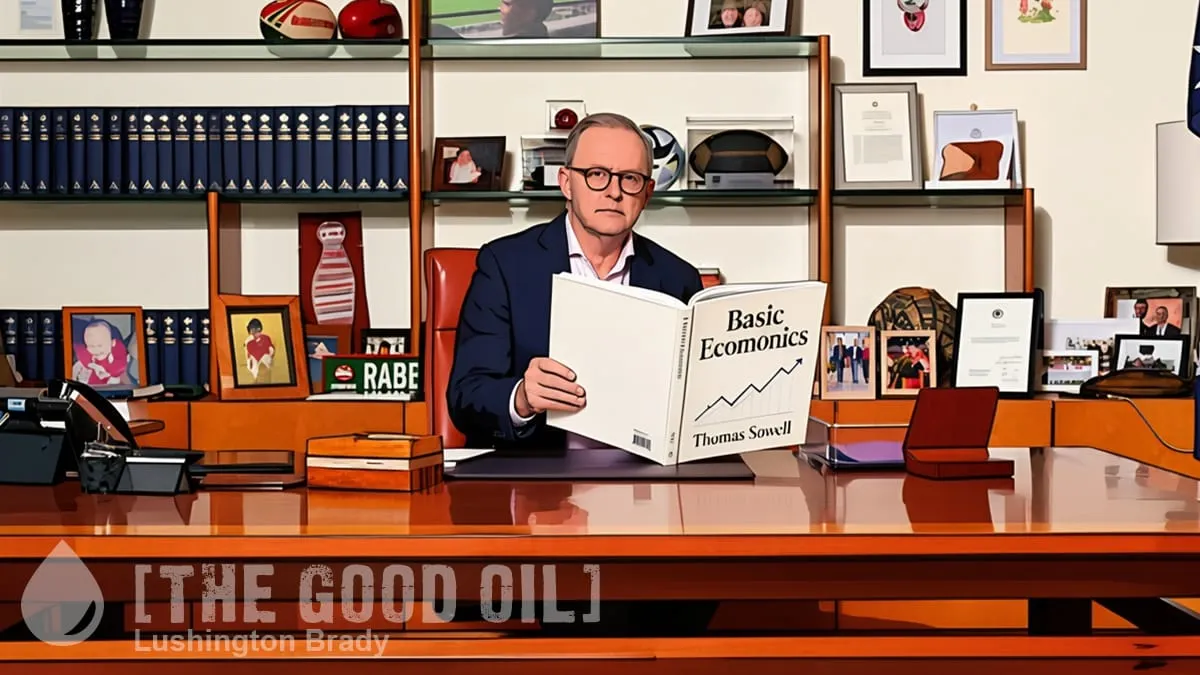
Treasurer Jim Chalmers, naturally, has a ready scapegoat: the war in the Middle East. Never mind that the US economy has barely blipped and fuel prices are already dropping. Chalmers’ excuse is as threadbare as his grasp of basic economics. Australia’s unique vulnerability stems directly from this government’s own decisions. The Albanese regime slashed strategic fuel reserves, leaving us exposed to every short-term shock. When energy costs spike, everything else follows: just as it has everywhere the Net Zero fantasy has taken hold.
Australia is set for its longest stretch of sub-par economic growth in more than 35 years, weighed down by weak consumer and business confidence, high interest rates and resurgent inflation, according to one of the world’s largest consulting giants.
In a dire reading for the Australian economy released by Deloitte Access Economics on Tuesday, the firm downgraded its real economic growth forecasts to a meagre 1.3 per cent this financial year, expecting growth to remain below two per cent for the longest period since the global recession of the early 1990s.
Deloitte Access Economics has rarely been so downbeat. Nor so clear about the culprits: Prolonged cost-of-living pain, higher borrowing costs and a housing market reeling from Labor’s tax assaults.
Chalmers’ tax-and-spend addiction is the engine room of this disaster. Bracket creep, capital gains changes, negative gearing attacks – all sold as ‘intergenerational equity’ while driving up inflation and forcing the RBA to keep rates punishingly high. A growing bill that future generations will have to pay.
“For too long, strong population growth has masked a weak underlying productivity performance… Years of insufficient investment in housing, infrastructure, energy and the economy’s productive capacity have left the supply side of the economy struggling to keep pace with demand.”
The vast bulk of Australia’s anaemic jobs growth, meanwhile, has come from the public sector: precisely where productivity has collapsed. Private investment is forecast to slump to just 0.7 per cent by decade’s end. Business is spooked by Labor’s anti-investment tax agenda – and its determination to kowtow to its union paymasters.
The retrograde industrial relations changes that have been made since Labor secured office in 2022 have been entirely politically motivated, rewarding its trade union partners – some would say masters. They are completely unrelated to increasing productivity, improving employee-employer relations or securing win-win outcomes.
Like a covetous teenager, the Australian Council of Trade Unions and several other influential trade unions have set down a “must have” list of gifts. The Labor government has worked through the list, ticking each one off as they are made law or delivered through the tribunal system.
Why build or expand here when the rules keep changing to punish success?
A government that cannot deliver affordable energy, housing or economic momentum has no business lecturing anyone about ‘help’. The verdict is already forming in kitchens and boardrooms across the country. When reality bites hardest, the excuses wear thinnest.