The central conceit of Multiculturalism is also its biggest lie and clearest instance of cognitive dissonance. Multiculturalism simultaneously claims that all cultures are equally valuable, but that the simple act of transplanting someone from the slums of the Third World magically transforms them into holding the same values as a middle-class, white, university-educated, left-wing female. More broadly, that importing millions of people from low-trust societies will somehow not at all affect high-trust societies.
A current scandal rocking the City of Hobart council graphically illustrates the collapse of a high-trust society into a low-trust one.
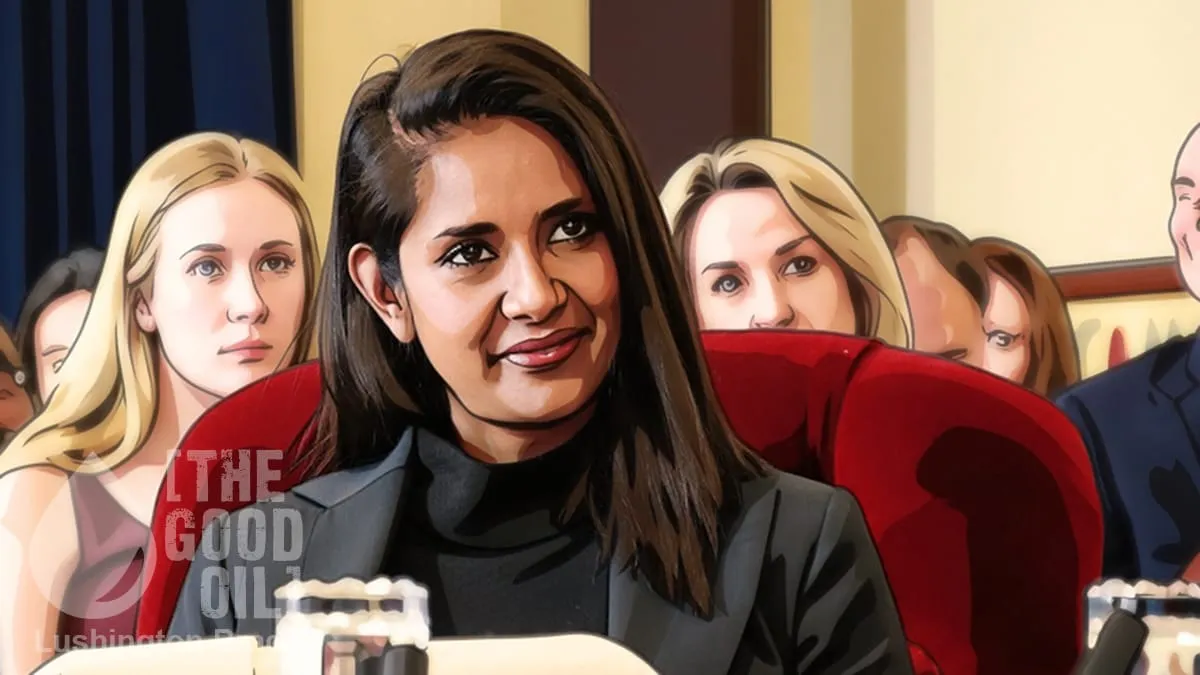
Deputy Lord Mayor Zelinda Sherlock has admitted to and apologised for taking provisions from a council lounge over several years.
The issue reared its head earlier this month after photos of Cr Sherlock entering the council chambers and leaving with bags of items were released by Cr Louise Elliot.
As CCTV footage shows, the Fijian-born, ethnic Indian, Sherlock and a friend entered council offices after hours, and made off with shopping bags filled with alcohol, nuts and chocolates, paid for by ratepayers for council events. Emails between council employees show that such items had been disappearing from the offices for at least a year, even when no events had been held. Sherlock later claimed that she had been taking the items for her home office and was unaware they could not be consumed elsewhere.
This begs the question: if the pilfering was so innocent, why sneak in after hours?
With astonishing chutzpah, Sherlock also ran to police, claiming that calls from other councillors for her to resign were “blackmail”.
With slightly less surprising chutzpah, the large bloc of left-leaning councillors – which includes her father – ganged up to kill a motion for an independent inquiry into the Tasmanian Greens member’s conduct.
Cr Sherlock, who recently became a member of the Tasmanian Greens, is due to become Hobart’s acting lord mayor once Anna Reynolds resigns in August, before local government elections are held in October.
Ask yourselves: if the boss caught you nicking shopping bags full of stuff from the workplace tearoom in the dead of night, exactly how long do you think you’d keep your job?
But this affair throws into stark light the folly of Multiculturalism and the erosion of societal trust in Western countries swamped by mass immigration from low-trust societies.
A high-trust society is one where shared ethical norms underpin transactions. If you can make a ‘handshake deal’ with a stranger and trust that it will be honoured, then you’re in a high-trust society. For instance, as a newcomer to a rural town, I once found myself without sufficient cash to pay for something at a shop. ‘No worries, just drop in the money next time.’ This, from someone I’d only met for the first time. At a big public event here in Tasmania, people will (or would) leave their folding chairs and blankets and things while they went to the toilet or kiosk, trusting that it would all be there when they got back.
Or, they used to. Tasmania is becoming more and more a low-trust society. Mostly thanks to importing a significant slice of the population from extremely low-trust societies overseas.
Low-trust societies are characterised by tribalism and nepotism: interpersonal trust is confined to immediate family, kin networks or narrow personal circles, rather than extending to strangers or the wider public. India – by their PM’s own admission – is a low-trust society. Indian journalist Aakar Patel describes his country as “a society where each person looks out for himself and not for the collective whole”. A stark illustration of this is a viral video showing Indians reacting to an overturned truck: rather than attempt to help, or even check on the driver, other road users swarmed the truck and looted its load of mangoes.
“India is a low-trust society. Here, everyone is trying to gain, not help,” said one commenter on the video. Fijian-born people say the same about Sherlock’s native Fiji: ‘Everyone is on the take.’
Flooding a formerly high-trust society with such people has consequences, far beyond nicking booze and snacks. As Francis Fukuyama pointed out, high-trust societies are not only safer – in Japan, children walk to school in perfect safety – but less costly. Suspicion, Fukuyama said, is a “tax” that hampers economic activity, not just inflating costs but necessitating onerous compliance rules requiring constant verification.
With no little irony, Sherlock’s consulting business, run in conjunction with her father and fellow councillor, Michael Dutta, proclaims that “Society is not just built on physical infrastructure. Our society’s strategic advancement also relies on successful social infrastructures, built on human connection.”
Just don’t leave the lolly jar unattended around her.