EKO
Artist and bookmaker
In 1932 Aldous Huxley wrote a book on a tyranny no one would ever have to be forced into, because the people would be trained from birth to love it.
It would come dressed as comfort. A pill that dissolved every worry.
When the worry was gone an hour still had to be filled, and there was an entertainment for that too. Pleasure would be tuned so precisely to the appetite that the thought of refusing it never crossed a single mind.
He called the drug soma. He said the perfect dictatorship would wear the face of a paradise. Its citizens would come to adore the very machinery that emptied them. It would always reach them as a gift. It would never reach them as a chain. They would hold the gift and thank the hand that gave it.
It didn’t stay fiction for long. The real thing arrived while he was still watching. In 1955 a small pill came to market with a friendly name. Miltown, after the New Jersey town where it was developed. It was barely advertised.
Word moved through Hollywood, across bridge tables, into doctors’ offices. And within two years Americans had filled over 36 million prescriptions for it (more than a billion pills). One in three prescriptions written in the country.
They called them peace pills. Milton Berle joked on TV that he was thinking of changing his name to Miltown Berle. The demand came from the people themselves. They asked for it by name.
The Second Warning
Twenty-six years later, in 1958, Huxley wrote a second book. But this one wasn’t a novel. He was watching the world he’d warned about arrive with a friendly face.
He’d been watching the world, a much older man now, and the speed of it frightened him. The things he’d invented to scare people were arriving faster than even he had guessed. They were arriving as conveniences that people lined up to receive. He intended the first book as a warning folks would heed.
But he was beginning to suspect that everything he wrote just made people comfortable inside the cage.
He said it out loud that year, on TV, sitting across from Mike Wallace.
The dictators of the future, he told him, would bypass the rational side of a man and appeal to his subconscious and his deeper emotions and his physiology even, “and so making him actually love his slavery.”
Wallace asked him if it could happen here. Huxley said of course it could. People might end up happy under the new regime, he said, “but they will be happy in situations where they oughtn’t to be happy.” Watch the interview. He’s calm, like a man describing the weather he can see coming.
The danger he named wasn’t that someone would take your freedom.
It was that you would never notice it was gone. The taking would feel like being handed something. Because a gift doesn’t feel like theft.
The Part That Lasts
Every tyranny built on force eventually meets a man who would rather die on his feet than kneel. That is the flaw in the boot. It manufactures the very thing that ends it. A boot you (or your descendents) fight. But a gift you keep.
The tyranny Huxley feared has no such enemy. It never stands on your neck. It sits in your hand. It is light. It is bright. It asks nothing of you except that you keep reaching for it, and you do, of your own free will, all day long.
We all do, eventually. And we convince ourselves the reaching is freedom.
This stopped being speculation and became on-the-record testimony.
Back in 2019, a guy who worked in tech as a design ethicist sat in front of a senate committee and described the mechanism. The pull-to-refresh on the screen in your hand, he told them, operates like a slot machine.
It has the same deeply addictive qualities that keep people in Vegas hooked. There are thousands of engineers on the other side of your screen, he said, whose job is to work against your self-control. Nobody is hiding it. It was entered into the congressional record in plain English. The people who built the cage testified to how it works. Nothing changed, because the cage works.
Last year Nikita Bier installed the mechanism at X. And the engineers on the other side of your screen are now a sea of AI agents working around the clock.
The Behavioral ArchitectEKO 15 October 2025
No one organizes a resistance against a thing he craves.
He organizes his life around it. He defends it. He feels a flicker of panic when it is out of reach for an hour. The hour without it is the hour he cannot bear.
If a cage door swings open and you just sit there, good luck trying to revolt. Those who decide to stay in an unlocked cage tell you they chose to stay.
Huxley kept saying it to anyone who would listen. In 1962, he stood in front of a hall of students at Berkeley and gave the thing its final name. The ultimate revolution. “We are in process of developing a whole series of techniques,” he said, “which will enable the controlling oligarchy who have always existed and presumably will always exist to get people to love their servitude.”
He called it the ultimate in malevolent revolutions. He had just 18 months left to live, and he spent most of it going around telling rooms full of young people exactly what was being built for them and their children’s children.
The Door He Couldn’t Find
Huxley spent his last days looking for the way out.
He looked for it in the world. Better schools. Wiser institutions. Decentralized power. Reasonable men making reasonable arrangements. Every answer was sane. But every one was a tool born from the same workshop that built the problem. Some part of him knew it. Because he could see the whole machine.
On the day he died he asked for the drug himself. November 22, 1963. Same day as Kennedy and C S Lewis. The cancer took his voice, so he wrote his request on a piece of paper and handed it to his wife.

She gave it to him. He died later that afternoon while the TV played the scene in Dallas over and over. The country didn’t hear for weeks that Aldous Huxley was gone. There was other news.
The way out, which he never found, was never a better government. It was the one room the apparatus has never learned to enter.
The small interior place. A person, alone, by themselves, stops listening to the noise long enough to hear the quieter thing underneath it. And that quieter thing has been speaking the entire time.
No curriculum installs that room. No institution confers it. It’s already there. The whole roaring machine is built to keep you too entertained to notice it.
They aren’t going to take your freedom. They can’t. But they are betting you will hand it over yourself, gladly, in exchange for something that feels a little better than being awake.
The door was never in this world.
Tonight, after the house quiets, set the bright shiny screen face-down, look up, and hear just how quiet the room has been the whole time.
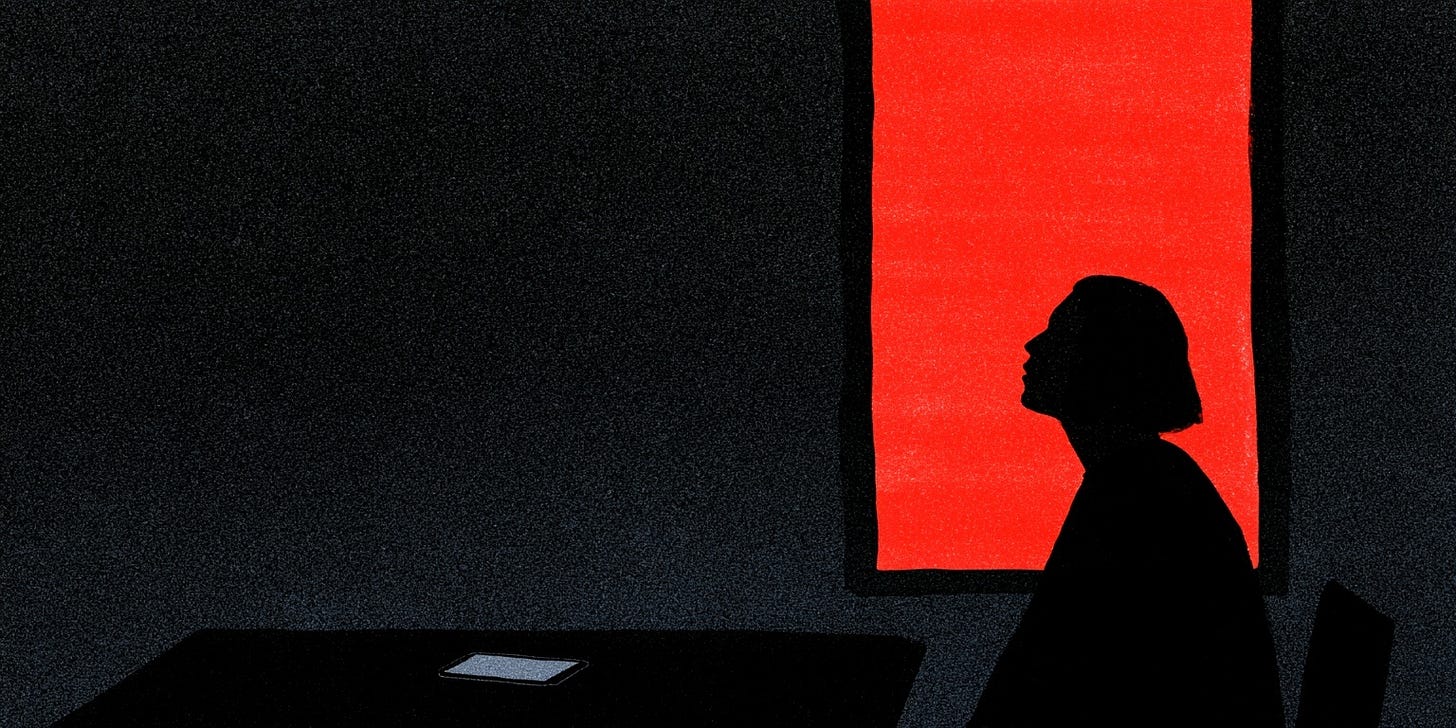
The cage is real. So is the door.
This article was originally published by EKO Loves You.