Table of Contents
Peter MacDonald
What began as a nationwide obsession with traffic cones has now evolved into a new and equally lucrative racket: the high-vis vest cartel. Just like their plastic cone cousins, these fluorescent garments are now a compulsory visual symbol of authority, control and, above all, profit. Funded, of course, by ratepayers and taxpayers...
The high-vis vest isn’t just a piece of safety gear anymore: it’s part of the equipment charge, alongside cones and signs, racking up massive profits for the corporations that manufacture and distribute them. Like fashion brands, these vests are constantly being ‘updated’, requiring new styles, colours and combinations depending on your role, site or company. Orange can’t be worn in certain areas if another shade of orange is designated for another role. Road workers wear one version, construction crews another and office bound staff must still comply when entering designated zones or risk disciplinary action... yes, office staff.
The safety-boot enforcers haven’t yet figured out how to co-opt office wallahs into their emerging cartel, though the steel-capped boot lobby is now rapidly closing in on the vis vest and cone cartels. It’s only a matter of time before spreadsheets require steel toes.
The grip of the vis vest cartel was laid bare recently in a Stuff video showing Winston Peters being pressured by a rail boss to don the compulsory orange garb. It is pure comedy…the rail boss was so serious. These enforcement by these ‘vis masters’ borders on the absurd. In some workplaces, being caught without the correct shade of fluorescent polyester can result in a sacking. It’s the emperor’s new clothes, but high-vis.
Behind the rhetoric of “health and safety”, there lies a deeply entrenched commercial machine. Like the cone industry, this isn’t about genuine risk mitigation anymore: it’s about compliance culture, contractor billing and corporate profit. It’s competitive, hierarchical and increasingly ridiculous.
Meanwhile, in cities around the world, a strange social fashion caste system has emerged. In London’s Canary Wharf, bankers in crisp white shirts descend daily on high-end eateries designed to relieve them of their bloated bonuses. The locals call them “the white shirts”. In Auckland and other urban hubs, cafes have sprung up to cater to their Antipodean counterparts: the orange shirts who line up in their neon regalia for coffee and carbs before clocking in on the latest ‘safety critical’ infrastructure gig.
And when the orange shirts are called in to repair the white shirts’ office towers in London, the real fun begins: two tribes of uniformed professionals awkwardly coexisting in a high vis/white collar collision. One group enforces visibility, the other trades in invisibility and yet both are propped up by inflated billing systems and baffling dress codes.
Welcome to the era of safety theatre where visibility is mandatory, logic is optional and your wardrobe is governed by an expanding cartel in hi-vis orange. One wonders what the late, great fashion collector Eden Hore would make of this ‘look’. Would he see it as a bold new statement in utilitarian chic or simply a fluorescent symbol of bureaucratic absurdity.
What’s even more laughable about the Kiwi cringe for high-vis is how a visiting American fashionista, utterly captivated by New Zealand’s obsession with bright orange road cones, created a human traffic cone and took home the prestigious Wearable Art Award. Grace DuVal’s design was a playful tribute to a symbol that Kiwis treat with near-reverence, yet she had no clue about the underlying mania gripping the nation for cones and hi-vis gear.
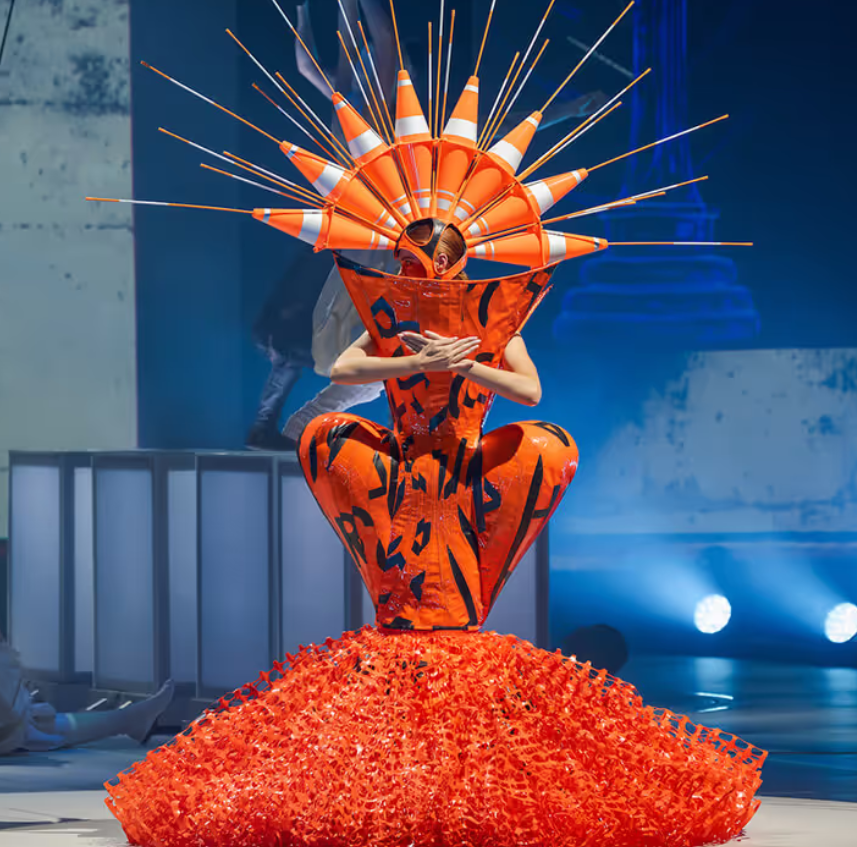
It’s a perfect example of how what seems quirky or ridiculous to outsiders has deep cultural roots here and how that obsession fuels entire industries, cartels and compliance cultures, all glowing in fluorescent orange.
Either way, the high-vis craze has certainly stamped its mark on modern fashion history whether by force or by fiat.