Table of Contents
From the Beatles’ “Doctor Robert”, to Brian Wilson’s Svengali shrink Eugene Landy to Conrad Murray, Michael Jackson’s licensed dealer, the history of pop music is sprinkled with unprincipled medicos who fed the appetites and stroked the damaged psyches of rock stars. Another (in)famous entry in this medical rogues’ gallery is “Dr Nick”. No, not the cheerfully inept ambulance-chaser from The Simpsons.
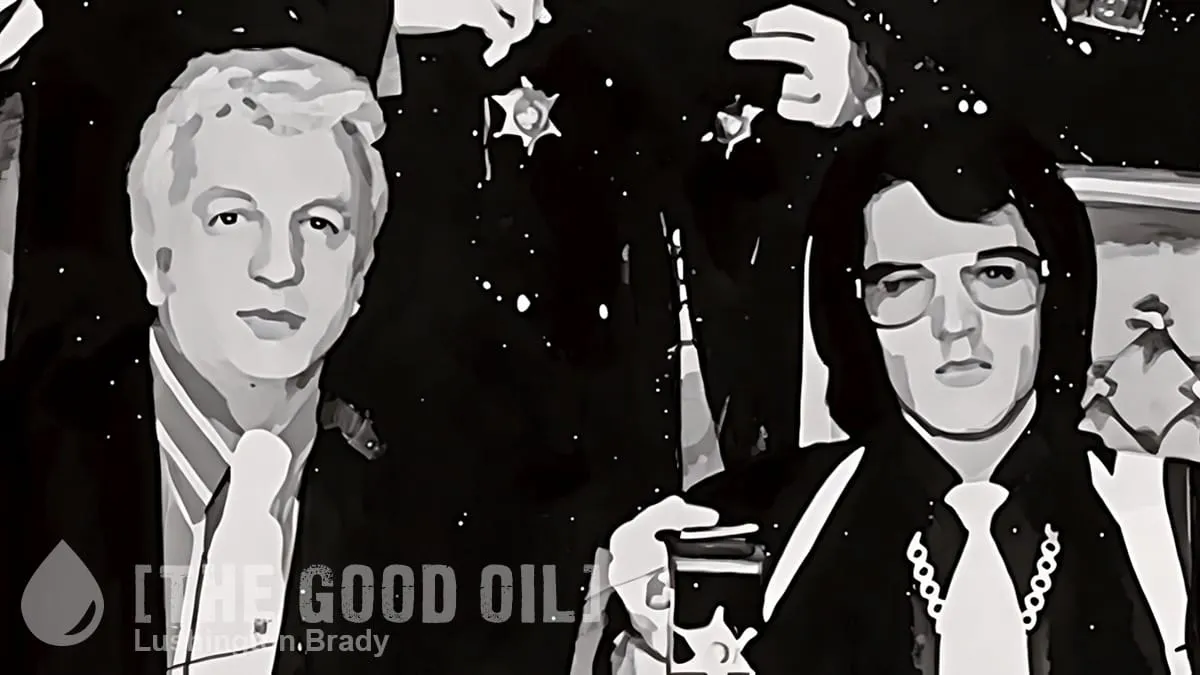
“Dr Nick” was George Nichopoulos, Elvis Presley’s personal physician. The King of Rock’n’Roll had been hooked on prescription amphetamines from his army days. Given that they were prescription drugs, Elvis convinced himself they were ‘safe’, compared to the street drugs most rock stars indulged in. For the last decade of Elvis’ life, Dr Nick was his friend and reliable supplier.
Even as Presley’s behavior grew more and more bizarre – and even after he suffered two overdoses in 1973 – Dr Nick controversially continued to supply the prescriptions. By this point, Presley had gained a substantial amount of weight, his health had deteriorated, and on August 16, 1977, he died at his Graceland home. George Nichopoulos was the one who signed the death certificate. Some fans would argue he had been signing it over and over again each time he wrote Presley a prescription.
Although Dr Nick was ultimately acquitted of any crime in regard to Elvis Presley’s death, the fact remains that in the 31 months leading up to that tragic day, the doctor had prescribed him 19,000 doses of drugs, including sedatives, amphetamines, and narcotics. Chillingly, the final prescription was written just 12 hours before Presley’s untimely demise.
For his part, Dr Nick maintained his innocence. Even by the time they met, in 1967, Elvis was already a heavy prescription drug user. When Dr Nick was called to Elvis’ Circle G Ranch in Mississippi, to treat the rock star for saddle soreness, the King was already taking Tuinal, Desbutal, Eskatrol and, soon enough, Placidyl.
Eventually, when it came time for Presley to go on tour, he asked Nichopoulos to tag along – not just for his sake, either. Dr Nick said he was looking after about 150 people associated with Presley while on the road. And although Nichopoulos was never officially on the payroll during the tour, he and Presley worked out a system so he would be paid the same amount that he would have made while he was in the office for that time period.
Before long, he became Elvis Presley’s personal physician.
“It was demanding,” Nichopoulos said. “When we were home, I’d still see Elvis probably five or six days out of the week. Every night on the way home, I’d go by his house just to check on him or just to sit and talk.”
In fact, Dr Nick argued that he was a stabilising influence on Presley’s increasing drug dependence and erratic behaviour. When Dr Nick tried to rein it in, Elvis knew he could always get whatever he wanted from other, less scrupulous, doctors.
“Elvis called me everything imaginable and another doctor went on the next tour. The new doctor changed the medicine around that I was giving him and the stuff that he gave him was a heavy tranquilizer… Elvis just couldn’t wake up” […]
Things got worse when Presley’s wife Priscilla left him in 1971. Presley became more and more erratic. He was always on something – anything he could get, essentially. Then, in 1973, he overdosed twice on barbiturates.
Dr Nick realized that Presley was continuing to get more drugs from other doctors. While there was little he could do about Presley’s other appointments, he said he tried to tell Presley to stop taking so many pills.
Eventually, Nichopoulos said he resorted to giving the rock star placebos, since it was clear the singer wouldn’t listen to his advice.
No small part of the problem was Elvis’ concept of how prescription meds worked. If Dr Nick prescribed four pills a day, he’d take eight or 12, thinking he’d just get better faster.
But there’s also the fact – on his own admission – that Dr Nick prescribed over 10,000 doses of sedatives, amphetamines and narcotics for Presley in the year leading up to his death alone. But those weren’t just for the singer, he says: they were also collectively for the 150-person crew who worked for him.
Not everyone saw things the same way.
George Nichopoulos claimed that he was surprised when he got the call about Elvis Presley’s death. He was even more surprised, over the following months, about the number of death threats sent his way.
He said he was blindsided again in 1979 when the Tennessee Medical Board charged him with gross malpractice over the illegal prescription of painkillers and other drugs to Elvis Presley, the singer and pianist Jerry Lee Lewis, and 12 other patients. The district attorney’s office even looked into potential criminal charges against him related to Presley’s death.
In January 1980, the Medical Board Tribunal found Dr Nick guilty of overprescription, resulting in a three-month suspension of his license and three years’ probation. Later that year, he faced criminal prosecution for abusing his license to prescribe controlled drugs and a potential prison sentence of up to 10 years. However, he was acquitted on all counts.
In 1995, the Tennessee Board of Medical Examiners permanently suspended Nichopoulos’ medical license, on the grounds that he had been overprescribing to numerous patients for years.
But he still maintained he was the wronged party.
“You break your balls to help somebody and try to keep him alive and it turns around you were in it for the money.”