Table of Contents
Advent calendars have become a near-ubiquitous staple of pre-Christmas commerce and, like almost everything else about one of the signature festivals in Western culture, have been ruthlessly secularised and commercialised. There are Lego Advent calendars, Disney Advent calendars and even Bluey Advent calendars.
But, as we once again navigate the war between what C S Lewis dubbed “Xmas and Christmas”, we may pause to ponder the origins of the Advent calendar and just what this Xmas sale item has to do with Christmas.
Indeed, it’s unlikely that many consumers buying millions of Advent calendars every Xmas even know what “Advent” means.
“Advent” is derived from adventus, a Latin word referring to the arrival of a notable person, thing or event. The Christian celebration of Advent – the countdown to the birth of Christ – emerged in the fourth or fifth century.
The season of Advent is traditionally celebrated by Christians in the four weeks leading up to Christmas Day. It begins on the Sunday that falls between 27 November and 3 December each year and symbolises the “coming” of Christ.
So, from Advent on, we count down the days to the 25 December, Christ’s Mass: the birth of Jesus. The practice of marking each day of the season, evolved over the next 1000 years and more.
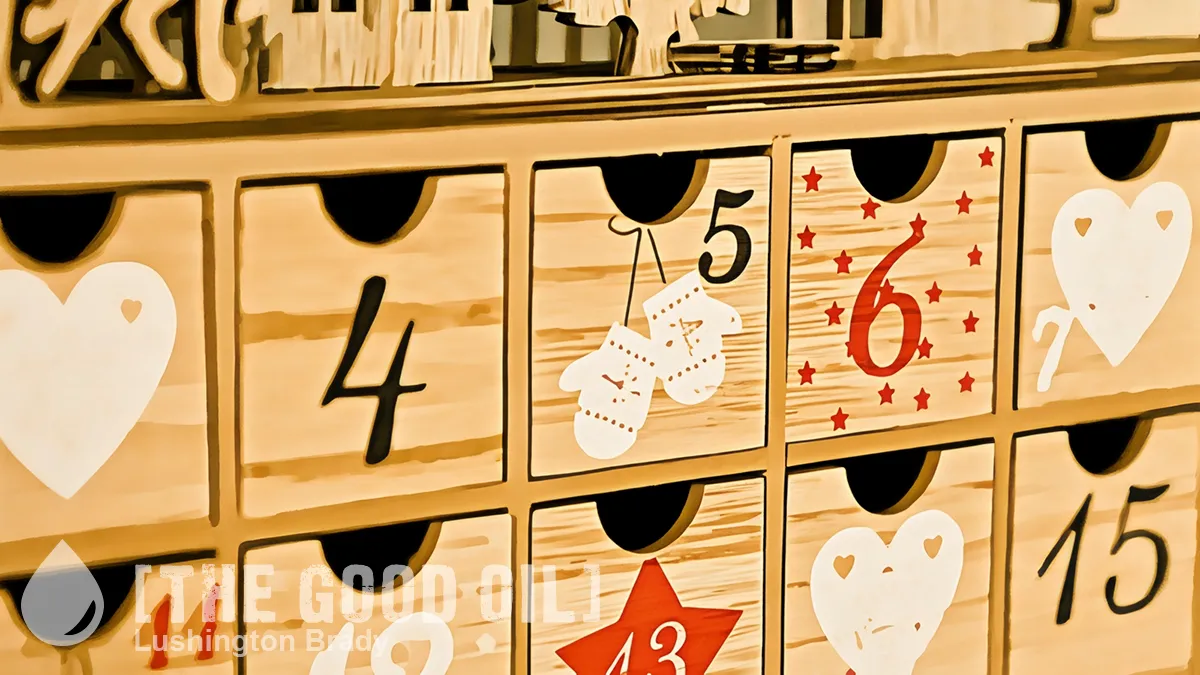
This festive practice originated in Germany, and dates back to the early 19th century, when German Protestants marked the days of Advent by burning a candle or drawing on walls with chalk. The first handmade, wooden Advent calendar was reputedly created in 1851, and by the early 20th century, the first printed Advent calendars started appearing.
Gerhard Lang later added small doors to the Advent calendars in the 1920s, while short Bible verses and traditional pictures were added behind the doors in the 1930s.
Thanks to (who else) the Nazis, who imposed a ban on calendars with images, as well as kicking off a world war that led to severe rationing of cardboard.
After the war had ended, Richard Sellmer of Stuttgart obtained a permit from the US occupying forces to begin printing them again. From there, the Advent calendar spread around the world through the 1950s. President Dwight D Eisenhower is credited for popularising the calendar after Newsweek published photographs of him opening an Advent calendar with his grandchildren on Christmas morning.
As Christmas became more commercialised, Advent calendars moved away from their Christian origins. Bible verses and pictures were replaced by chocolates.
By the late 1950s, chocolate Advent calendars were popular and, nowadays, the cardboard Christmas countdowns contain a variety of treats, including spa products, children’s toys and if you’re a really lucky adult: gin.
Really amping up the commercialism is an Advent calendar that would make even a mediaeval Pope blush with envy.
In 2018, Australian jewellers Mondial released the most expensive Advent calendar in the world: a four-million dollar extravaganza of “specially selected, natural Australian timbers and embellished with precious gemstones, gold and silver as well as hand-made, crystal chandeliers”.
It’s all a long way away from that humble stable in Bethlehem.