Table of Contents
Just over 2000 years since her death, Cleopatra VII, Queen of Egypt, remains one of the most famous names in not just history but popular culture. So much so that not even a modern movie can be made about her without a fierce and more-than-usually uninformed battle for ‘cultural appropriation’ – mostly driven by the bizarrely a-historic claim that she was ‘black’.
While Cleopatra was the last of the Ptolemaic dynasty to effectively rule Egypt, she was not the last of her line. Nor the last of her line to rule as a queen.
Cleopatra and Marcus Antonius, Roman triumvir, were famously lovers. Less famously, they had three children together. First, the twins Cleopatra Selene and Alexander Helios, and their younger brother Ptolemy Philadelphos. The two boys disappeared from the historical record, likely due to early death through illness.
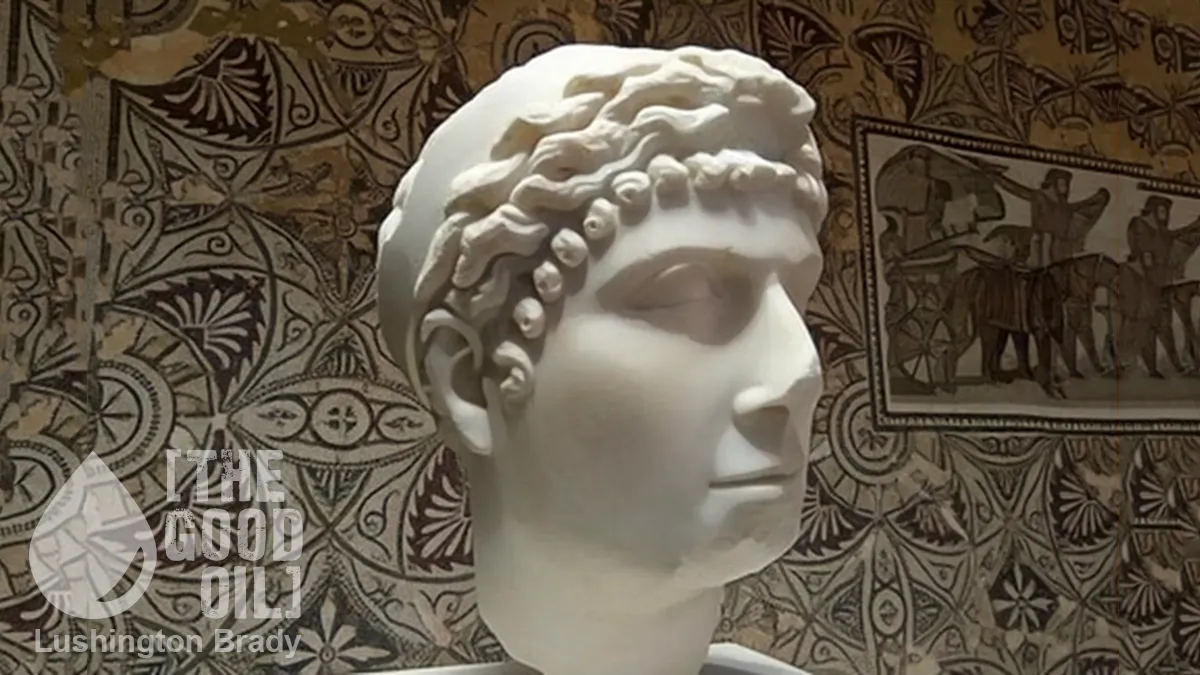
Cleopatra Selene, however, not only survived into adulthood but became an important and influential political figure in her own right. She claimed descent from the mythological figure of the Greco-Roman demi-god Herakles/Hercules and the historical heroes Philip of Macedon, Alexander the Great, Ptolemy I Soter and Ptolemy II Philadelphos, as well as kinship with the Julio-Claudian emperors Augustus, Tiberius, Caligula, Claudius and Nero. Over the course of her eventful life she was first an Egyptian princess, then a Roman prisoner and finally an African queen. Ironically, unlike her mother and the contemporary female rulers Cartimandua of the Brigantes, Boudicca of the Iceni and Zenobia of Palmyra, who have been remembered for the domestic strife, civil wars and rebellions of their regimes, the reason little is known of Cleopatra Selene is because she was successful.
When Cleopatra’s and Antony’s relationship ended in war with Antony’s erstwhile fellow triumvir, Octavian, known to history as Augustus, the founder of the Roman Empire proper. With defeat inevitable and Octavian arriving in Egypt, Antony and Cleopatra famously committed suicide. They had already sent the children away. Caesarion, Cleopatra’s son by Julius Caesar, was captured en route to India and executed. Antony’s three children, sent south to Thebes, were returned to Alexandria as nominal rulers of Egypt. Two weeks later, Octavian made Egypt a Roman province and returned to Rome with the children as hostages.
For the first 10 years of her life Cleopatra Selene had been raised in Egypt as an Egyptian princess at an Egyptian court; the fact that her father was a Roman citizen, former consul and triumvir was virtually irrelevant at this stage of her life. However, once both of her parents were dead and Egypt had ceased to exist as an independent kingdom, the question of what to do with Cleopatra Selene and her brothers needed to be answered. In the absence of any surviving relatives, responsibility for them passed to Octavian and he in turn passed it to [his elder sister] Octavia.
The three former Egyptian royals lived in Rome, as part of an extended family that included such famous Roman personages as Octavian, now known as Augustus, his nephew Claudius and future emperor Tiberius. In addition to this Roman brood who’ve fascinated history ever since, Augustus had accumulated a collection of foreign royal children.
Mostly these were the heirs of friendly client rulers, who had been sent to Rome as a means of ‘Romanising’ them to make them more effective client kings, but it also included several individuals who were the offspring of former client rulers, who had been deposed or had died, or both.
One of the latter was Gaius Julius Juba, the son of King Juba of Numidia (modern-day Algeria, Tunisia and Libya), who had committed suicide in 46 BC after being defeated by Caesar at the Battle of Thapsus.
Juba and Cleopatra Selene had a lot in common, both orphaned at an early age by their parents’ suicides following defeat by Rome, then brought to Rome at first as trophies, later as Romanised clients. They were also raised by Octavia, something of a dynastic matchmaker.
They were also politically problematic and marrying them and installing them as client rulers was a potentially excellent solution. So, following the wedding, Augustus proclaimed them king and queen of Mauretania and sent them there to rule as his clients.
The couple proved more than equal to the task. Especially Cleopatra Selene, raised to rule for the 10 ten years of her life.
Consequently she possessed enough prestige to rule alongside her husband as a queen in her own right and consistently referred to her Greek and Egyptian heritage on the coins she issued in her own name as well as those she issued in conjunction with Juba […]
The couple ruled Mauretania for almost two decades, until Cleopatra’s early death at the age of 35. Judging from a second commemorative epigram written by Crinagoras of Mytilene, her death seems to have coincided with a lunar eclipse, which would place it on or around 23 March, 5 BC.
Juba ruled for another 18 years, and was succeeded by their son Ptolemy. Ptolemy ruled for another 17 years, until he was executed on the orders of his mother’s great-nephew, Caligula. Ptolemy died without an heir, so when Claudius succeeded the assassinated Caligula a year later, he assumed full Roman control. The kingdom of Mauretania was divided into the Roman provinces of Mauretania Caesariensis and Mauretania Tingitana.