John Surtees
John is a former soldier and policeman with Northumbria Police.
The Metropolitan Police Service, founded on 29 September 1829, marks nearly two centuries of policing the streets of London. Officially established to maintain public order and deter crime, its history is often bathed in a romanticised narrative of ‘policing by consent’ embodied by the myth of the friendly, neighbourhood ‘Bobby’.
However, a more critical examination reveals a recurring, dark tension. While thousands of individual officers have shown extraordinary heroism, dedication, and a genuine desire to serve Londoners over the decades, the institutional function of the Metropolitan Police has consistently operated as a shield for the government and a cold enforcer of state will. The Met was never truly designed to protect the people from crime: it was designed to protect the state from the people.
The creation of the Metropolitan Police, via the Metropolitan Police Act 1829, was engineered by the Home Secretary, Sir Robert Peel. The traditional historical view frames Peel’s intervention as a benevolent, progressive response to rising crime rates in a rapidly industrialising capital. Yet, the political motives behind its implementation were far more complex, calculating, and rooted in ruling-class self-preservation.
In the early 19th century, Britain was rocked by profound social unrest. The Napoleonic Wars had ended, economic depression was widespread, and the newly urbanised working classes were increasingly demanding political reform, fair wages, and democratic representation. Prior to 1829, the government relied on a patchwork system of local parish constables, night watchmen, and, in times of serious riot, the military. Using the army to suppress civilian protests was a blunt, volatile instrument that frequently resulted in martyrdom and bloodshed, most notoriously at the Peterloo Massacre in Manchester in 1819, where cavalry charged into a peaceful crowd of 60,000 reform protesters, killing 18 and injuring hundreds.

The political establishment realised that continuing to use the military against British citizens risked triggering a full-scale revolution. Peel’s true genius was not in inventing a crime-fighting force, but in designing a bureaucratic, highly centralised, and civilian-dressed apparatus that could control the population without the immediate optics of military tyranny. By dressing his new officers in blue coats rather than army red, and arming them only with wooden truncheons rather than muskets and bayonets, Peel created a domestic standing army designed to manage dissent quietly.
From its very inception, the primary structural imperative of New Scotland Yard was to preserve the existing political and economic hierarchy against those who wished to challenge it.
The permanent tension between individual officer intent and institutional function is best understood through historical milestones where the state explicitly deployed the force to suppress domestic political movements that threatened the status quo. For example, during the Suffragette movement, events like Black Friday in 1910 demonstrated a willingness by authorities to deploy the Met with severe physical force. On that day, hundreds of women marching to parliament were met by police forces determined to prevent them from lobbying politicians, resulting in widespread physical and sexualised assaults on peaceful campaigners demanding basic democratic franchise.
Similarly, decades later, the 1984–1985 miners' strike marked a pivotal escalation in using police personnel as a coordinated mechanism to dismantle industrial action and enforce national economic directives. Met units were sent far beyond their London jurisdictions to act as a paramilitary force, exacerbating tensions, provoking a violent response, blockading villages and breaking picket lines to enforce the political will of the central government.
While thousands of individual officers over the generations have joined the Met out of a genuine desire to protect communities, frequently demonstrating immense heroism during crises like the Blitz, the 1952 Great Smog, or modern terrorist incidents, their deployment during these key historical disputes highlights an unyielding institutional priority. When push comes to shove, the force does not serve the community: it defends the governing regime against public opposition.
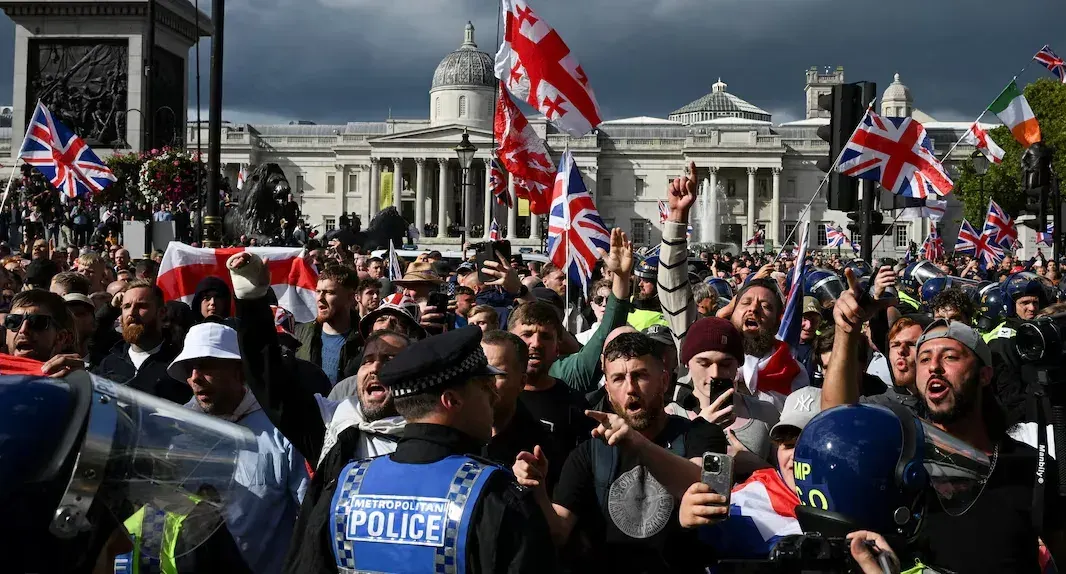
In the modern era, this protective shield for government authority has been reinforced through sweeping legislative changes that systematically expand police powers over public expression and assembly. Significant statutory updates have fundamentally altered the boundary between lawful protest and state-sanctioned crackdowns, turning police officers into judges of acceptable political behaviour:
The Police, Crime, Sentencing and Courts Act 2022 granted the Met unprecedented authority to impose highly restrictive conditions on static protests based on subjective criteria, such as generating ‘too much noise’ or causing ‘serious unease’ to bystanders and politicians.
The Public Order Act 2023 further criminalised long-standing protest tactics, introducing harsh criminal penalties for ‘locking-on’ and drastically lowering the legal threshold for what constitutes ‘serious disruption’ to London’s infrastructure or daily life.
These laws effectively shift the legal default from an ancient British presumption of free assembly to an authoritarian environment where the Met is legally empowered to pre-emptively dismantle dissent before it can politically embarrass or inconvenience the governing regime.
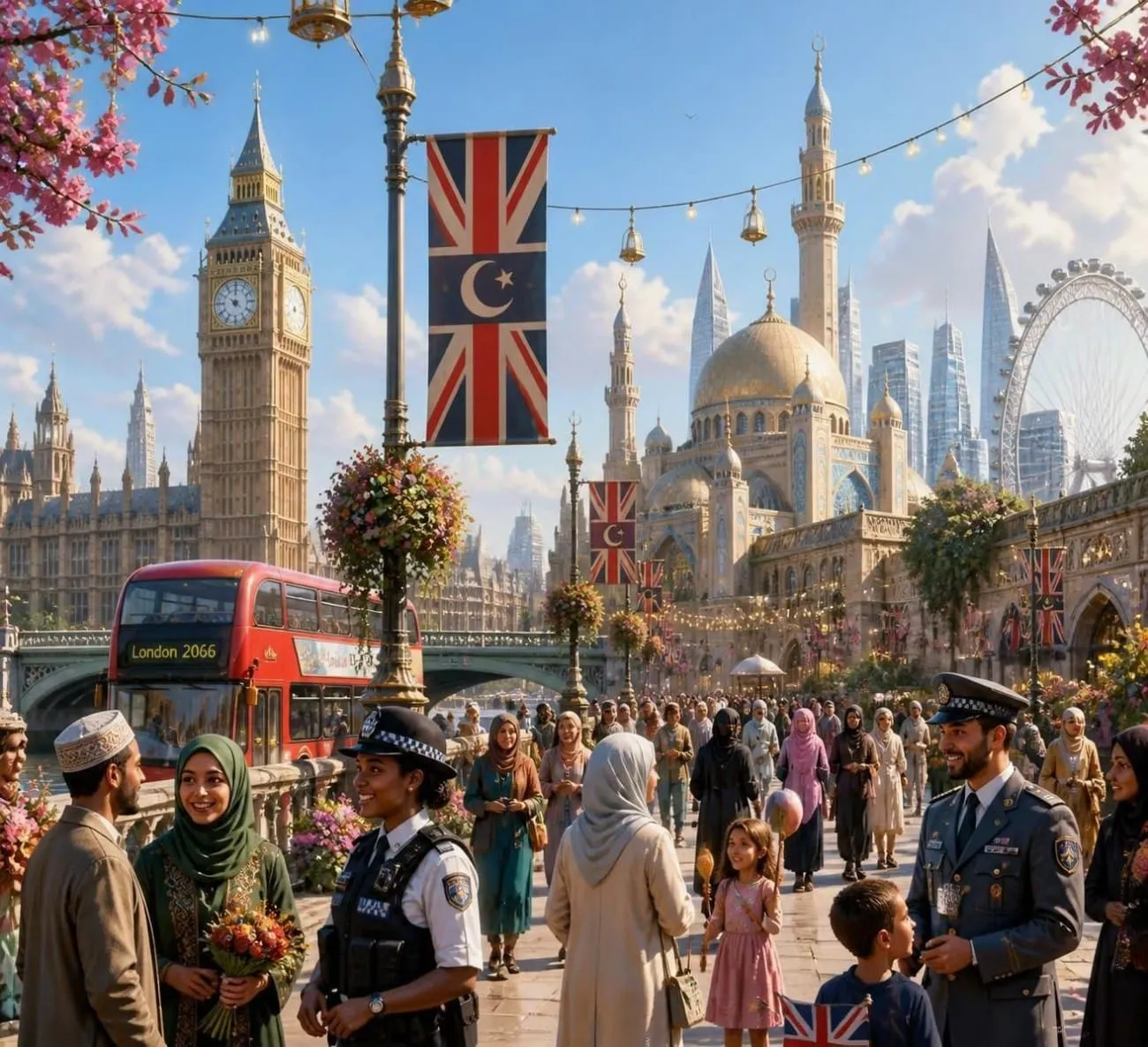
Rather than utilising these expanded powers strictly to combat violent crime, burglaries, or anti-social behaviour, the contemporary Metropolitan Police has increasingly channelled its resources into enforcing state-sanctioned ideological conformity. The modern British state has adopted an orthodox globalist dogma centred around identity politics, administrative diversity metrics, and speech regulation. The leadership of the Met has aligned its operational focus accordingly, eager to prove its loyalty to this new ruling-class consensus.
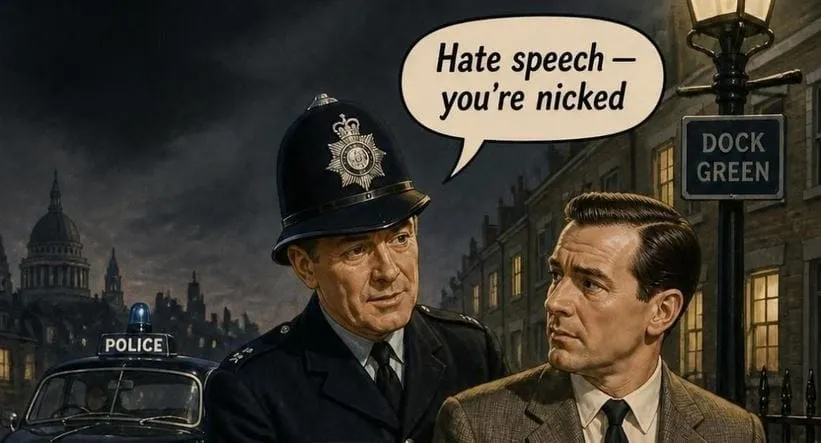
As a result, traditional concepts of free speech, once a cornerstone of British liberty, have been heavily eroded. The force now actively diverts personnel and multi-million pound budgets to monitor social media platforms, track thousands of ‘non-crime hate incidents’ – which legally do not even constitute a crime – and arrest individuals for expressing controversial, unfashionable, or anti-establishment opinions in public spaces. Officers who should be walking the beat are instead deployed to police online commentary, monitor silent prayer near clinics, or investigate offensive language on digital forums. By prioritising the suppression of political dissent and the policing of language over tangible public safety, the Met has progressively abandoned its core duty to protect ordinary Londoners.
Conclusion: The Enemy of the People? Two centuries after Robert Peel's experiment began, the Metropolitan Police finds itself at a profound, existential crisis point. The fundamental compact of ‘policing by consent’ appears entirely broken. By prioritising the suppression of political dissent and the enforcement of state-sanctioned ideological conformity, the force has increasingly turned its apparatus against the very population it was meant to safeguard.
For the average Londoner, whose home burglary goes uninvestigated, whose stolen property is dismissed with a text message, or whose local streets feel increasingly unsafe due to rising knife crime, the sight of police resources deployed to clamp down on free speech is a bitter pill. By abandoning its traditional duty to combat core criminality in favour of enforcing the ideological will of the ruling class, the Metropolitan Police has broken cover and can no longer pretend to be a protective shield for the public or is policing with consent. It has, instead, become, as a collective institution, an adversary to the historic liberties of the people it is ostensibly employed to protect – a job it is now progressively abandoning.
This article was originally published by the Free Speech Backlash.