Simon O’Connor
Husband, step-father, foster dad, and longtime student of philosophy and history. Also happen to be a former politician, including chairing New Zealand’s Foreign Affairs, Defence, and Trade Committee.
I was reflecting on my reactions to the recent leader and ‘minor party’ debates. I’ve found them dull, full of predictable talking points, and carefully rehearsed responses. They seem less a contest of ideas and more an exercise in political management.
Yet, at the same time, I am very aware just how close this election is and how critical the result will be for the future of New Zealand.
It’s a strange paradox, or perhaps contradiction, that for such a close-run election with so much riding on the result, that I and many others just cannot get excited about it.
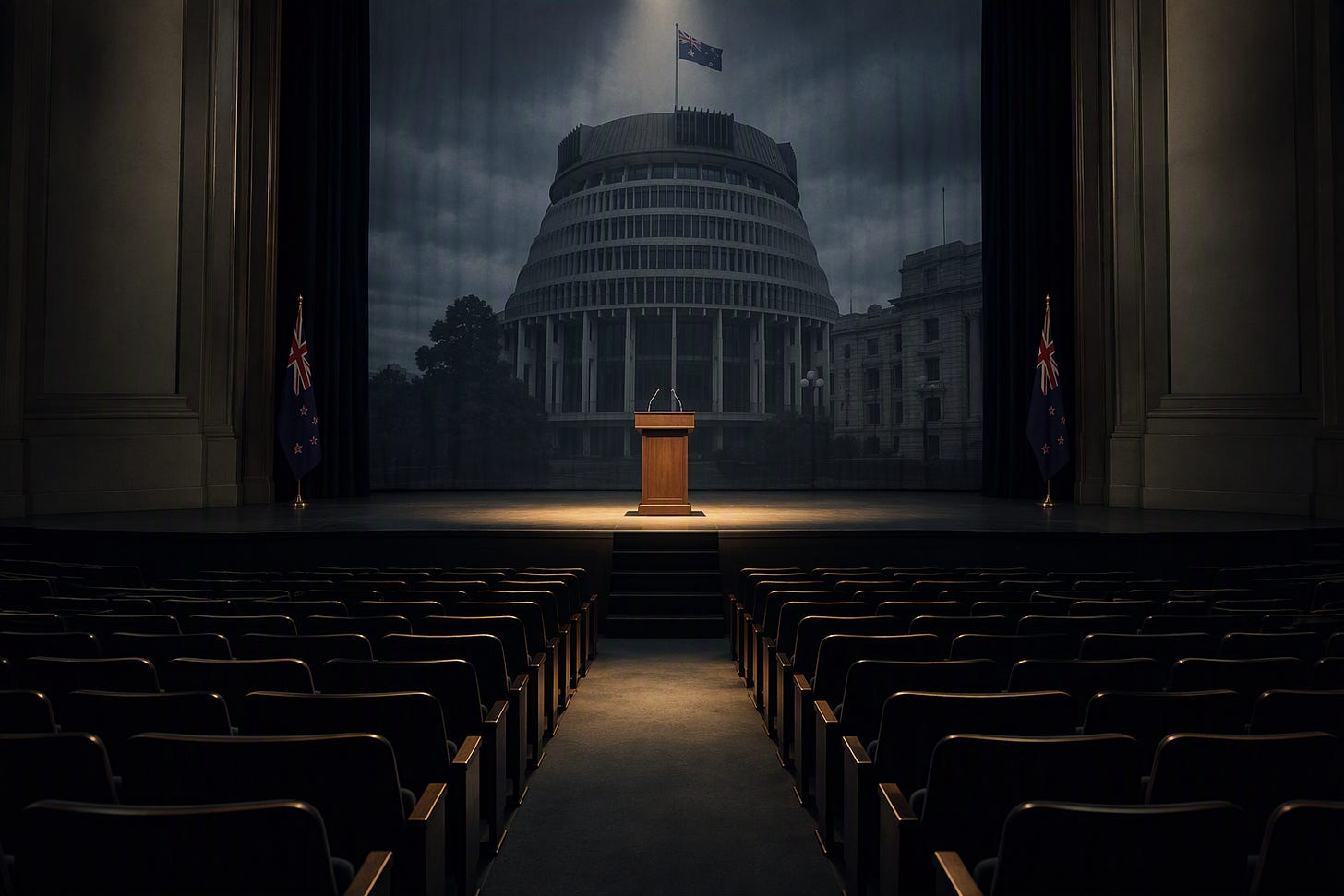
What strikes me most is how managerial modern politics has become. Leaders and politicians who are increasingly focused on managing perceptions rather than advancing deeply held principles. Consequently, vision-led change is replaced by tinkering around the edges – something we are all too familiar with.
When leaders of principle are asked difficult questions, they can be clear and to the point, being quite prepared to defend their positions even if deemed unpopular. With our current crop of managerial leaders, one observes a never-ending word salad that does anything but clearly state a position.
Fundamentally, the managerial approach undermines trust because it priorities presentation over conviction, paper shuffling for progress. Instead of being prepared to back a position to the public, managerial leaders and MPs are busy pondering what answer they think will land best with the audience. It is about giving a managed presentation instead of an answer.
I think part of the explanation is also a growing weariness within New Zealanders. The cost-of-living challenges are real, but they have persisted for so long that many voters now doubt whether either side of politics can meaningfully improve their situation. Whether it was Labour during its six years in office or the current coalition over the last three, neither has convinced voters that the country is heading in a better direction.
This weariness may also explain why many of the positive contributions of the current coalition government are being overlooked. Whether in education or law and order, as well as health or even the RMA reform, successes have been ignored. I can only assume that struggling New Zealanders are more receptive to negative messages currently, rather than celebrating successes.
Yet there is clearly a desperation in play as well. The idea that the former Labour government and a defeated former prime minister (Chris Hipkins) is the solution boggles my mind. As many comment – have people forgotten what happened when they were last in power, just three short years ago? I think the answer is ‘no’, New Zealanders have not forgotten, but they are so tired, fed up, and frustrated that they find it easy to simply blame the ‘current lot’ and turn to any alternative available.
This frustration is compound by another trend – the reduction of politics to short Facebook reels or TikTok videos. This was evident within the debates, where you can almost hear the various leaders’ minds whirring as they ponder what response will look better in a short online video than actually answering the question with conviction.
To be fair, part of this relates to the formats that the various media outlets choose. All have preferred the light touch on subjects as opposed to diving deep into areas of key interest to New Zealanders.
All this said, these last days of the election may shake things up a little. We may have seen some early indication of this with the latest 1News Verian poll that has National, for the first time since who knows how long, over 30 per cent. It is possible that the many disgruntled National voters, who up to now have been withholding their support, are begrudgingly returning to vote blue.
I’ve often noted that it is relatively ‘cost free’ for angry National voters to say they will vote a different way months out from an election. But the reality of changing votes becomes more apparent the closer one comes to election day.
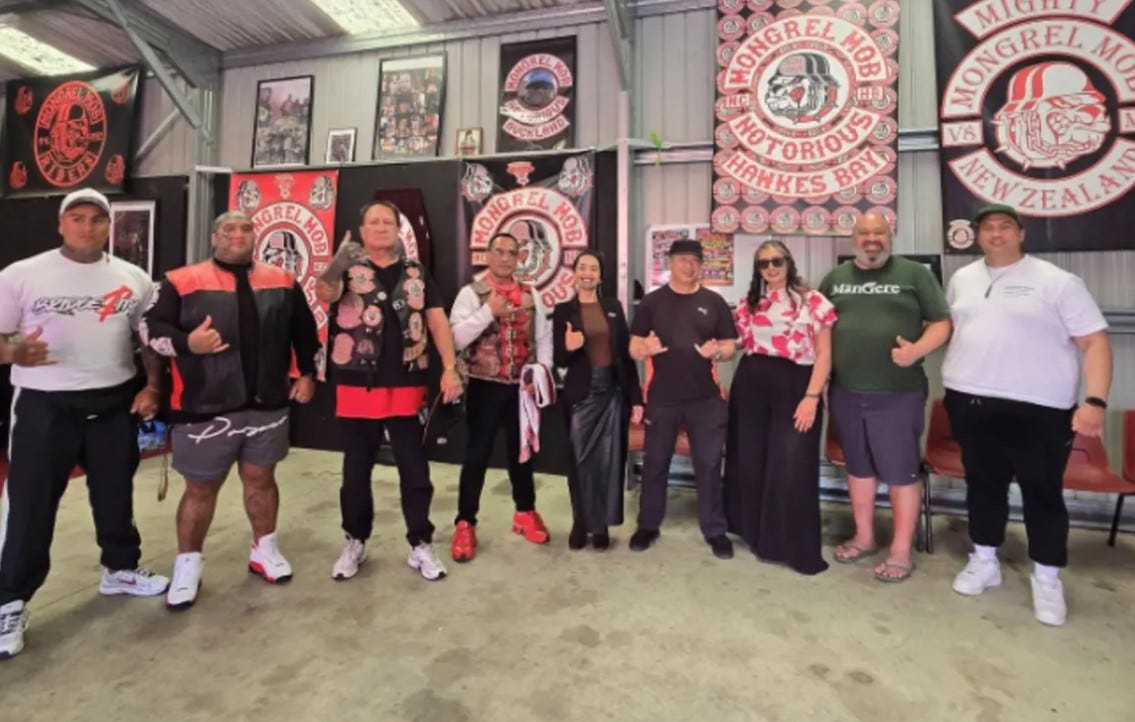
On the other side, the Greens and Te Pāti Māori have done their very best to derail their campaigns, and that of the entire left-wing, by visiting the pad of a criminal organisation. Both parties have doubled down on this decision and the reason is remarkably straightforward – both parties are radical groups that frame almost every issue through a lens of grievance and victimhood. Ironically, not the actual victims of crime but those who claim they are – in this case, the Mongrel Mob.
Advanced voting starts on Monday, and election day is Saturday 7 November. Boring as the campaign has been, we are still in for an interesting ride.
In Media
Not the easiest topic to discuss, but an important one for parents, grandparents, caregivers, and others to understand.
“Grooming doesn’t look like danger – it looks like trust.”
In this eye-opening conversation on the Family First podcast, licensed clinical social worker Anna Sonoda, LCSW, breaks down the four stages of grooming every parent needs to know so as to keep your kids safe.
Over on RCR online radio, myself, Bob McCoskrie, and Rodney Hide hosted a webinar discussing all the ins and outs of the election – how MMP, strategic voting, wasted voting, and more. Check it out below 👇


And my wife Rachel O’Connor has been outwriting me, having just released another Substack, this time on capitalism: Let’s Flourish by Rachel.
This article was originally published by On Point.