John Surtees
FSB
As everybody knows, Ann Widdecombe was found dead last week in the quiet village of Haytor Vale, on the edge of Dartmoor. The 78-year-old former minister, whose sharp intellect and unyielding principles had made her a distinctive voice in British public life for decades, had sustained serious injuries and, what should have been a straightforward, if tragic, murder inquiry has instead become something even more unsettling: a case study in how official pronouncements, selective transparency, and institutional habits can fuel precisely the speculation they purport to discourage. For those of us who left the Conservative Party for Reform or allied endeavours but retained a genuine respect for Widdecombe’s forthright brand of conservatism, the handling of her death feels particularly raw, if not suspicious.
Widdecombe was no stranger to controversy. A convert to Roman Catholicism, a staunch Brexiteer, and later a spokeswoman for Reform UK, she embodied a brand of plain-speaking Toryism that many found refreshing even if they disagreed with its particulars. Her television appearances, from Strictly Come Dancing to robust parliamentary exchanges, revealed a woman of wit and conviction who did not suffer fools. Her death, therefore, was never going to pass unnoticed. Yet the police response, marked by rapid arrests, pointed statements on motive and ethnicity, and a swift pivot to counterterrorism officers, has left a trail of unanswered questions. In an age when public trust in authority is already threadbare, these loose ends invite scrutiny, not from prurience, but from a legitimate concern for truth and accountability – and worries about something far more sinister.
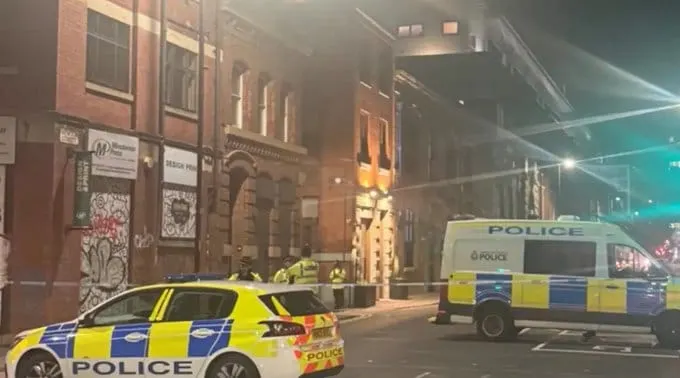
The facts, as far as they are known at the time of writing, begin on Thursday, 9 July 2026. Widdecombe was discovered at her Devon home with serious injuries. Police indicated that the attack had likely occurred the previous afternoon, around midday on Wednesday. Devon and Cornwall Police launched a murder investigation. Early on Friday, officers arrested a 26-year-old ‘white British man’ in the Newton Abbot area, not far from the scene. This detail – the ethnicity – was noted publicly with a precision that stands out. British police do not routinely emphasise the race of suspects in every case: the choice to do so here was conspicuous. That man was later released without charge.
Then, on Saturday, came a second arrest: a 28-year-old ‘white British man’ in Rotherham, South Yorkshire, some 320 miles from Haytor. Police stated they were not looking for anyone else. The distance is striking. What manner of connection linked a suspect in northern England to a retired politician in rural Devon? The journey suggests premeditation, or at least significant intent. Yet initial police statements, issued with notable haste, stressed that there was “nothing to suggest” the killing was politically motivated or terrorism. Assistant Chief Constable Matt Longman, at a press conference, reiterated that detectives remained open-minded while firmly ruling out, or at least downplaying, ideological drivers “at this time”.
Such phrasing is telling. The caveats “at this time” or “nothing to suggest” leave the door ajar even as they seek to close speculation. Later, counterterrorism police from the South East took over the investigation citing “new information and evidence”, and the force again emphasised that it was not being treated as a terrorist incident. The Home Secretary, Shabana Mahmood, echoed this development. Meanwhile, warnings were issued that public speculation was “unhelpful and distressing”. One cannot help but observe the pattern: reassurance first, complexity later.
Media reporting has filled some gaps, though not always in ways that clarify. Footage shows the Rotherham suspect dressed in a white shirt and shorts getting into a red car outside a house, with a long object apparently protruding from his pocket just a few hours before the attack in Devon. Neighbours reportedly spoke of a red car being taken from the drive. Yet accounts of activity near Widdecombe’s own home include reports of a vehicle parked on her drive mere minutes before the estimated time of the assault. Nigel Farage, who visited the scene, drew attention to this. Questions linger about doorbell cameras or local CCTV at the property as Widdecombe was known to have security measures, and whether their contents align with the Yorkshire footage. Police have not released comprehensive scene imagery themselves, a departure from the norm in high-profile inquiries where appeals for witnesses often feature prominent video.
These discrepancies matter. A random burglary gone wrong does not easily explain a 300-mile journey to target a specific elderly woman in a rural village. Widdecombe lived a relatively public life: her views were well-known and, to some, provocative. The notion of a politically or ideologically driven attack is not fanciful, even if evidence ultimately points elsewhere. Yet the police’s early emphasis on the absence of such a motive, repeated before a full picture could reasonably emerge, feels almost designed to provoke the very curiosity it condemns. Why highlight ethnicity in the first arrest? Why the swift geographical leap to the second? Why the red car in one location and potentially differing descriptions nearer the scene? The information management creates an impression of either incompetence or control rather than candour.
This is not mere nit-picking. It reflects a deeper erosion of public confidence, one with roots in previous cases. The Southport murders of 2024 remain a painful reference point. There, initial official statements and media guidance appeared calibrated to downplay the perpetrator’s background and any ideological elements, only for subsequent inquiries to reveal systemic shortcomings in risk assessment and information sharing, at best. Lancashire Constabulary later acknowledged failures, including an incident where the attacker was found with a knife but not properly arrested. The inquiry highlighted preventable lapses and a reluctance to confront uncomfortable realities. Many observers, across the political spectrum but particularly among those sceptical of mass migration and institutional multiculturalism, came to view such episodes as part of a pattern: reassurance and narrative management designed to protect ‘the project’ taking precedence over transparent investigation.
In Widdecombe’s case, the invocation of counterterrorism policing adds another layer. Officers from that unit supported the arrest in Yorkshire and have now assumed leadership, citing fresh evidence. Yet the force maintains it is not a terrorism-related matter. This is not inherently contradictory , counterterrorism teams possess specialist forensic and tactical capabilities useful in complex murders, but it contributes to the fog. The public is asked to accept both the deployment of elite resources and the firm assertion that ideology is irrelevant. For an intelligent readership that has watched institutions falter on issues from grooming gangs to riot responses, such dual messaging invites doubt.
Ann Widdecombe herself would have demanded better. Her career was defined by a refusal to accept official lines at face value, whether on European integration, social policy, or criminal justice. She possessed a rare combination of moral clarity and intellectual rigour, qualities that earned respect even from those who had moved beyond the Conservative Party she once served. Many who defected to Reform did so not out of personal animosity towards figures like her, but because of Tories captured by globalist managerialism and a reluctance to address cultural and security concerns head-on. Widdecombe’s willingness to align with Reform in her later years spoke to a recognition that bolder voices were needed.
The speculation surrounding her death, therefore, is not the product of fevered imaginations alone. It arises from a vacuum created by incomplete disclosure or, possibly, misinformation. Why drive across the country to attack a specific politician if the motive is purely personal or opportunistic? The police’s own actions in emphasising a white suspect, releasing (or allowing the release of) selective CCTV, and issuing early motive denials amplify rather than quell curiosity. In a healthier polity, authorities would flood the public domain with verifiable facts: full timelines, forensic summaries, comprehensive CCTV where appropriate, and clear explanations of investigative steps. Instead, we have partial releases and admonitions against speculation.
This approach risks deeper damage. Trust in policing and governance has been fraying for years, accelerated by high-profile missteps, two-tier perceptions in public order, and a sense that certain truths are managed rather than confronted. When a prominent conservative voice dies under suspicious circumstances, the instinct is not conspiracy but accountability. The counterterrorism handover, the red car anomalies, the rapid ethnic notations, and the hedging on motive all constitute legitimate loose ends. The public deserves better than to be told that noticing them is “unhelpful”.
As the investigation proceeds, greater transparency would serve justice. The family, friends, and wider public mourning a formidable woman deserve clarity, not carefully worded reassurances. Trust in Britain’s police, already diminished to the point of vanishing legitimacy, cannot afford further erosion. Ann Widdecombe spent her life speaking truth as she saw it, often against the grain. The least that can be asked, in the wake of her violent death, is that those charged with uncovering the truth do so without inviting the shadows of doubt through omission or over-eager narrative control. The moorland mists around Haytor may obscure the landscape, but they should not be allowed to shroud the facts.
This article was originally published by the Free Speech Backlash.