Yvonne van Dongen
Veteran NZ journo incredulous gender ideology escaped the lab. Won’t rest until reality makes a comeback.
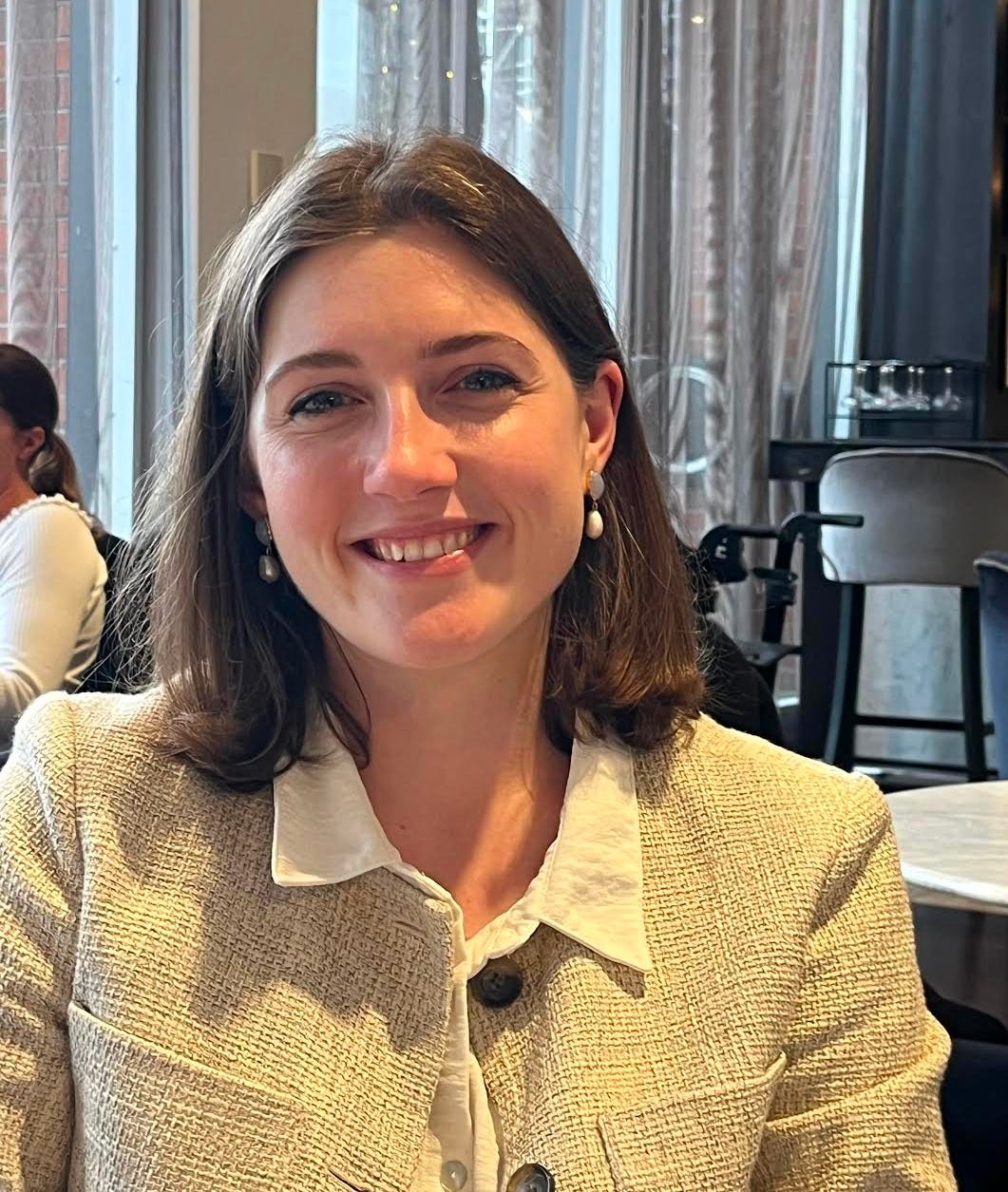
Here’s a head scratcher for a gender critical thinker – should academics be allowed to say sex is a spectrum?
Yes, says American free speech scholar Sarah McLaughlin. But they should not be allowed to censor anyone who opposes this statement. The academy is supposed to be able to sort these things out on its own.
Such is the uncomfortable reality of free speech. Even dumb ideas are allowed to be aired.
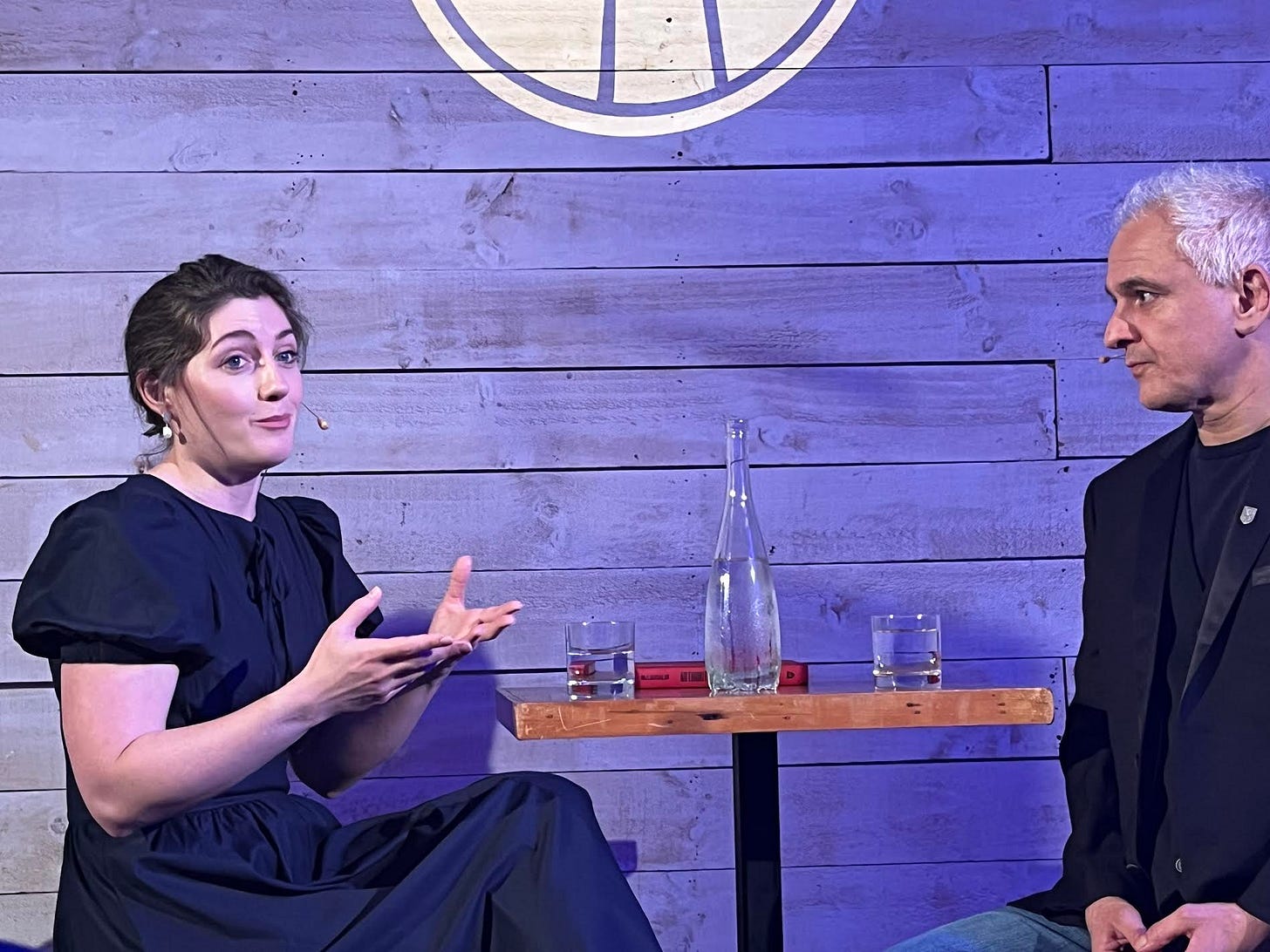
McLaughlin has thought about this sort of conundrum a lot. Indeed her latest book specifically tackles free speech challenges faced by universities. The title alone tells you something of how she views the situation – Authoritarians in the Academy: How the Internationalization of Higher Education and Borderless Censorship Threaten Free Speech.
McLaughlin is currently visiting New Zealand as a guest of the Free Speech Union. As the senior scholar, global expression at the Foundation for Individual Rights and Expression (FIRE), her job is to monitor the health of the globe, free speech-wise. That means that at any one time she knows what’s happening to free speech in countries as diverse as Qatar, Wales, Brazil, Spain and even New Zealand.
With this bird’s eye perspective, she has come to the conclusion that the patient is not well and, indeed, is likely to get worse before they get better. McLaughlin has observed a pattern of receding free speech rights infecting nations, both free and unfree, everywhere. The pressure to conform to censorship for financial gain, to avoid punishment or controversy is ubiquitous. It’s why she’s dubbed her visit The Conformity Crisis Tour.
But that doesn’t necessarily mean there is a global conspiracy to expand state power and limit free speech. At least not in the sense of a scheming cabal of sinister politicians aiming for world domination. The reality is more nuanced.
We have a lot of legislators watching what each other is doing. There is a co-ordinated effort and desire to have similar legislation across all countries. So for example, even though Canada is not in the European Union, it is pushing for online content and harmful speech legislation that looks a lot like it came from the EU.
Humans are a mimetic species and that applies to nations too. Liberal democracies look at how other liberal democracies tackle particular challenges, while authoritarian nations observe the actions of nations most like them.
Authoritarian states (e.g., China, Russia) seek to maintain or intensify censorship while democratic societies are testing or expanding restrictions, often justified by concerns like misinformation, hate speech, extremism or combatting harm to children.
McLaughlin urges caution when it comes to all these concerns. Misinformation and disinformation are terms frequently used to condemn speech but McLaughlin says it’s better to think of them as lies. Humans have always lied, sometimes deliberately (disinformation) and sometimes unintentionally (misinformation).
We can test lies while bearing in mind that we don’t always know with absolute certainty what is false and what is true. McLaughlin says there’s always the risk of hubris. “A lot of assumptions people make show a lack of humility.”
Tempting as it might be to police lies or curtail speech deemed hateful, she says there is harm that comes from giving governments this power.
There’s also the question of whether censorship even works to achieve its goal. If the purpose is to have a better informed public, policing speech can be dangerous for public trust. Not many people are happy with the way governments are enforcing hate speech anywhere. This is especially true in Europe and the United Kingdom (UK) where wide-ranging laws have come under attack. The internet changes things in that we now have the capacity to reach many more people than we’d ever imagined.
For instance, in Germany rules against insults to elected officials resulted in the police investigation of a Facebook comment calling Chancellor Friedrich Merz “Pinocchio”. In the UK thousands of peaceful protestors have been arrested under anti-terror legislation, others investigated for what they posted online and the authorities have even started to set rules around ‘harmful content’ on Netflix.
Perhaps the most potent of all the arguments for internet censorship is ‘think of the children’. The harm the net poses to young people has been convincingly outlined by the likes of American psychologist Jonathan Haidt. The proposed solution, a campaign to ban teens from social media, might seem like an unstoppable international crusade that New Zealand should join, but McLaughlin advises caution.
She worries that with countries from Australia to France to Spain to the US, all jumping on the age verification bandwagon, the global internet risks becoming the greatest victim of free speech. Age verification restrictions would almost certainly lead to an exponentially rising free speech recession.
Too few people understand that age verification is not a duty that will fall on just teenagers, but on everyone, and in the process create real risks of self-censorship and threats to anonymous speech.
Youth safety matters. But so do speech rights.
Institutions all over the world face pressures to conform to censorship. None more so than those in higher education. Oppressive governments like China, Qatar and the United Arab Emirates know how to use the lure of money to undermine free speech, either by issuing direct demands or relying on the persuasive effect of generosity to foster voluntary self-censorship. They may set up outposts of Western universities in their own country or lavishly fund universities overseas, as well as sending thousands of their own citizens to pay high fees to study abroad. This creates a network of influence.
New Zealand learned this in 2019 when Auckland University of Technology (AUT) cancelled a planned event commemorating the 30th anniversary of the Tiananmen Square crackdown (June 4, 1989). Critics accused AUT of yielding to pressure from the Chinese government, raising concerns about academic freedom and foreign influence on New Zealand campuses. The university initially claimed it did not know the event’s topic and cancelled due to procedural issues (a staff member bypassing proper approval) and the holiday closure but OIA email revelations later contradicted this.
Technology allows China to keep tabs on their students overseas. McLaughlin says she knows of students who have been recorded attending controversial events such as listening to the Dalai Lama. These images were then sent to the Chinese consulate.
Of interest to New Zealand, given the requirements of the India Free Trade Agreement to take Indian students, McLaughlin notes that India, a partially free democracy, is also becoming increasingly autocratic and employing state censorship. She sees the Indian government using similar tactics to the Chinese government and warns that if a university is reliant on Indian students, they will be hesitant to criticise the Indian government.
Of the repressive regimes, Qatar is the most generous donor to US universities. Official records show that since 1986 they have donated $7.7b to American universities, while China has given $6.4b. But generosity comes with strings attached.
In early February 2020, Northwestern University in Qatar (a branch campus of the US-based Northwestern University) scheduled an event that featured the band Mashrou’ Leila as guests/panelists at their Doha campus.
The band is known for progressive lyrics, including support for LGB rights, and lead singer Hamed Sinno has been openly gay for years – one of the most visible gay Arab musicians in the region.
After the event was announced, it triggered a strong online backlash on social media from conservative and anti-LGB users in Qatar and the broader Arab world. Critics accused the university of promoting ‘immorality’ or violating local cultural/religious norms (homosexuality is illegal in Qatar and punishable by imprisonment).
Northwestern University in Qatar then cancelled the on-campus event, citing “safety concerns” for the band members and the university community. They relocated the discussion to their main campus in Evanston, Illinois (USA) instead.
However, Qatar Foundation (the non-profit organisation that hosts and funds many international university branches in Qatar’s Education City, including Northwestern) pushed back, suggesting the cancellation was more about the event not aligning with Qatar’s laws and cultural values rather than purely safety.
McLaughlin says this shows the university outright lied about why the event was cancelled, thus undercutting the independence of the institution and giving oppressive governments like Qatar the right of veto.
We need institutions to have strength and courage. I think we can ask that much of our universities. Universities are an institution created out of a set of values of free enquiry and speech. If you don’t have those values, what is the institution resting on? You’re just looking at a hedge fund.
Unlike American philosopher and academic Peter Boghossian who favours burning the house down when it comes to compromised universities, McLaughlin takes a more optimistic approach. She believes change is possible using praise and market pressure by means of influential donors or students going elsewhere.
Once some do it, it’s a lot easier for others to do it.
Makes sense. It’s how all the bad ideas spread so it should work for the better ones.
This article was originally published on the author’s Substack.