Table of Contents
If 1905 was Albert Einstein’s annus mirabilis, 1925 was the miracle year of the physics that would remain Einstein’s bete noir for the rest of his life. One hundred years ago this year, Werner Heisenberg and Erwin Schrödinger each spent long periods in seclusion, working out the mathematical bases of what came to be known as quantum physics.
With nothing but daily walks and long swims to distract him, 23-year-old Werner Heisenberg had time to grapple with a conundrum.
The macro world – of apples falling from trees – behaved differently from the micro world – of atoms and their subatomic components.
While the macro world could be explained by Sir Isaac Newton’s laws of motion, nature’s tiniest particles seemed lawless […]
A month after this trip to Helgoland, on July 29, Heisenberg submitted a paper considered to be the advent of quantum mechanics.
In the same year, recovering from tuberculosis at a sanatorium in Switzerland, 38-year-old Schrödinger was working on what came to be one of the most important components of quantum mechanics: the wave equation.
Heisenberg’s musings and subsequent writings were triggered by the concept of “quanta”, which was introduced at the end of the 19th century.
Quanta are discrete packets of energy, and their existence challenged the old view of energy as a continuous phenomenon […]
The wave equation was easier to grasp than Heisenberg’s [“matrix mechanics”], and as a result it’s still used today to understand the behaviour of particles.
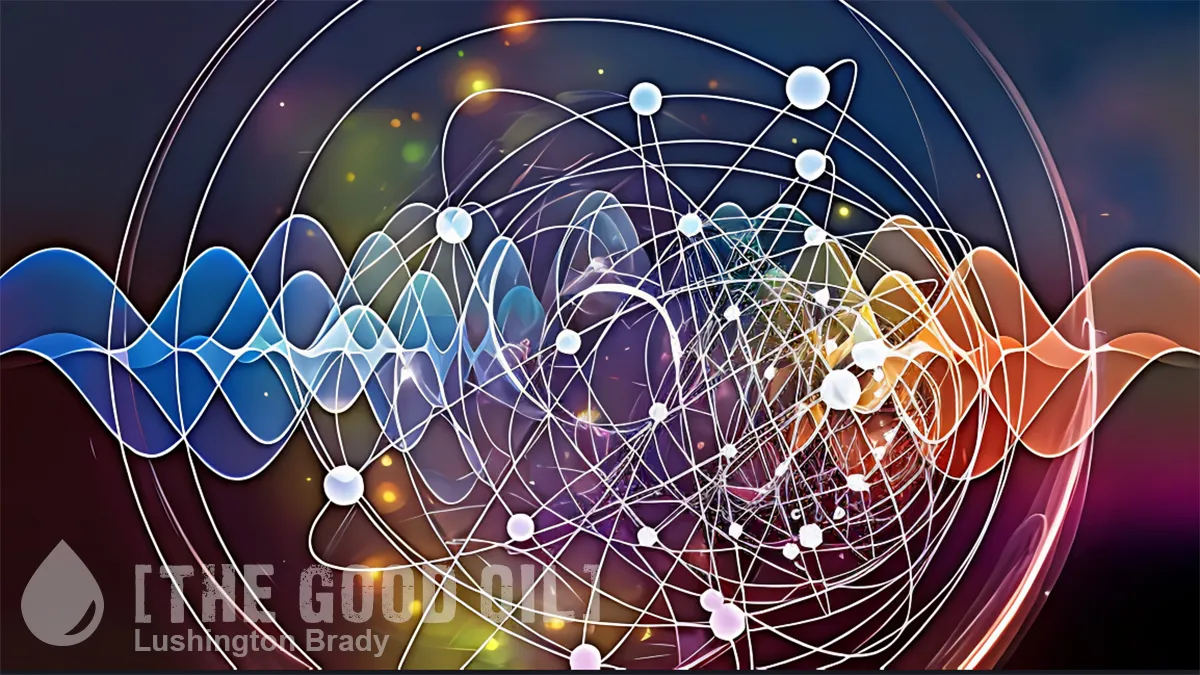
While Schrödinger initially imagined the wave in his wave equation as a physical phenomenon, like a soundwave or an ocean wave, it is in fact a ‘wave of probability’.
“It’s a wave of probability telling you all the possible places the particle might be.”
If you picture a very basic drawing of a wave on a piece of paper, the peaks and troughs will indicate where a particle is more or less likely to be found.
But here’s the strange thing – until observed, the particle does not have a precise location. It exists in all of those possible locations at once.
This is called superposition.
This concept is often explained through the “Schrödinger’s cat” thought experiment, where the cat is both alive and dead at the same time.
“And that was a really interesting and strange idea,” [mathematician and historian of science Robyn Arianrhod] says.
So strange it started a decades-long debate between two titans of physics: Albert Einstein and Danish physicist Niels Bohr.
Einstein thoroughly disliked the implications of quantum mechanics – namely that ‘God plays dice’ with the building blocks of reality – and at the Solvay Conference on Physics in 1927 embarked on long debates with Bohr. In proper scientific fashion, Einstein came up with argument after argument, forcing Bohr to repeatedly defend the new physics. Like tempering steel, the long debate forced quantum defenders to make their theory ever-more robust.
Long after the Solvay Conference, where the common assumption was that Bohr had won, he and Einstein spent many more years swapping letters and thought experiments:
Trying to figure out how a particle could be in a superposition of every possible state until observed.
How could observing a particle alter the particle? Don’t particles have inherent properties, whether they’re observed or not?
It was this observer effect, and Einstein’s attempts to undermine it, that led us to the strangest phenomenon of all: entanglement.
This was a result of Einstein’s efforts to dethrone quantum theory, in particular, a paper that formulated what became known as the the Einstein-Podolsky-Rosen (EPR) paradox.
In it, the authors present a thought experiment to demonstrate a problem with the observer effect.
“Say you’ve got a red and a green jelly bean and each is in a sealed box,” Dr Arianrhod says.
“If observer one opens their box and finds a green jelly bean, then observer two knows the colour of their jelly bean in the other box will be red.”
Easy enough to understand. However, if these are quantum mechanical “entangled” jelly beans, things get more complicated.
According to quantum mechanics, neither jelly bean has an inherent colour. They exist in a superposition of both red and green until they are observed.
“All we can say for sure is that each jelly bean has a 50 per cent chance of being red and each has a 50 per cent chance of being green,” Dr Arianrhod says.
If observer one looks inside their box and discovers a red jelly bean, observer two’s jelly bean will instantaneously be green.
“And this means that the second jelly bean’s colour is determined by the first observer. It’s not pre-existing,” Dr Arianrhod says.
The EPR paper concluded: “No reasonable definition of reality could be expected to permit this.”
Einstein dubbed such an outrageous situation ‘spooky action at a distance’.
He thought there must be “hidden variables” that determine the colour of the jelly bean, not the observer who simply opened a box and looked inside.
Bell’s Theorem, formulated by physicist John Bell in 1964, demolished the assumption of “hidden variables”. Eventually, Alain Aspect, John Clauser and Anton Zeilinger won the 2022 Nobel Prize in Physics for a series of experiments that upheld Bell’s Theorem.
Einstein was ‘proved wrong’ – but he’d been asking the right questions all along. Especially the nagging basic: ‘what does this all mean?’ A question which still bedevils theoretical physicists.
Whoever solves it all, and especially reconciles the fundamental incompatibility of relativistic and quantum physics, will almost certainly do so by completely re-writing the laws of physics as we currently know them. The ‘new physics’ has been around for a century: what the new new physics will be is still anyone’s guess. All we know for sure is that it must be out there, somewhere.