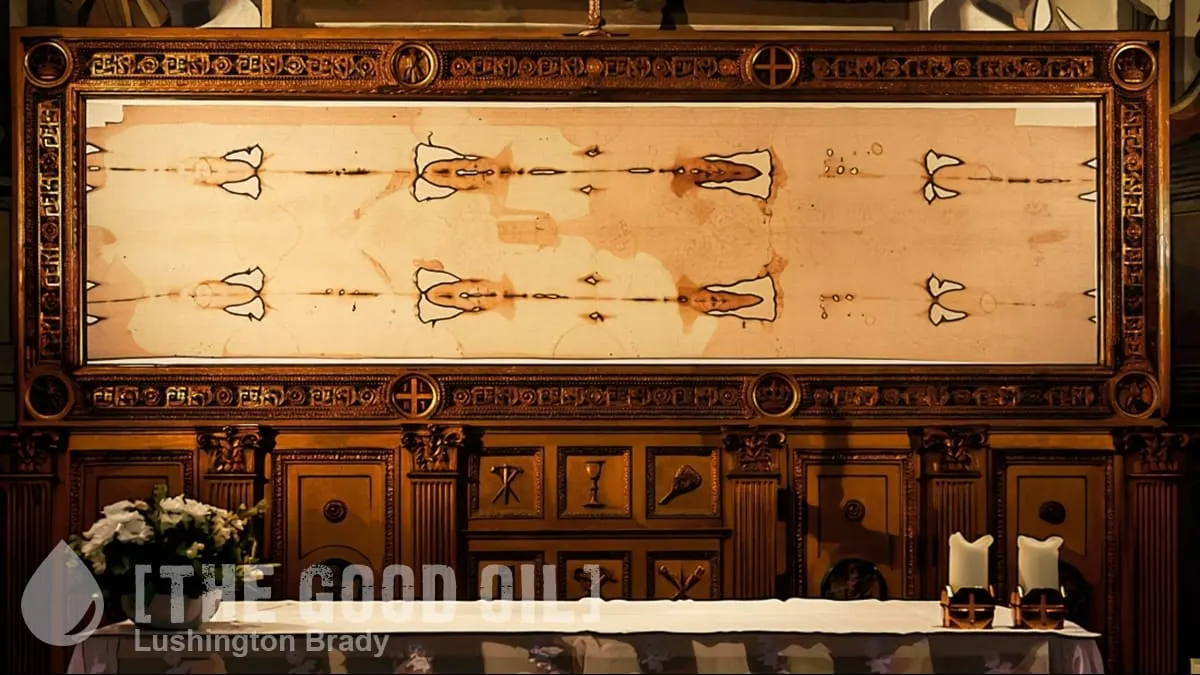
After centuries, the Shroud of Turin still remains, well, shrouded in mystery. While the easy answer is that it is a 14th century forgery – an accusation made even back then – the shroud to this day attracts considerable controversy and dispute. Part of the problem is that many of the forensic techniques that would settle controversies are destructive – and, not unreasonably, the church is reluctant to keep destroying the shroud by the inch.
Not all techniques are destructive, though. One performed in the 1970s was relatively simple: giving it a good vacuum. Running a forensic Hoover over the shroud yielded a treasure trove of dust and pollen. The initial analysis at least showed that the shroud had certainly at some stage been in the geographical region its legendary origin would claim. It also showed that it had been around – or that it had at least been in contact with other things which had.
Just how many, of what kind and from where, a new study has unveiled.
Nearly 50 years after samples were officially collected from the Shroud of Turin, scientists have used advanced genetic sequencing to reveal just how much biological material the linen cloth has accumulated over the centuries.
Almost as much that sock you found under your teenage son’s bed.
Researchers applied a technique known as PCR-free next-generation metagenomic sequencing, a method that reads genetic material directly without amplifying it first, to the official 1978 sample collection, uncovering multiple human mitochondrial DNA lineages alongside a wide-ranging microbiome of bacteria, fungi and salt-tolerant microorganisms. The study also detected DNA from cultivated crops, domesticated animals and even Mediterranean red coral, offering a detailed picture of the many people, places and environments the shroud has passed through, though researchers are clear that none of this settles the long-running debate over its age or authenticity. Even so, the sheer scope of biological information recovered marks a significant leap forward for forensic genomics applied to historical textiles, giving researchers an unprecedented window into centuries of human contact, environmental exposure and geographic movement.
The result is less a portrait of a first-century burial cloth than a passenger list for everyone and everything that has breathed on it since. Human mitochondrial DNA turns up in several lineages, which is a polite way of saying a great many hands have been on the thing. The microbiome is equally chatty: bacteria, fungi and salt-tolerant bugs consistent with a cloth that has spent centuries being folded, unfurled, kissed, carried and stored in places that were not a clean room. Then the rest of creation piles in: cultivated wheat, carrots, corn, bananas and peanuts, cattle, pigs, chickens, dogs and cats. And the coral, of course.
If you were hoping for a single, immaculate genetic signature of the man in the image, you’re out of luck. Like the old joke about Picasso asked by police to do a sketch of the man who mugged him, you will have to settle for a farmyard, a fruit bowl and a cat.
One thing it doesn’t do is settle the debate on the shroud’s date or origins, either way.
The paper, in Scientific Reports, is careful to the point of monotony: the results do not establish when the shroud was actually made or whether it is authentic. Centuries of handling have stacked so much biology onto the weave that nobody can pick out a strand and say, with a straight face, that this one belongs to the earliest chapter. Corn, bananas and peanuts are not first-century Judean crops. They are the New World arriving late to the party: which, if you are keeping score, is another data point for ‘this cloth has had a busy afterlife’, not for ‘this is (or isn’t) the grave-sheet of Christ’.
The 1978 collectors themselves are part of the mess. Later commentary on the same samples notes that the dominant human lineage on some threads matches the man who took them, and that skin proteins suggest the work was not done in gloves. Science, like pilgrimage, leaves fingerprints. Mix that with every bishop, photographer, restorer and tourist who ever leaned in, and you have a palimpsest.
Professor Noemi Procopio, of the University of Lancashire, puts the best available gloss on it:
According to Procopio, the shroud functions as a rich archive of genetic information built up through centuries of human interaction and environmental exposure, one that this kind of advanced DNA analysis can now begin to read in far more detail than was possible when the original samples were first collected nearly 50 years ago.
That is true and it is also the sort of sentence that tells you the authors know they have not found the smoking lance. What they have found is a method. Historical textiles, like old manuscripts and shipwreck cargo, turn out to be genetic hotels. You can now read the guest book, but you still cannot prove who checked in first.