Steven Barnes
Steven is a retired doctor from North East England.
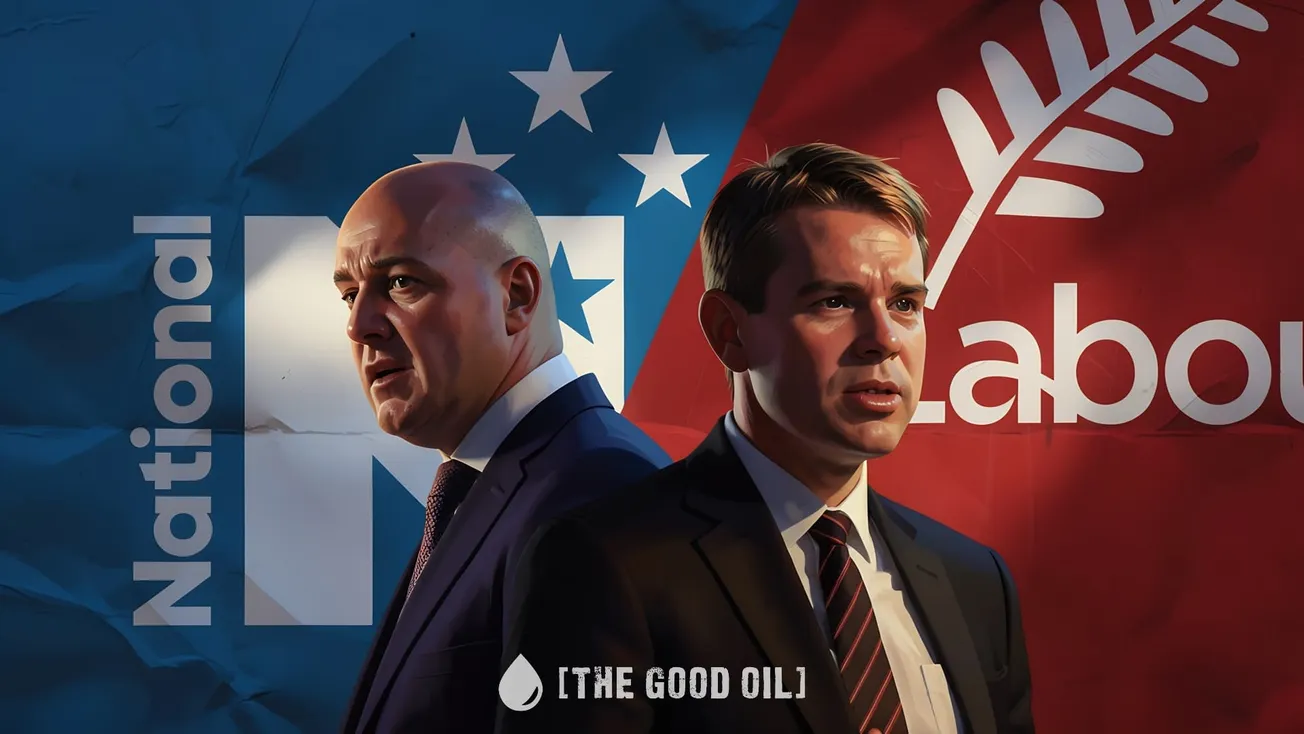
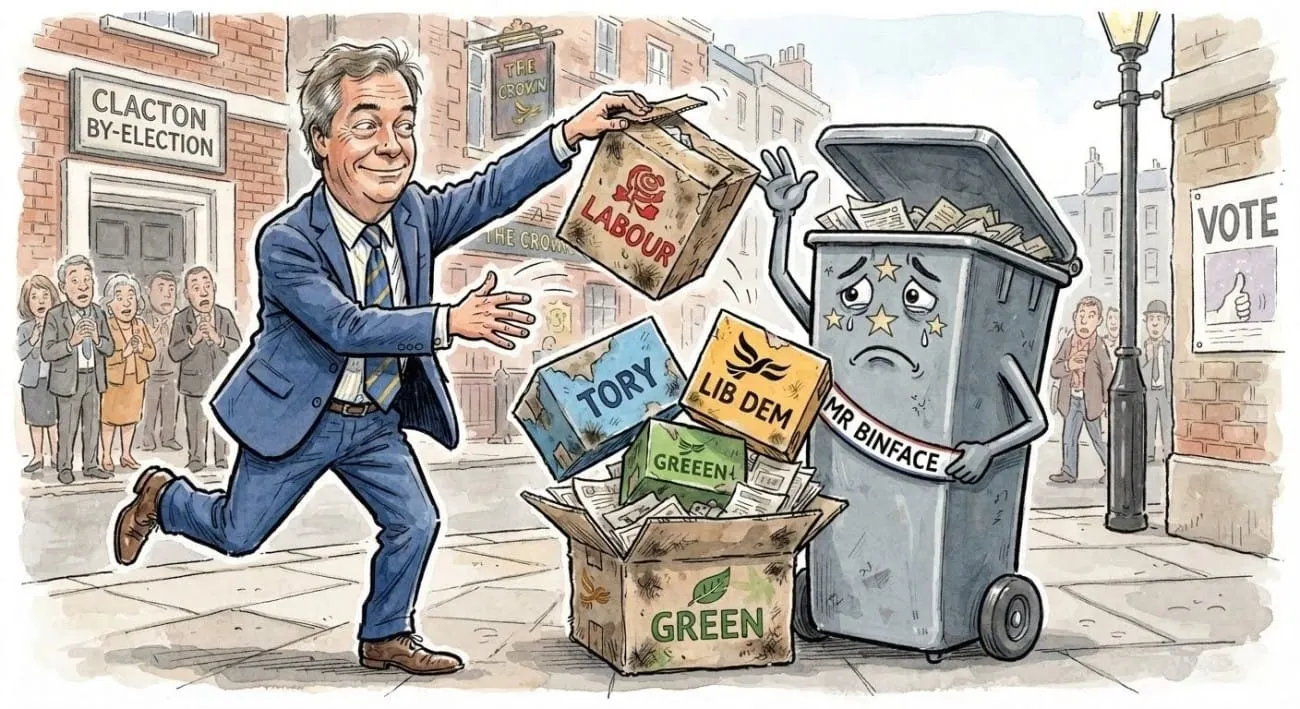
In a move that reeks of establishment arrogance and democratic contempt, the so-called Uniparty, that cosy cartel of Labour and Conservative elites, has refused to field candidates in the by-election triggered by Nigel Farage’s resignation. This is not political strategy: it is a brazen slap in the face to the voters of Clacton, an insult to the very foundations of British democracy, and damning proof that the Uniparty operates as a cabal beholden to the woke establishment, hell-bent on crushing Reform UK by any means necessary. Far from a principled stand, their boycott exposes the hollowness of their claims to represent the people. It reinforces the growing conviction among millions that Westminster is rigged, that genuine challengers to the status quo will be neutralised, and that democracy in Britain is increasingly a managed illusion.
Farage, having won Clacton convincingly in 2024 with a majority of over 8,000 votes, announced his resignation amid parliamentary scrutiny over financial declarations, including a substantial gift from a Reform donor. Framing the by-election as a ‘people versus the establishment’ contest, he invited the voters to judge him directly. What should have followed was a robust democratic battle: candidates from across the spectrum presenting their visions, debating policies on immigration, net zero, taxation, and the cultural erosion that has left working-class communities like Clacton behind. Instead, the Uniparty factions of Labour, the Conservatives, Liberal Democrats, Greens, working in concert and under the same orders, have slunk away, declaring they will not contest. Kemi Badenoch’s Conservatives, who came second in 2024, explicitly ruled themselves out, calling it a “fake by-election”. This collective retreat is unprecedented in its cynicism.
It is also an outrage. Democracy thrives on choice, not choreographed consensus. By refusing to stand, the Uniparty denies Clacton residents the opportunity to affirm or reject Farage through open competition. It treats the electorate as props in a scripted drama rather than sovereign citizens. Voters in Clacton, many of them disillusioned by decades of broken promises on borders, housing, and economic security, deserve better than this paternalistic veto. They elected Farage to shake up the system; now the system refuses to engage, effectively saying: ‘Your vote doesn’t count unless we approve the opposition’. This is not governance: it is contempt. It echoes the worst authoritarian instincts, where power is preserved not by persuasion but by exclusion.
The implications stretch far beyond one Essex seaside town. This refusal cements the Uniparty narrative: two wings of the same bird, differing in rhetoric but united in preserving the post-war, globalist, woke-infused settlement that has hollowed out British sovereignty and working-class prosperity. Labour and the Conservatives under successive leaders have converged on key issues such as mass immigration, net zero zealotry, identity politics, and deference to supranational bodies, rendering them indistinguishable to many voters. Their joint boycott in Clacton is performative theatre, designed to starve Reform of the oxygen of competition while portraying Farage as an isolated crank. In reality, it validates Reform’s critique: the establishment fears genuine disruption.
This tactic is no accident. It mirrors the coordinated campaigns that have targeted populist or reformist figures time and again. Consider Liz Truss. Elected leader of the Conservative Party on a platform of bold tax cuts and deregulation to unleash growth, Truss lasted a mere 44 days before being hounded from office. The economic establishment, media, and elements within her own party unleashed a frenzy of opposition: market turmoil (exacerbated by external factors and internal sabotage), relentless negative coverage, and pressure from within the parliamentary party. Truss herself later pointed to a “powerful economic establishment” that denied her a fair chance. Whether one agrees with her policies or not, the speed and ferocity of her removal suggested a system intolerant of deviation from the Treasury-OBR-Bank of England orthodoxy. The Uniparty consensus prevailed, restoring the status quo at the expense of democratic mandate from party members.
Similar patterns abound. Abroad, the smears against Donald Trump, two impeachments, lawfare through multiple prosecutions, and endless media characterisation as an existential threat, served the same purpose: delegitimise and destroy the outsider. In Britain, Brexit itself faced relentless sabotage: Project Fear, Project Smear, parliamentary manoeuvres, and establishment wailing that democracy had been ‘hijacked’. Reform UK’s rise, with its focus on stopping the boats, scrapping net zero targets, and prioritising British workers, triggers the same immune response. The Uniparty does not debate Reform’s ideas: it seeks to marginalise them through financial scrutiny, selective outrage, and now electoral boycott. Farage’s personal finances are placed under the microscope in a way that rarely applies with equal vigour to establishment figures with murky donor networks or revolving-door lobbying ties.
This is the playbook of a cabal, not a healthy democracy. The woke establishment – that nexus of NGOs, legacy media, civil service mandarins, corporate HR departments, and international bodies – demands conformity on climate alarmism, open borders, and cultural self-flagellation. Reform threatens this by appealing directly to the forgotten millions in coastal towns, post-industrial heartlands, and suburbs who bear the brunt of these policies: strained public services, suppressed wages, eroded national identity, and unaffordable energy. By not standing in Clacton, the Uniparty signals that defeating Reform matters more than democratic norms. It is a tacit admission that, on the issues that count, they have no compelling counteroffer. Better to let Farage win unopposed, decry the result as illegitimate and then have Farage removed by a rigged inquiry than risk a proper contest where Reform’s arguments might resonate.
The insult to voters is profound. Clacton, like many areas, has suffered from neglect: high deprivation, reliance on seasonal tourism, and the downstream effects of national policies on migration and welfare. Farage’s 2024 victory was a cry of protest. By boycotting the by-election, the major parties tell these voters their concerns are not worthy of engagement. It breeds cynicism and apathy, or worse, radicalisation. Democracy requires participation, not pre-emptive surrender. If the Uniparty truly believed their vision superior, they would field candidates, debate immigration statistics, energy costs, and cultural cohesion head-on. Their refusal reveals fear, not principle.
This episode also damages the Conservative brand irreparably. Once the party of Churchill and Thatcher, it now cowers behind Labour’s coattails to avoid confronting Reform. Badenoch’s decision hands Reform a propaganda coup: ‘Even the Tories won’t fight us’. It accelerates the realignment of British politics, where the true divide is between the Uniparty establishment and the populist right representing native working-class interests. Labour’s absence is equally telling: Starmer’s government, mired in its own controversies and sleaze, prefers to mock the process as a “circus” rather than defend its record.
Abroad, parallels reinforce the pattern. In France, the cordon sanitaire against Marine Le Pen; in Italy, endless attempts to undermine Giorgia Meloni before her election; in the US, the lawfare against Trump. The tactics vary – smears, regulatory harassment, media blackouts, or electoral pacts – but the goal is identical: preserve the Uniparty order against democratic disruption. In Britain, the tools include parliamentary standards processes weaponised against outsiders, donor transparency rules applied selectively, and now this boycott. It is anti-democratic engineering dressed as propriety.
The broader destruction of Reform is the endgame. Reform’s polling strength, policy clarity on reversing decline, and ability to articulate the anxieties of millions terrify the establishment. They represent a potential realignment that could consign the old parties to history, much as UKIP pressured the EU referendum. The woke establishment, with its grip on education, bureaucracy, and culture, cannot abide a party that prioritises British identity, fiscal sanity, and energy realism. Hence the determination to ‘destroy Reform at any cost’ – through reputational assassination, internal division, or denying them fair electoral fights.
British voters deserve better. Democracy is not a private members’ club for Labour and Conservative insiders. It demands robust contestation, especially in by-elections meant to reflect the will of a specific constituency. The Clacton farce undermines trust further in an already sceptical polity. Turnout will suffer; legitimacy will be questioned. Farage may win handsomely, but the victory will be tainted by the absence of opposition, allowing critics to dismiss it as hollow. Yet the real hollowness lies in the Uniparty’s evasion.
This boycott is a symptom of deeper rot: a political class detached from the people it claims to serve, captured by ideological fads and self-preservation. The woke establishment’s influence – promoting policies that erode cohesion and prosperity while insulating itself from consequences – faces its strongest challenge in decades. By refusing to stand, the Uniparty has not marginalised Farage – it has exposed itself. Voters across Britain are watching. The message is clear: the cartel will go to extraordinary lengths to cling to power, even if it means abandoning democracy in Clacton.
The path forward requires voters to punish this cowardice at every opportunity. Support for Reform, or any genuine alternative, must grow to force the Uniparty to compete on ideas rather than suppress them. Until then, Clacton’s by-election stands as a monument to democratic failure – not because of Farage, but because the establishment lacked the courage to face him. This is the Uniparty’s true legacy: contempt for the ballot box when it threatens their control. Britain deserves a politics of conviction, not collusion. The voters of Clacton, and the nation at large, have been short-changed once again.
This article was originally published by the Free Speech Backlash.