Table of Contents
Gene McVay
Christian conservative retired fighter pilot and wing commander.
What is currently occurring in Iran is not a conflict instigated by Israel. It does not represent a Jewish vendetta, nor is it merely a regional skirmish that does not concern the broader global community. Contrary to assertions by Tucker Carlson, this situation is not connected to Chabad. It is essential to understand the true circumstances.
Washington severed its diplomatic relations with Iran during the Carter administration, after Iranian students stormed the US embassy in Tehran, taking 52 Americans hostage. This incident took place in 1979.
Since then, every administration – Carter, Reagan, Bush (senior), Clinton, Bush (junior), Obama, Biden, and Trump – has asserted that a nuclear-armed Iran is unacceptable. The White House has recently documented 74 instances where Trump made this case, labeling it as “longstanding, bipartisan American policy.” This is not a new perspective: it has been a belief held by multiple administrations over half a century.
So, why has it taken until now for action to occur? Because Iran consistently changed the parameters, and the world allowed it to do so.
By May 2025, the IAEA reported that Iran’s stockpile of near-weapons-grade enriched uranium had increased by approximately 50 per cent in just three months, bringing Tehran very close to having enough material for ten nuclear weapons.
This is not merely a vague threat. It represents a countdown.
The head of US Central Command testified that if Iran chose to expedite its efforts toward developing a nuclear weapon, it could produce sufficient weapons-grade material for a basic device within a week, and enough for 10 weapons in three weeks.
Secretary of State Marco Rubio succinctly stated: “They have everything they need to build nuclear weapons.” When you have constructed the engine, loaded the fuel, and aimed the vehicle at a wall, it is of little importance whether you have pressed the accelerator yet.
Iran spent years claiming that its program was for civilian purposes, all the while advancing toward military capabilities. Reporting from the Institute for International Political Studies indicates that Khamenei had approved the development of miniaturized nuclear warheads for ballistic missiles as recently as October 2025.
Now, let’s focus on China, as this aspect is crucial.
China is not an uninvolved observer in this scenario. Iran is pivotal to Beijing’s overall trade and energy strategy. Iran is at the core of China’s Belt and Road Initiative, a network of infrastructure that links East Asia to Europe via land transportation and Persian Gulf energy routes. Without stable access through Iranian territory, Beijing’s supply chains lack a viable alternative. In 2025, Iran exported over 520 million barrels of crude oil to China, with only Saudi Arabia exporting more. China purchases over 80 per cent of Iran’s oil. This situation is not one of ideological alignment but a dependency that neither party wishes to disrupt.
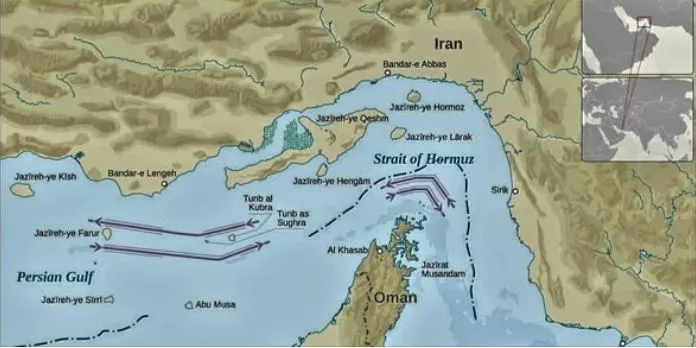
This leads us to the Strait of Hormuz.
In 2025, approximately 13 million barrels of oil per day passed through the strait, accounting for about 31 per cent of all seaborne crude globally.
About 45 per cent of China’s oil imports transit through this strait. Iran has threatened to shut it down. This threat has resulted in China entering direct discussions with Iran, urging Tehran to facilitate safe passage for crude oil and LNG vessels while refraining from targeting tankers or key export hubs. When Beijing’s energy supply is at stake, its anti-American rhetoric shows clear limitations.
In summary, all of this adds up to a significant understanding.
The United States did not inadvertently enter this conflict due to a polite request from Israel. It responded to a threat recognized by five decades of American presidents, which was largely postponed until now.
Iran was merely weeks away, not years, from securing the necessary materials for nuclear weapons. It possessed long-range ballistic missiles capable of reaching US bases and allies in the region. It had also maintained a weapons development program that it had been deceitful about for years.
Labeling this as Israel’s war disregards 50 years of American policy, numerous failed diplomatic efforts, and a nuclear program that had reached its limits.
The world required someone to take action. The more pertinent question is not why this situation unfolded but rather why it took so long for action to be initiated.