Table of Contents
Ani O’Brien
Like good faith disagreements and principled people. Dislike disingenuousness and Foucault. Care especially about women’s rights, justice, and democracy.
The NZ Breakers made the decision not to wear rainbow-coloured insignia for the NBL’s “Pride Round.” They stated that in order “to protect individual players from being singled out for their beliefs, the team collectively decided they would either all wear the insignia, or none would”. That’s it. No campaign, no statement condemning anyone, no dramatic stance. Simply a team opting out of political symbolism in sport. As a gay woman, I have absolutely no issue with that. What I do have an issue with is the hysterical media overreaction, the manufactured outrage, and the authoritarian attitude of a vocal activist-academic-media class who believe disagreement is bigotry.
Apparently there is a “backlash” to the NZ Breakers’ decision. But as far as I can tell there is an inconspicuous absence of any meaningful, organic backlash from the public. As usual, journalists confused X and BlueSky noise with real life. They saw their friends crank up the outrage machine and swung into action to make it a ‘thing’.
Naturally, reporters decided to track down sponsors and apply pressure on them by demanding comments suggesting that NZ Breakers had done something morally reprehensible. This has become standard practice for the new breed of reporters who believe it is their job not to report the news, but to re-educate the deficient public. They ambush private companies for ‘a position’ as if these telcos and fast food joints must pass a modern morality test and justify continuing to sponsor a sports team.
It is actually ideologically motivated punishment. These are passive aggressive Struggle Sessions designed to force compliance or punish dissent.
We have spoken with the BNZ Breakers, and while we don’t agree with the decision, they let us know the call on what the team will wear was made by the players themselves in line with the league’s voluntary participation policy,” a spokesperson for BNZ said.
They’ve confirmed that Pride will be visibly recognised at the game and in stadium with activations supporting the rainbow community, and we look forward to celebrating the NBL Pride Round with the wider basketball community.
We’re a big supporter of the NBL Pride Round and inclusion in sport for all people.
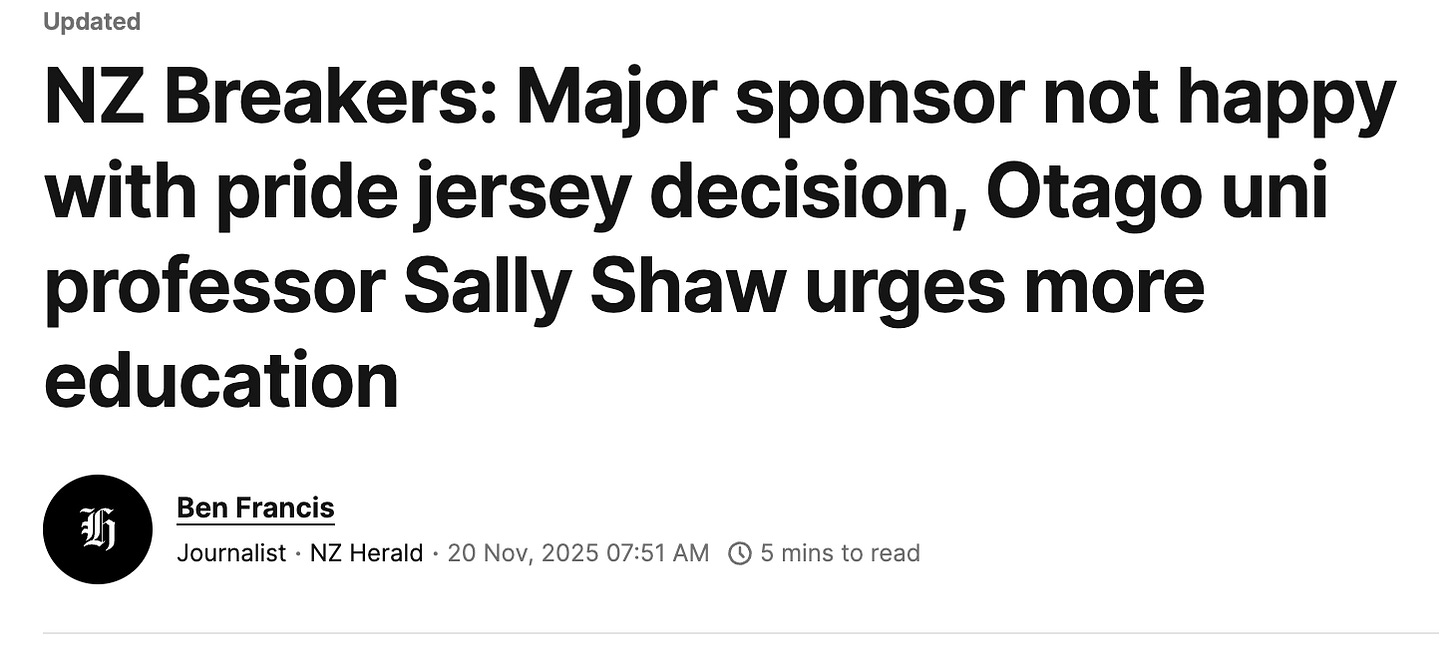
Days after the initial NZ Breakers announcement, which didn’t seem to generate much interest at all, Newstalk ZB is now running the story on every hourly news bulletin. RNZ framed the decision with the predictable “this is homophobia” angle, quoting former NRL player Ian Roberts as if him taking offence alone is indicative of widespread upset. The NZ Herald ran pieces platforming outraged voices, including a University of Otago professor insisting the Breakers need “education” after this so-called “backlash”. They all report breathlessly about it, but the backlash wasn’t discovered or observed by the media, it was constructed.
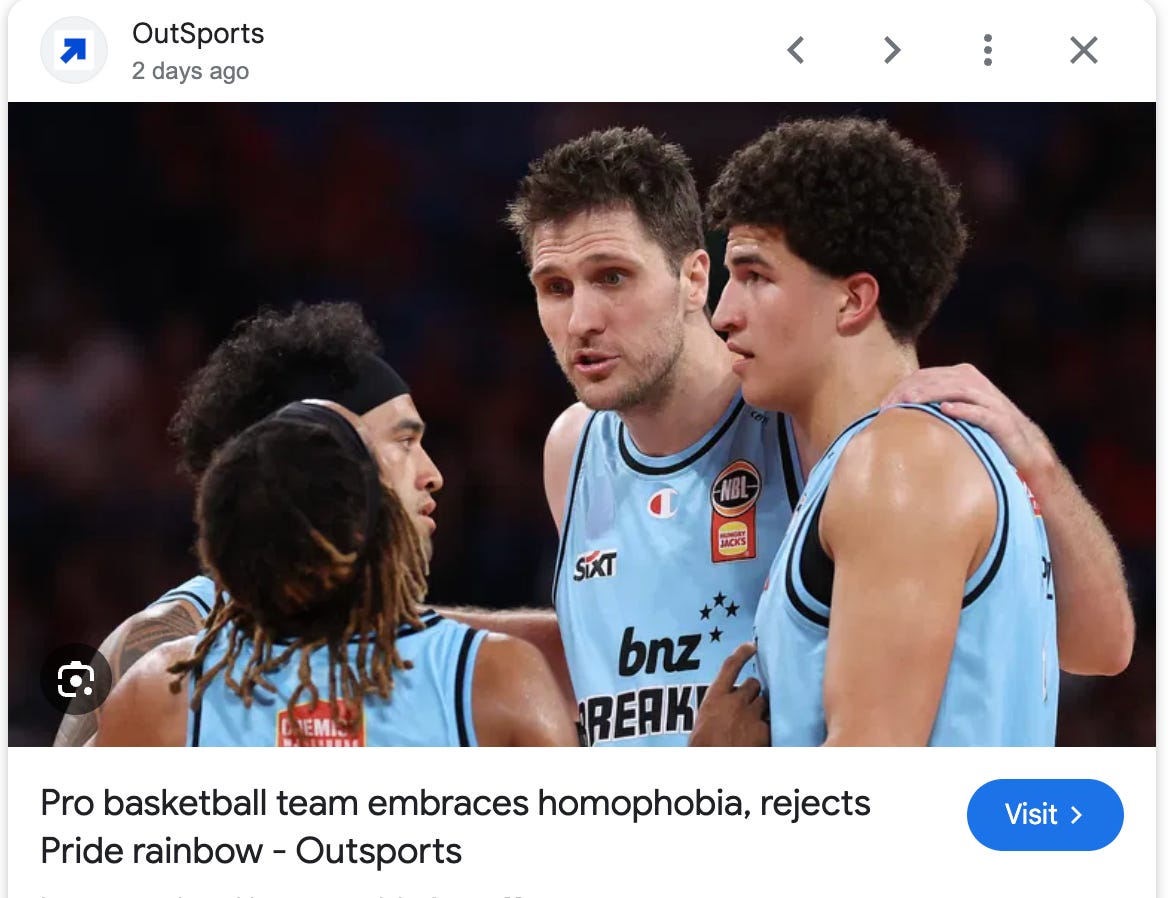
What actually happened was a few journalists got offended, a handful of activists demanded conformity, and the media machine dutifully tried to whip it into a scandal. Total elite outrage laundering itself through the news cycle. Reality is, you ask the average sports fan and they will tell you they would rather all politics and social justice was kept out of sport. It is meant to be entertainment and escapism and it can hardly be that when the same drama over identity that has burrowed its way into every aspect of our lives expects attention on sports fields too.
When rainbow rounds were first introduced, they were pitched as a feel-good gesture. A simple way to say ‘everyone’s welcome’. Fine. Harmless. But like every corporate-driven campaign, the meaning evaporated the moment it became a branded gimmick. Now it’s just another merchandising opportunity, complete with limited-edition rainbow singlets that do more for revenue targets than they do for any LGBT+ person’s wellbeing. And, at this point, the increasing militancy around these campaigns is doing the opposite of what was intended. Instead of fostering inclusivity, the compulsory cheerleading and ritual shaming of anyone who opts out is breeding resentment, fatigue, and a very predictable cultural pushback.
Sport should never have been dragged into this mess. Pride rounds, themed jerseys, symbolic political statements, while well-intentioned, take what should be a unifying cultural space and turn it into a compulsory expression of ideology. We’ve seen this politicisation across countless codes the world over, and every time athletes hesitate, the response isn’t to respect their autonomy: it’s to shame, accuse, and “educate” them until they comply. Bullying them into submission and forcing them to espouse views they don’t hold.
What really alarms me in this Breakers case is how openly academics have called for re-education of the athletes because they don’t want to enthusiastically participate. Professor Sally Shaw’s comments urging more “education” are bizarre. Since when does an athlete need ideological tutoring for choosing not to wear a symbol? Since when did university departments get to decide moral orthodoxy for professional sports teams? Inclusivity? Nah, it’s the policing of thought.
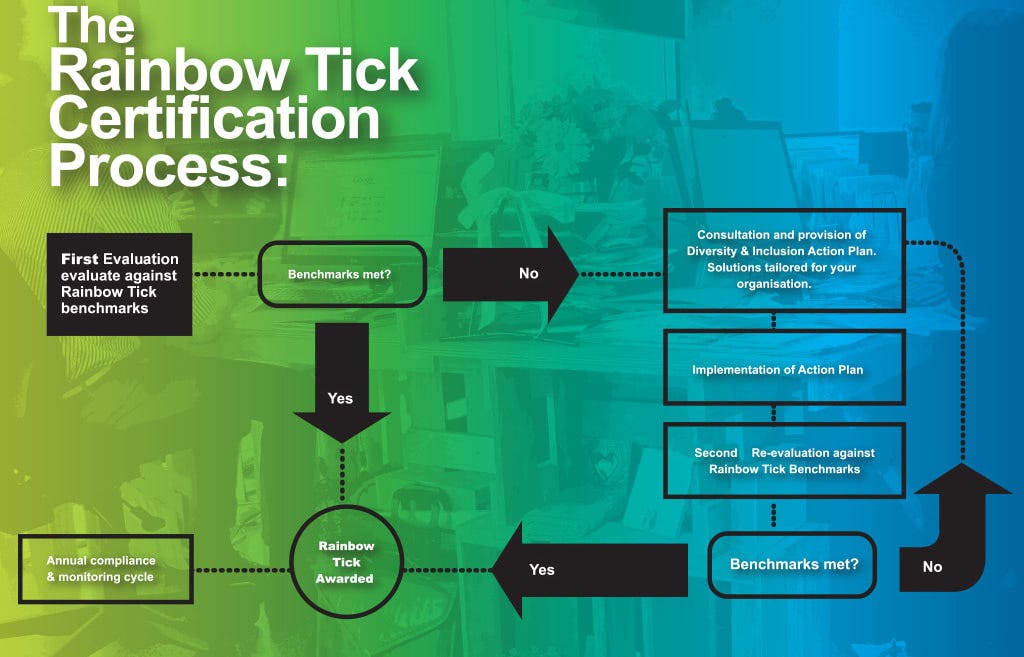
And the context many are missing is that the media’s objectivity here is compromised. Most major newsrooms are themselves enrolled in the Rainbow Tick scheme, which is explicitly ideological and requires continual proof of adherence to doctrine. It requires companies to adopt a particular worldview regarding the “rainbow community” and become advocates for that worldview. A worldview that not all gays subscribe to. That’s fine for corporates if they want to do that, but should journalists who work for certified “advocacy-compliant” organisations really be the ones deciding what counts as homophobia? How can they claim neutrality while simultaneously belonging to a programme that trains them to evangelise for a specific set of “queer” political priorities?
Their behaviour this week suggests they can’t. A sporting team declined to wear a political symbol and the media treated it as blasphemy. They elevated every activist voice calling for reprimand, and aggressively hunted for corporate pressure points. They covered the story not as reporters but as enforcers making sure the Breakers felt the consequences of non-compliance.
The great irony is this that, like me, most gay people I know don’t care. We are not fragile wee petals whose dignity depends on a basketball team wearing a rainbow. Well-adjusted gays getting on with living our lives are not losing sleep over this. But the activist class, heavily over-represented in journalism, academia, and NGOs, needs constant moral drama to stay relevant. So, “backlash” is declared and herd behaviour follows.
Sport doesn’t need more political symbolism. It needs less. It needs to return to being an arena where people from all backgrounds can unite around athletic excellence rather than competing ideological demands. Athletes should be free to play and free to say “no thanks” to political messaging without the threat of cancellation hanging over them.
This article was originally published by Thought Crimes.