Yvonne van Dongen
Veteran NZ journo incredulous gender ideology escaped the lab. Won’t rest until reality makes a comeback.
Last week Newsroom’s publication of an article penned by two biologists supported the existence of dimorphic sex heartened sex realists in New Zealand.
That article by Dr Chris Pook from the Liggins Institute in Auckland and Dr Julia Schaletzky, Professor of Molecular Therapeutics and a Bioethicist at UC Berkeley, USA, was written in response to a previous article in Newsroom that claimed sex was a spectrum. Neither of the authors of that article was a biologist. One was a PhD candidate at Massey University “using interdisciplinary feminist methods to study disease emergence in Uganda”; the other a research fellow in the School of History, Philosophy, Political Science and International Relations at Victoria University.
The Pook-Schaletzky article was unequivocal in its condemnation of the previous piece, which claimed that the bill to define sex failed basic science. Pook-Schaletsky explained why that is false and concluded:
“This is not science. It is quackery.”
Their article was taken as a hopeful sign among sex realists that sanity and the scientific method had returned to New Zealand academia, most especially to those trained in biology. Pook is described as a “classically trained biologist with a 20-year career in biochemistry research and chair of the University of Auckland Sex Equality and Equity Network, writing in a personal capacity”.
However the list of those making submissions opposing the Definition of Sex bill tell a different story. They include academics from a range of different institutions throughout the country such as:
- Three University of Auckland biologists (Cate Macinnis-Ng, Rochelle Constantine and Margaret Stanley)
- Faculty, staff, and students in the School of Biological Sciences at the University of Canterbury
- Faculty, staff and students at the University of Canterbury.
- Women in Science and Rainbow Science at the University of Auckland
- University of Canterbury Rainbow Engineering Society
- Peter Dearden – Distinguished Professor in Biochemistry with 27 years of experience. Head of Otago University’s biochemistry department and co-director of Genomics Aotearoa.
- A collective of academics from Te Puna Hauora (The School of Health) at Te Herenga Waka (Victoria University of Wellington).
- Gender Affirming Care health and counselling clinicians – StudentHealth and Counselling at Te Herenga Waka (Victoria University of Wellington)
- New Zealand Medical Students’ Association
Also opposing the bill are the New Zealand Skeptics.
Countering this is the 32-page submission made by a group of academics, primarily biologists, from New Zealand and abroad, concerned that public debate about the proposed legislation is being shaped by inaccurate biological claims about sex. They call themselves the Ad Hoc Working Group on Sex Denialism. Pook and Schaletzky are part of this group as are 14 other academics.
They do not take a position for or against the bill. Their submission seeks only to clarify what biology does, and does not, show about sex.
Their submission examines in depth seven false claims made about sex. Summarised they are:
- False claim: 1.7 per cent of humans are intersex.
This statistic relies on an over-broad and heavily criticised definition. The rate of births involving significant genital ambiguity is orders of magnitude lower. - False claim: sex is a spectrum.
Many traits vary continuously, but mammalian reproductive organisation is binary. Variation within males and females does not create additional sexes. - False claim: there is no reliable definition of sex.
Biology defines sex by reproductive function: the distinction between large and small gametes. - False claim: male and female are “assigned at birth”.
Sex is observed and recorded, usually with high reliability: it is not assigned by social convention. - False claim: brain scans prove “female brains in male bodies” or the reverse.
The neuro-imaging literature does not support such simple claims. - False claim: drugs and surgeries can change sex.
Medical interventions can alter appearance, hormones, and some secondary sex characteristics, but they do not change reproductive sex. - Very dubious claim: “gender identity” is genetic.
Current evidence does not justify strong claims of genetic causation.
Their submission is a significant development given the global trend for academics and universities to embrace leftist ideologies. New Zealand academia is demonstrably left-leaning. The Free Speech Union, working with Curia Research, surveyed 432 academics in 2023. They found that 52 per cent identified as left-wing to some degree, compared with just 19 per cent who identified as right-wing; 30 per cent described themselves as centrist.
University students tend to be more left leaning. A 2022 study, “Perceived Freedom of Expression at New Zealand Universities”,surveyed university students in New Zealand and the United States. Among respondents who could be classified politically in New Zealand, 6.6 per cent were right-leaning, compared with a much larger left-leaning group. The researchers concluded that both the New Zealand and American student samples leaned strongly left, with the imbalance more pronounced in New Zealand.
These findings illustrate the extent to which academic institutions have been infiltrated via students and staff by ideologies prioritising equity and social justice over empirical truth.
This shift in perspective has antecedents which goes back decades. Some trace it to the Marxist thinkers of the 1930s and ’40s. After classical Marxism failed to produce revolution in the West, these thinkers adapted Marxism to culture and psychology. They argued that the desire to dominate was the key driving force behind human behaviour.
From the late 1970s through to the ’80s, American scholars promoted the idea of critical race theory. This emphasised the ubiquitousness of racism despite liberalism’s colour blind promise. Storytelling and standpoint epistemology was supposed to supplement or replace traditional doctrinal analysis. From then on, concepts such as intersectionality, white fragility, systemic racism, oppression and micro-aggressions gained credence. This logic was extended to sex, sexuality, disability, and other categories.
Postmodernism’s emphasis on relativism further eroded confidence in objective truth. Knowledge was increasingly treated as a product of power relations rather than anything that could be tested empirically.
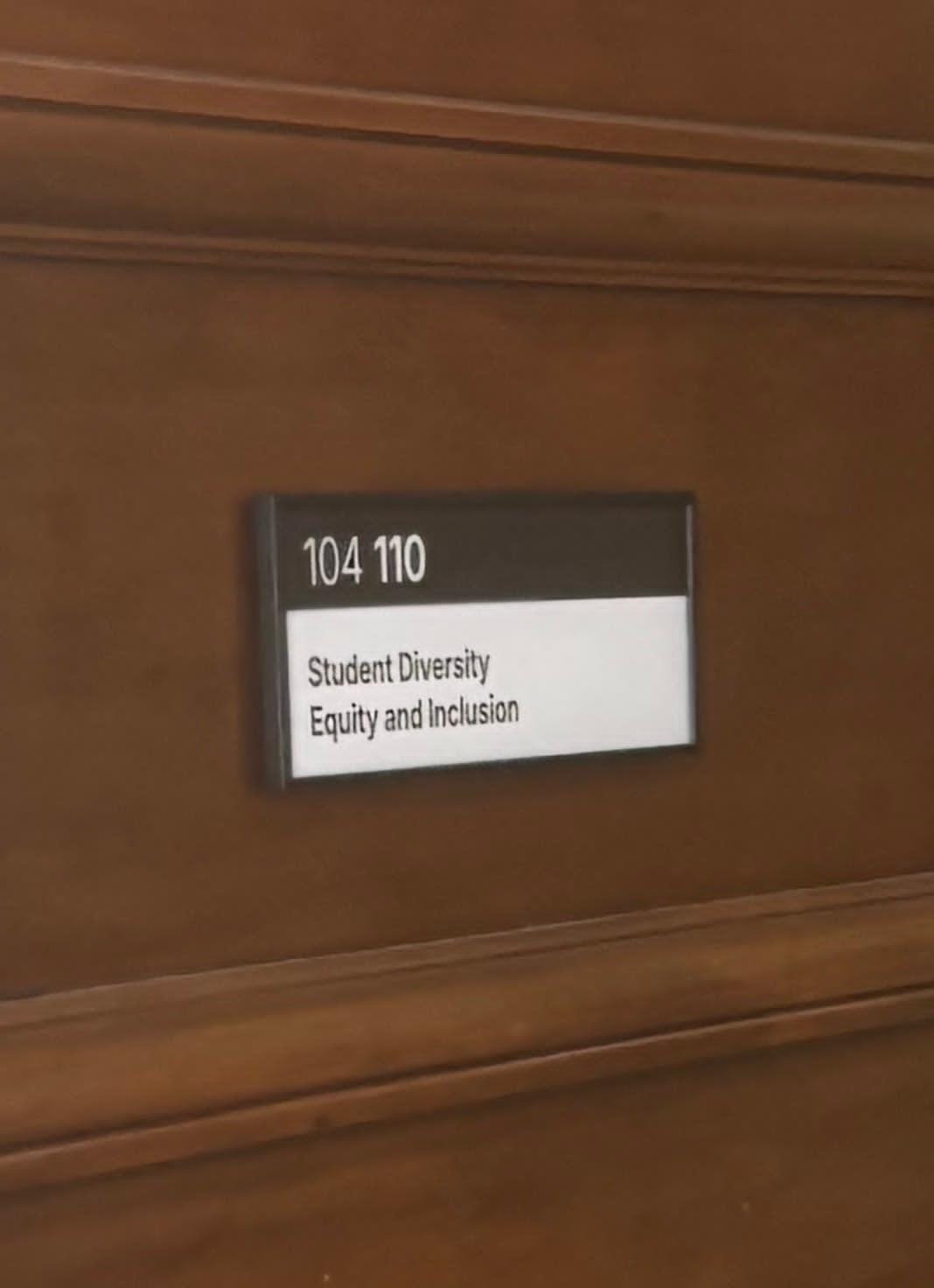
Amplifying these changes was the increase in student numbers post World War II, combined with the cultural upheaval of the ’60s. Thirty years later, it was the ranks of non-academic university staff that ballooned with the establishment of diversity, equity, and inclusion offices. These offices and related bureaucracies created permanent institutional homes for social justice frameworks. Traditional canons and empirical methods gave way to theory, activism and identity.
Once these destabilising ideas took hold, they became the default ideology of university culture among staff and students. Anyone daring to dissent was effectively introducing a flaming rag into a room full of gas.
This volatile mix concocted over decades by a multitude of players with a variety of intentions is how we got to 2026 and the need to define sex in law. In this deconstructed post-modern, relativist universe, people can be whoever they say they are. The rest of us are just supposed to go along with their chosen identity. A man can be a self-declared woman. A female can cosplay as a male. Some people can be neither.
Except we all know this is nonsense. Quackery even.
This article was originally published on the author’s Substack.